This article is the position of one ISO member regarding strategic orientation towards the 2026 general election.
The 2026 election is shaping up as one of the closest elections in this country’s history. This article identifies the factors that could lead to a National-led coalition winning the election, the factors that may prevent it from doing so, and then discusses two different voting pathways for people who want to kick this Government out. If you want this to be the first single-term National government in Aotearoa’s history, then keep reading.
How the Rich are Helping National and ACT to Win the Election
Money. Lots of money. The rich are pouring an unprecedented amount of money into the campaign coffers of National and ACT. According to the Electoral Commission, donations to the parties in 2025 was as follows:
ACT: $2,445,256
National: $6,275,234
NZ First: $1,360,272
Total donations to the ruling coalition parties: $10,080,762
Greens: $1,848,679
Labour: $2,403,242
Te Pāti Māori:$141,986
Total donations to the centre-left parties: $4,251,921
As these figures show, in 2025 the right bloc parties received more than double the amount of money that the left bloc parties were able to raise. Once the figures come in for 2026, funding for National, ACT, and NZ First will break all previous records. This has enabled National and ACT to run much bigger campaigns in traditional media formats and online platforms than they would otherwise be able to do.
It’s not hard working out why this government is so popular amongst the rich. The National-led Coalition Government gave residential property investors a $2.9 billion tax break and followed this up with its $1.7 billion per year investment tax subsidy for certain kinds of new investment. The rich want to keep a taxation system that is one of the most favourable for the rich in the world.
ACT and the National Party are backed by the two social classes that dominate society and politics: capitalists and farmers. The resources that these classes have at their disposal to influence elections literally stares us in the face as soon as we drive between our towns and cities. National Party billboards litter the countryside because farmers own the bulk of the land that borders the roading network. These billboards are on privately owned land but are only effective because the campaign messaging is projected into public space.
Another factor in favour of the right bloc parties is the right-wing bias of the mainstream corporate and state media. Since the 2023 election, this bias has been increased by capitalists and this Government as they have replaced former moderate heads of media organisations with more right-wing characters. Examples include the appointment of Matthew Hooton, a right-wing journalist who is a former National Party press secretary and speech writer, as editor-in-chief of The Post and Stuff and the appointment by David Seymour of Jason Winstanley – former Head of Talk at the right-wing News Talk ZB – as the new CEO for RNZ.
Finally, as Rosie Cruickshank shows, in December 2025 the Government passed the Electoral Amendment Act which is designed to make it harder for those aged from 18 to 24, Māori, and members of the working class to vote. It has done this by stopping voters from enrolling and voting at the same time on election day. The intent of these changes “is to make it easier for the current government to stay in power, and this could be effective.”
The Economy, Cost-of-Living Crisis, and Housing
A major factor that was supposed to help the National-led Coalition win the election was an economic recovery that according to Treasury’s 2025 forecasts was going to gather momentum in 2026. This hasn’t happened. Instead, the economy only grew by 0.2 percent in the June quarter 2026 and annual growth was only 1.7 percent in the year to June 2026 – one of the lowest growth rates in the OECD.
The recovery has been delayed by Trump’s war against Iran which drove up fuel prices and caused a surge of inflation. To understand why this has led to a delay in the economic recovery you need to understand how the Reserve Bank manages the financial system to counter inflation. It has been using a monetarist approach in which it responds to inflationary surges by driving up interest rates. Rising interest rates forces struggling small businesses to close and causes a downturn of business investment. This causes the growth rate to fall and unemployment to rise. This is why unemployment has risen to the highest level seen since the early 1990s. According to Stats NZ, in the June quarter 2026 there are 171,000 officially unemployed plus 440,000 people who are ‘underutilized’.
People are placed in the underutilized category if they are fully unemployed but not officially counted as such because they are ‘discouraged job seekers’ or if they are working part-time but wanting more hours. That is, there are 611,000 people currently unemployed and underemployed. It is this mass unemployment which the Reserve Bank uses to put downward pressure on wages and via this pressure reduce inflation.
From a capitalist viewpoint this monetarist approach to managing inflation with mass unemployment has the added advantage of keeping workers weak and making employers strong with respect to collective organising and bargaining. But there is a problem for National arising from a situation where heaps of small businesses are closing and 611,000 people are suffering because they have lost their jobs or can’t get enough work. National’s campaign slogan ‘fixing the basics’ rings hollow for a growing number of people who are voting in this election.
Polling for this election has consistently identified the cost-of-living as the issue of most concern. 63 percent of those who responded to a September 2026 Ipsos survey identified this as the most important issue followed by healthcare at 44 percent, the economy at 34 percent, and unemployment at 21 percent.
Steeply rising prices for fuel and groceries are making it increasingly difficult for the majority of the population who are on low- and middle-incomes to pay the bills. Little wonder that the Greens’ rhetoric and policies in relation to “imported fossil fuel inflation” and the “profiteering supermarket duopoly” are resonating with voters. As wages, salaries, benefits, and student allowances fall behind inflation, more than half the voters in the 2026 election are struggling to make ends meet. This is terrible for all sorts of reasons, the most important being the human suffering that is being generated by this Government’s monetarist approach to managing the economy. But it is also undermining political support for National.
The struggle for a more affordable cost-of-living has taken different forms in 2026, ranging from strike action (for example, by teachers, university staff, firefighters, and public servants) to student protests over rising fees and debt. Ultimately what is happening outside of parliament is much more important than what is happening inside it. But what is happening in this election campaign is also an important part of the struggle. The tax policies of the Greens and Te Pāti Māori would make the rich pay more tax so that 96 percent of tax-payers would pay less. This would make a real difference to workers, Māori, Pasifika, students, and welfare beneficiaries – all of whom would see their real incomes rise as a result.
The right to strike is of particular importance to the struggle for a more affordable cost-of-living. The Green Party is the only party that is committed to “expanding the right to strike, including for breaches of collective agreements and political and solidarity reasons.” When it comes to the struggle for a more affordable cost-of-living, this is one of the Greens’ most important policies, yet across multiple Green Party election campaigns it is hardly even mentioned. This is because the Green Party does not understand the crucial role played by the working class in general and strike action in particular when it comes to mass struggles for positive progressive social and political change (for elaboration see the discussion of the Greens’ reformism below).
The final thing that is undermining support for National is what is happening with respect to housing. Homelessness was virtually non-existent throughout the era of the Keynesian welfare state from 1935 to 1984. In contrast, 42 years of neoliberalism has resulted in a level of homelessness that is the highest in the OECD (a group of comparable advanced capitalist countries). Instead of increasing government provision of social housing sufficiently to eliminate homelessness, the Government has disqualified emergency housing applicants who “have unreasonably contributed to their immediate emergency housing need.”
The manner in which the National-led Government has attacked some of the most vulnerable members of society with victim blaming rhetoric and policies, such as benefit sanctions and removing people from waiting lists for social housing, is absolutely disgusting but it probably hasn’t adversely affected National’s electoral support. What is hurting National most is the longest and largest downturn in the housing market experienced since the second half of the 1970s. House prices have been falling at the same time that interest rates and mortgage payments have been increasing. Thus, housing has become an important aspect of the cost-of-living crisis. Many people are seeing the value of their most important asset falling and this has introduced a “feel-bad” factor into the election year. It has contributed to National polling under 30 percent for much of 2026.
Two Pathways to Voting in the 2026 Election
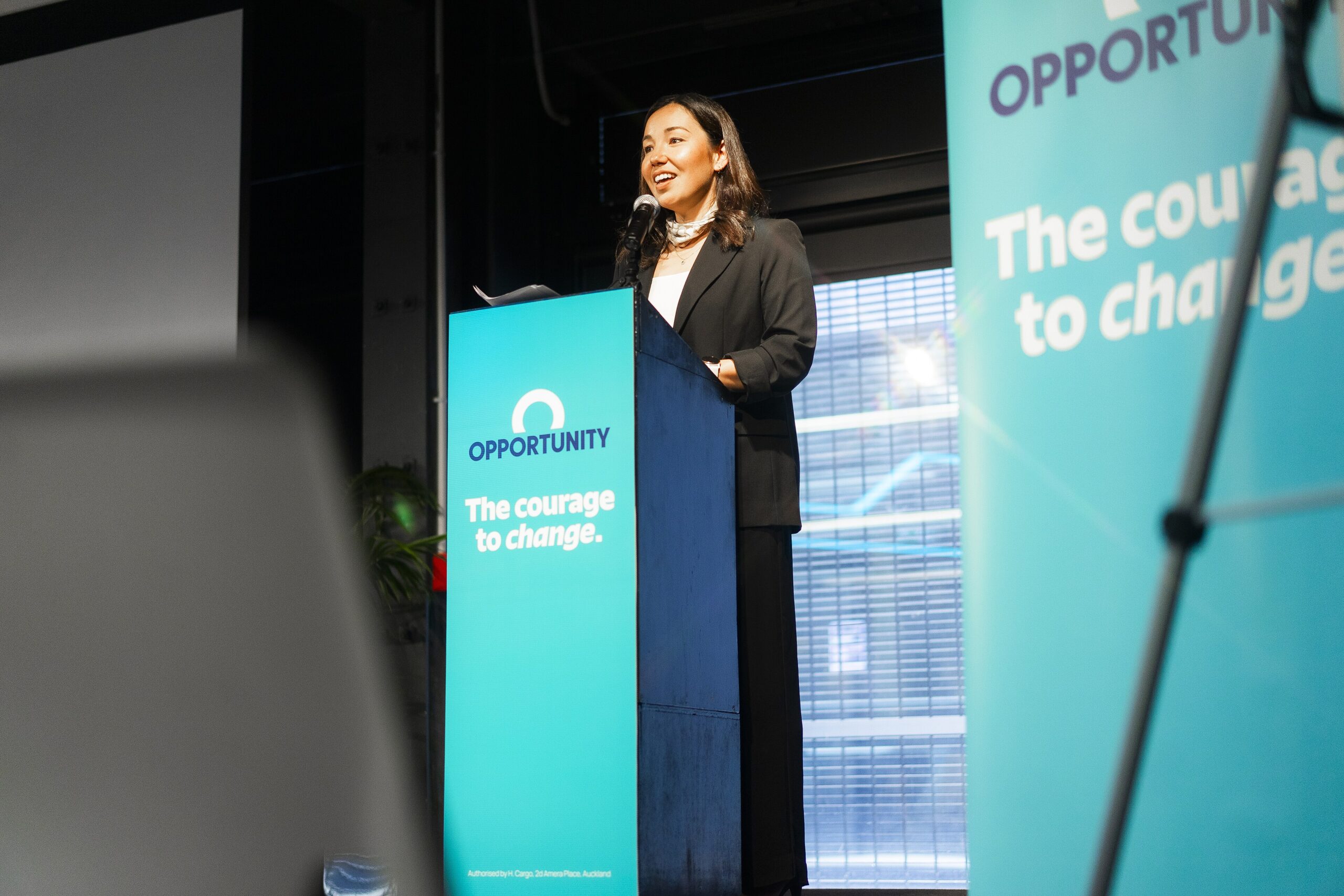
If these arguments make sense, then what does this mean for how to vote in the election? The are two possible pathways to go down, with different options in each. The first pathway is the “vote the Government out” pathway. If your primary concern is to “vote the Government out,” and you don’t care which of the centre-left parties you vote for, then there is a clear answer to this question based on the political polling conducted in September and October 2026. If you want to vote the Government out, you should party vote Labour. Why? Because all of the recent polling indicates that The Opportunity Party (TOP) is likely to hold the balance of power, and because the leaders of this party (Qiulae Wong and Daniel Eb) have said that they will go with whichever of the main parties gets the most votes. As Luca Schulz shows in his analysis of TOP, this party cannot be trusted to side with Labour and the Greens, because even though a majority of its voters lean to the centre-left politically, TOPs backers and leaders would rather see TOP going into coalition with National and ACT than Labour and the Greens. But it will be harder for them to do this if Labour outpolls National.
Giving absolute priority to voting the National-led coalition out also has implications for the Māori electorates. The polling in these electorates indicates clearly that Labour, the Greens, and Te Pāti Māori are in a surprisingly close race, with projections of Labour winning two, Te Pāti Māori four, and the Green Party getting its first Māori electorate MP (Hūhana Lyndon). But if the overriding goal is to vote the Government out, then all of the electorate votes for Labour and Green candidates are wasted votes. For example, Hūhana Lyndon is a popular and effective sitting MP who is likely to retain her seat because she is ranked number seven on the party list. She doesn’t need to win the Te Tai Tokerau electorate, to be sitting in the next parliament.
What’s an Overhang and Why Does it Matter?
The left bloc needs at least four Te Pāti Māori MPs to be elected if Labour is to form a government. This is because of the overhang. An overhang arises when a party wins more seats in parliament than it woud be entitled to on the basis of its share of the party vote. This mainly arises in situations where a party wins more electorate seats than the total number of seats it would be getting if these seats were exclusively determined by the percentage the party received in the party vote. For example, if a party gets one percent of the party vote, and there was no five percent threshold for parliamentary representation, then this party would have only one MP in parliament. But if this party wins four electorates, then it get three more MPs than it is entitled to in terms of the party vote. Under MMP, extra seats are created in parliament to maintain a degree of proportionality for the representation of parties. In this example, the size of parliament would be expanded from 120 to 123 MPs.
This matters because of the vote splitting campaign happening on the right of the political spectrum. This campaign encourages centre-right voters to give their electorate vote to National, while giving their party vote to either ACT or NZ First. If successful, it would result in National (currently projected to win 37 electorate MPs) getting between 3-5 more MPs in the next parliament than it would be entitled to on the basis of its share of the party vote. This would create an overhang favouring the right. Hence the importance of Tē Pāti Māori winning enough electorate MPs to create a counter-balancing overhang on the left.
The Split Your Vote campaign is being funded by New Zealand’s currently richest family – the Mowbray family with a combined wealth of $20 billion. The Mowbray family are big donors to the ACT party and hold far right political views. The campaign is being fronted by Don Brash who is a former hardline neoliberal Reserve Bank Governor who followed this up with stints as leader of the National Party (2003-2006) and then ACT (April to November 2011). He also founded Hobson’s Pledge – an anti-Māori campaign group. The main organisational vehicle for the campaign is the far-right Reality Check Radio (RCR). According to Harry Mowbray the key aims are to keep the left out of government and to discredit MPP in the hope that this will make possible a return to a First-Past-the-Post electoral system that would keep the Greens and Tē Pāti Māori out of parliament.
According to political commentator Bryce Edwards, RCR has spent $424,000 on the campaign, in a clear breach of the rules governing third-party campaigning. Apart from online boosting, this money has funded full-page advertisements in the country’s newspapers. The big problem with this campaign from the perspective of National’s leaders is that, firstly it could lead to its top list MPs, including Chris Bishop, Nicola Willis, and Paul Goldsmith, losing their seats in parliament and, secondly, it increases Labour’s chances of getting the largest share of the party vote. This led National to lodge a complaint with the Electoral Commission over the campaign which then forced Harry Mowbray to take down RCR’s Split the Vote website. Watch this space because the size of the overhangs on the right and the left may be of crucial importance in determining the outcome of the election.
Party Vote Green
The second pathway to voting in election 2026 differs from the first because although it rests on a desire to kick this government out, it does not give overriding priority to this goal. The top priority of the second pathway is to encourage the greatest possible representation in parliament of the parties and MPs who are clearly to the left of Labour, both politically and with regard to policy. Clearly these parties are the Greens and Tē Pāti Māori following the latter’s left turn in the early 2020s. From this perspective a Hipkins-led “Labour as National-lite government” won’t make the changes needed to, among other things, fix the cost-of-living crisis, introduce fees-free tertiary education with a universal living allowance and independent student unions, eliminate homelessness, improve workers’ rights to organise and bargain collectively, including expanding the right to strike, increase funding for sexual violence response agencies, and respond more effectively to the ecological crisis.
Those taking this pathway do care about which parties do well in the election and correspondingly they care about the party composition of a centre-left government. From this perspective, it makes sense to advocate a party vote for the Green Party and an electorate vote for Tē Pāti Māori. This is not the pathway that is statistically most likely to result in a change of government, but it is the pathway most likely to build the overall strength of the left inside and outside of parliament. A high party vote for the Greens will help to put pressure on Chris Hipkins and Labour to adopt more progressive social, economic, and environmental policies than Labour would otherwise.
The Limits of Green Party Reformism
The second pathway outline above could be misinterpreted. If it’s worth voting for the Greens, then why not fully commit by joining the party? The short answer is that the Green Party is reformist to its core. Chloe Swarbrick is an eco-socialist, but she is a reformist eco-socialist. Why does this matter? It matters because it is not the bad policies of this or that government that is causing the ecological crisis, although neoliberal policies have certainly been intensifying it, but rather capitalism that is simultaneously frying the planet and causing a global extinction event with a shocking decline of biodiversity. We can only create a better world that is environmentally sustainable, democratic, egalitarian, and enhances freedom, if we collectively get rid of both capitalism and neoliberalism. Swarbrick, in contrast to former blue-green party co-leader James Shaw, does have critical things to say about both capitalism and neoliberalism, but nonetheless thinks that capitalism can be reformed to make it more humane and environmentally sustainable. Even though it is the case that progressive reforms can make a small but significant difference for the working-class majority of society, such reforms leave in place the underlying causes of the major problems facing humankind in the 21st century. To remove these causes, capitalism needs to be replaced by socialism.
Another problem with the reformism of the Green Party concern its thinking about which forces in society can bring about positive change. The potentially catastrophic consequences of unlimited demographic and economic growth, accelerating non-renewable resource use, and environmental degradation threatens the wellbeing of humanity. Green Party members think that this imbues the ecological ideas and policies of the Greens with universal appeal since everyone “regardless of colour, gender, class, nationality, religious belief, and so on” have a “common interest in uniting together with people of all classes and all political allegiances to counter this mutually shared threat” (Dobson, 2000, 21; see also, Dann, 1999, 325-326). The problem is that with respect to strategic political thinking this universalism is profoundly disabling – militating against analytically clear identification of potential allies and real enemies. For example, the Interim Climate Change Committee, appointed by climate change minister James Shaw in April 2018, was chaired by a corporate lobbyist and had no environmental NGO or union representation. Described by NZ’s most influential non-agricultural business association, Business NZ, as “balanced,” its composition reflects the absence of an accurate class analysis of the socio-political forces on either side of environmental conflict, and a lack of recognition of the disproportionate influence business generally exerts over government policy.
“Class” is a word that is even more conspicuously absent from Green Party discourse than “capitalism.” Although a focus on social inequality is a central theme in the Green’s politics and policy-making, there is no overt class analysis in any of the Greens’ policy documents, despite the incontrovertible fact that class inequality has increased substantially since the mid-1970s, when the post-war long boom collapsed, ushering in a prolonged period of economic stagnation and mass unemployment. Instead, there is the constant use of “our,” “we,” “human.” We hear that it is “our economy,” “our land,” “our resources,” and “we” emit carbon, “we” pollute rivers, “we” have to do better.
The use of these terms is highly problematic. A large majority of the people who live in NZ do not own or control the economy. The economy is most definitely not “our” economy and we certainly don’t own it. The means of production, distribution and exchange are predominately owned by capitalists (including capitalist farmers). NZ society is actually made up of classes – the working class, middle classes, and a capitalist class – and you can’t make sense of what is going on socially and politically unless you recognise this (Roper, 2005, 33-54; 2006). Putting it bluntly, it is the capitalist class that is exploiting the majority, generating high levels of inequality, and that is also exploiting natural resources and causing environmental devastation in the process.
Related to this, the Green Party doesn’t fully appreciate the extent to which real reforms that would benefit workers, women, Māori, Pasifika, the disabled, elderly, members of rainbow communities, and students can only be achieved through mass struggles, involving strikes, occupations, rallies, and protests outside of the parliamentary process. The most important waves of reform in NZ’s history have been carried on high tides of mass working class struggle, such as the reforms introduced by the Liberal Government in the 1890s following the 1890 Maritime Strike, the rise of the Red Federation of Labour from 1908–1913 that led to the formation of the Labour Party in 1916 and, eventually, the election of the First Labour Government in 1935 that introduced the welfare state in the wake of the 1932 Depression Riots. More recently, the highest levels of working-class struggle in NZ’s history combined with Māori protest movements and the women’s liberation movement to pressure the Third Labour Government into introducing major reforms from 1972–1975 (Roper, 2005, 145-149).
Although in the context of favourable economic circumstances and/or when subject to sufficient pressure from working class movements, social democratic governments have introduced reforms that have significantly improved working class life chances in the advanced capitalist societies (as took place during the golden era of Keynesianism from 1945 to 1973), no such government has eliminated the fundamental problems generated by capitalism such as class inequality, persistent gender and ethnic inequalities, unemployment, alienation within the workplace, the destruction of the natural environment, and industrialised military conflict between nations. Furthermore, as Lavelle (2008) and many others have shown, since the collapse of the post-war boom in the mid-1970s social democratic governments across the globe have implemented neoliberal policies, attacking their working-class supporters in the process.
Supporters of the Green Party fail to engage critically and systematically with the historical record of social democratic parties and governments, many of which started out with radical aspirations and publicly stated intentions to implement progressive policies, and which once in office were forced to water down their policies and, since the late 1970s, accommodate themselves to the central pillars of the neoliberal policy regime. More specifically, they tend to ignore rather than explain the historical failures of social democratic governments to implement progressive policies. The reality is that social democratic governments have consistently failed to bring about fundamental change because capitalism is an inherently and unalterably undemocratic form of economic organisation. There is not a single historical or contemporary example of any government extensively democratising economic life in a capitalist society.
This is because real power in capitalist society does not, for the most part, lie in elected governmental assemblies; it is heavily concentrated in the network of economic and political organisations of the capitalist class. Within the state apparatus itself power is heavily concentrated in cabinet and its key advisory bodies – central banks, treasuries and other similar financial ministries. Furthermore, capitalism generates massive inequalities in the distribution of income and wealth, which means that capitalists can generally, but not always, exert more influence over the formation of policy by governments than environmentalists, trade unions or progressive social movements (Lindblom, 1977; Roper, 2005, 88-90; 2006, 165-167; 2013, 236-239).
Governments, regardless of whether they are centre-right or centre-left, head the state in capitalist society. All capitalist states are constrained by financial dependence on revenue gathered from the taxation of incomes generated in the process of capital accumulation. Because state power is dependent on capital accumulation, every government in a capitalist society must promote conditions conducive to the continuation of capital accumulation. These domestic constraints have been compounded by the growing internationalisation of the economic system. In short, the particular kind of state that exists in NZ, a specifically liberal democratic state, is inextricably linked to, and fundamentally committed to maintaining, capitalism. Therefore, it is receptive to business lobbying and generally will not implement progressive reforms that are fundamentally contrary to capitalist interests unless placed under a lot of pressure to do so by workers, students, and oppressed peoples mobilising in unions, campaigns, and social movements.
Finally, participation in the parliamentary system itself, together with the financial and material benefits that this provides, also shapes the intellectual and political development of the Green Party and acts to distance the parliamentary leadership from active involvement in social movements, political protests and campaigns, and trade union struggles outside the parliamentary system.
Party Vote Green but Join the Socialists
The historical and recent experiences of reformist governments clearly show that there is no parliamentary road to a better society. If you want to build the struggle for a more affordable cost-of-living, then a better way to invest your time and energy is to join the ISO. Although the ISO is still a very small political organisation, it has a much better understanding than the Green Party of what is wrong with the world, why it is like this, how we can change it for the better, and how to build a feasible and desirable socialist alternative to a capitalism and neoliberalism.
Sources and Further Reading
Barber, S. (2019). Māori Marx: Some provisional materials. Counter-Futures, 8, 43–71.
Dann, C. (1999). ‘From earth’s last islands: The origins of green politics.’ PhD thesis, Lincoln University.
Dobson, A. (2000). Green political thought. 3rd edn. Routledge.
Edwards, B. (2026). ‘Democracy Briefing: Who is paying to engineer the election overhang?’ The Democracy Project, Wellington.
Lindblom, C. (1977). Politics and Markets. Basic Books.
Roper, B. (2005). Roper, B.S. Prosperity for all? Economic, social and political change in NZ since 1935. Thomson Learning.
Roper, B. (2006). Business political activity in NZ from 1990 to 2005. Kotuitui: NZ Journal of Social Sciences Online 1: 161-183.
Roper, B. (2017). ‘Election 2017: Why vote, and why vote left?’ At https://iso.org.nz/2017/09/14/election-2017-why-vote-and-why-vote-left/
Roper, B. (2023). ‘The Climate Change Policies of the Green Party of Aotearoa/New Zealand: An Eco-Socialist Analysis and Critical Evaluation’. In New Zealand Sociology, Vol.38, no.2, pp.17-34.