It is not the best or most popular ideas that hold the most sway in society, but rather the ideas of those who have the most power. We know the state machinery of capitalist nations is built to serve the ruling capitalist class and perpetuate their ideas. This doesn’t mean that there is no room for contestation. What it means is that any alternative vision for the world needs to be backed up by organisation if it is to survive and spread.
Those defending the capitalist order are well-organised. Through lobby organisations, international military alliances, multinational corporations, think-tanks, and privatised media, capitalists and their allies collaborate to maximise exploitation and defend their dominance. In recent years, reactionary right-wing forces have effectively used a range of tools – from media distortion to organised violence – to advance their political projects. There has been comparatively little progress made by people who champion reforms that benefit the working class, let alone those who seek to challenge the capitalist system as a whole. Popular movements for liberation have repeatedly emerged, but too often have been crushed or co-opted, followed by even harsher regimes.
The situation is not hopeless. The working class has the power to resist state repression, beat back the Right, and overturn capitalism. What is needed is collective organisation.
Working Class Organising
The most fundamental form of working-class organisation is the trade union. A lone worker is relatively powerless in their workplace, but when we band together that power balance shifts. Collectively, we can demonstrate our true power: we are the ones who make society run. If we withdraw our labour by going on strike, we can make it stop, or at least deprive the bosses of profit.
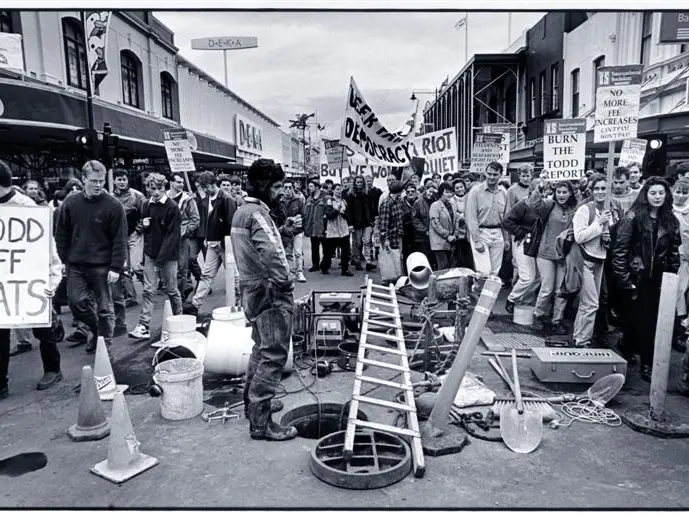
Workers participate in other forms of organising too, taking part in protest and resistance movements. Truly powerful movements are born when industrial action is brought together with wider social and political movements. We saw a glimpse of this in Italy, where workers struck against the onslaught in Gaza.
Movements of resistance often start organically, but it takes deliberate organisation to sustain them and make them effective. Long-term campaigns require ongoing activity. Sustained actions such as strikes and occupations require enormous practical organisation to be maintained. In moments of mass uprising, normal activities come to a halt and new forums and bodies emerge – workers’ councils and neighbourhood committees – which channel workers’ organisational capacity into sustaining and defending the movement.
While other political forces in society focus on how to effectively lobby those in power, or how to move their representatives higher in the halls of power, revolutionary socialists focus on action that builds workers’ capacity to self-organise.
Political Organisation
The importance of organisation isn’t just about practical matters, but also about ideas and political programmes. Organisational structures provide the framework for participants to debate and clarify ideas, to make and implement democratic decisions. When they are organised around a clear vision for the future, organisations can make that vision a reality.
Understandably wary of hierarchy, progressive social movements have sometimes sought to avoid it through structurelessness. In his book If We Burn, journalist Vincent Bevins interviews activists from recent popular uprisings. When asked why they thought their movements had ended in greater repression, rather than positive change, a clear theme emerged: there is no such thing as a political vacuum. These movements witness first-hand the devastating consequences of “political vacuums” being filled by reactionary political forces who were able to out-flank progressive actors organisationally, or to appoint themselves as representatives of the movement in negotiations with the ruling powers.
Uprisings and upheavals will not automatically result in positive change for the working class – unless it is organised politically to put forward their own vision, over the vision of other forces. Unless structures exist for workers to resolve issues among themselves, critical questions such as how to dismantle sexism or uphold Indigenous rights will remain unresolved, or will be resolved in bigoted directions. Unless workers feel capable of ruling themselves, they will be ruled.
Socialist Organising
This is why we are not just for organisation, but for political organisations. Bodies such as trade unions, important as they are, are ultimately defensive. They operate to defend workers’ rights within the capitalist system, not to challenge it. The working class needs independent political organising to advance our cause and, ultimately, to take the running of society into our own hands. The ultimate vessel for this is the mass working-class party.
The work of organisations like the ISO today is to lay the groundwork for such a party by bringing together student and worker activists, refining political vision and strategy, and forging the connections needed to build working-class power. This work is important not just for tomorrow, but for right now. Working class and student organising is urgently needed to win gains for the working class and the oppressed, and to combat the rise of the far Right and the rightward drift of mainstream politics. We invite you to join us.
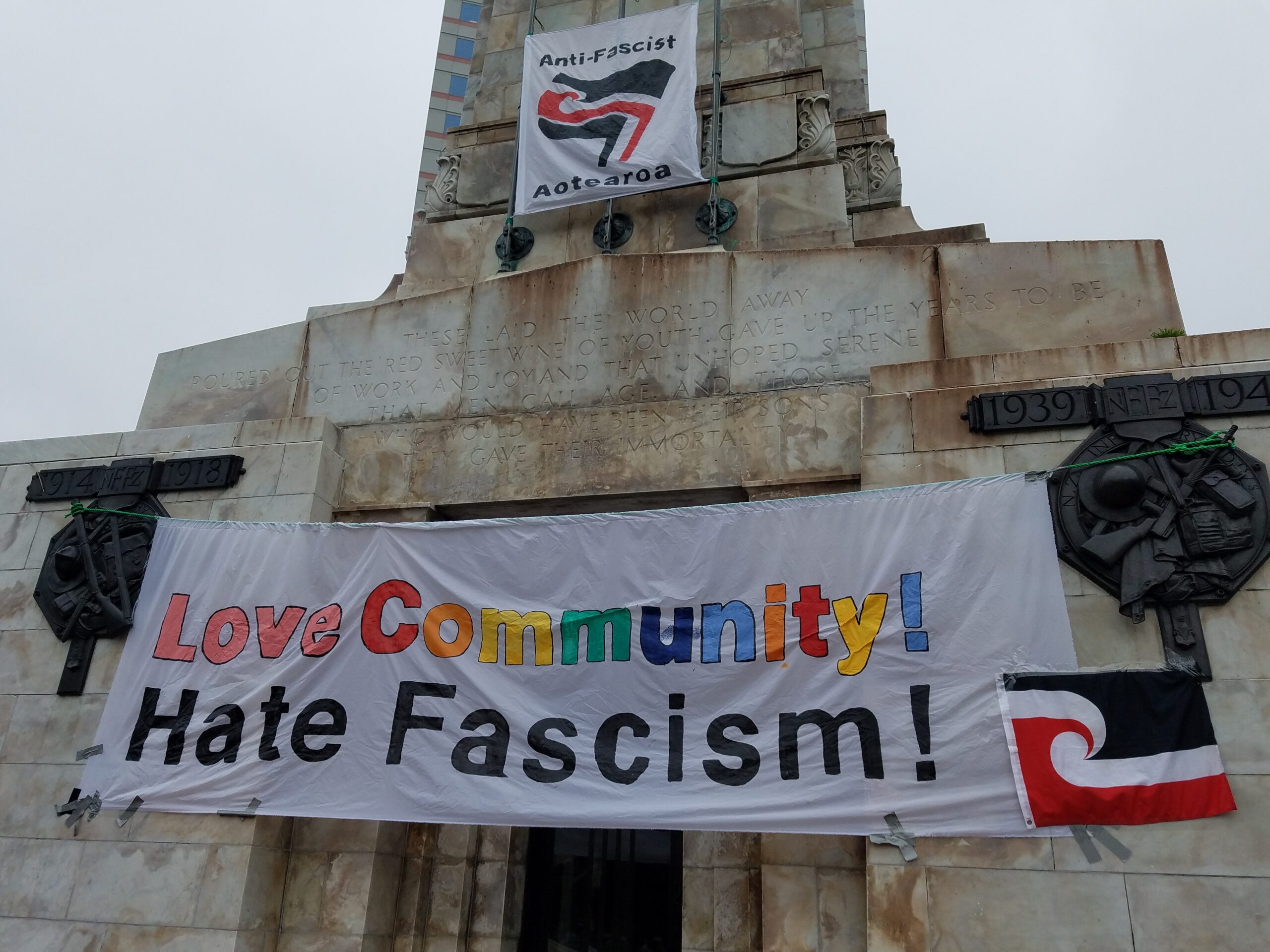
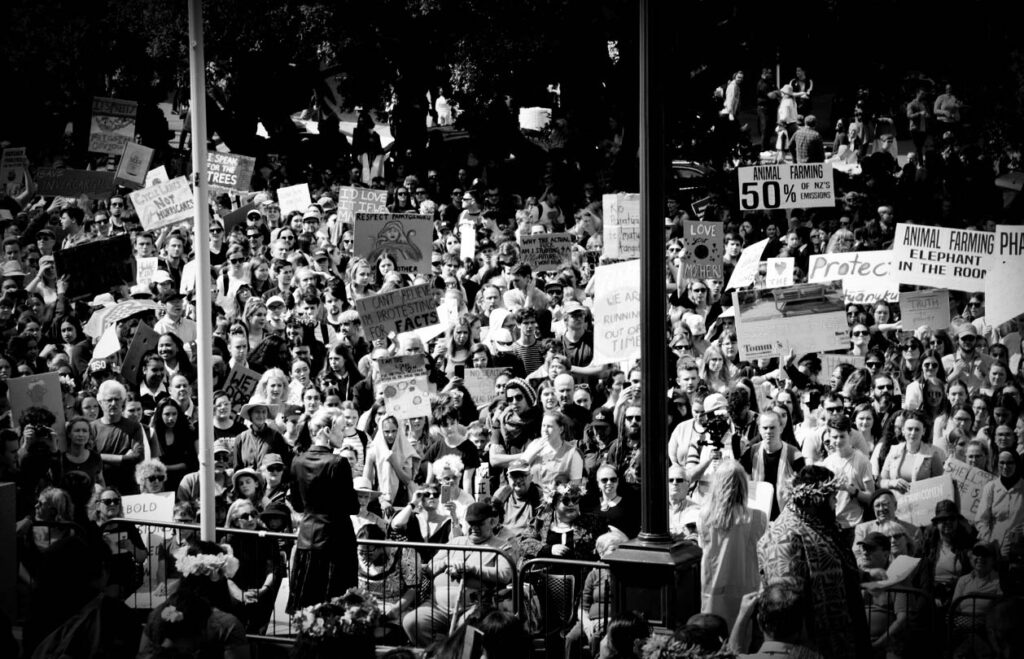
Banner image: New Zealand Parliament Climate Strike Protest, 2019. Credit: Nevada Halbert, via wikimedia commons.