The word “revolution” to many conjures images of peasants holding pitchforks, fires spontaneously burning on the streets, or someone being beheaded on a guillotine. For some, listening to alternative music or following a raw fruit diet can be described as revolutionary. But what exactly do revolutionary socialists mean by a revolution, and how can such a thing come about?
Revolutions have happened since the beginning of class society thousands of years ago. Class society was formed when one section of society, the ruling class, gained control over resources or tools necessary for survival. The ruling class could then leverage this control over resources to extract labour from the oppressed class (everyone else) to advance their own wealth and political power. The interests of the ruling and oppressed classes are inherently opposed. A revolution is a material realisation of power switching to the hands of the oppressed class, as they overthrow the systems that keep them downtrodden. There is no room within the system of oppression for such a transformation of power to occur. The oppressed class cannot liberate itself through the institutions and channels provided to it by the oppressors. Instead, the power of the ruling class must be shattered through mass mobilisations of people with a shared class interest, carrying the power of collective action to actively challenge their oppressors and create the structures needed to recreate society anew.
Prior to capitalism, class society produced the conditions for peasant revolutions against landlords and slave revolutions against masters. As conditions of class society changed with the development of capitalism, bourgeois revolutions such as the 1789 French Revolution were launched against the aristocracy, setting the stage for rapid capitalist development and the spread of capitalism across the globe. The integral class conflict under capitalism is between the working class and the bourgeoisie. The working class are unable to make a living except by selling their labour to capitalists, who use their pre-existing wealth to own all of the infrastructure required for production. Capitalists leverage their ownership of this infrastructure to scoop up all the profits produced by the hard work of those they employ. Capitalism concentrates workers in workplaces, where ideas can be disseminated, and organising can take place. The power of the working class lies in their ability to withhold their labour, to strike. Workers can use their collective power to prevent the flow of profit to the ruling class, and can use this threat of lost profit to bend the owners to their will. In taking strike action, workers threaten the power structures of capitalist society, showing that the ruling class’s power is limited and reliant on workers to function. But strikes do not on their own amount to a revolution. A revolution cannot be scattered around individual workplaces – it must make it out onto the streets, to seize the apparatuses of bourgeois power and replace them.
It is important for revolutionaries to understand that our work is not aimed at bringing about a revolution, choosing when it will be or accelerating our society towards it. Revolutions are brought about by the mass of workers in response to social and economic crises produced by the instability of capitalist competition. In such crises, the working class have the opportunity to see through the blinding propaganda of the ruling class and realise that their class interests lie in revolution.
The working class is the only class which has the ability to liberate themselves and to bring along the rest of oppressed working people with them. This is a result of their relationship to the means of production and their organisation in workplaces, which gives them a unique ability to threaten the ruling class by withdrawing their labour. The working class must first take control over their workplaces. In order to seize power from the ruling class, the working class must form its own leadership that can challenge the assumed authority of the bourgeois state. One possible model for this power is soviets, or workers’ councils. Soviets form the basis of a workers’ democracy, comprised of elected delegates from workplaces in a given area with the purpose of making strategic decisions regarding strike action and ultimately revolution. The power of the soviets must grow to contest that of the bourgeois state. The bourgeois state (and the fellow bourgeois states around the world) will throw all of its might behind crushing the soviets. The workers’ movement must therefore throw all of its might behind crushing the bourgeois state.
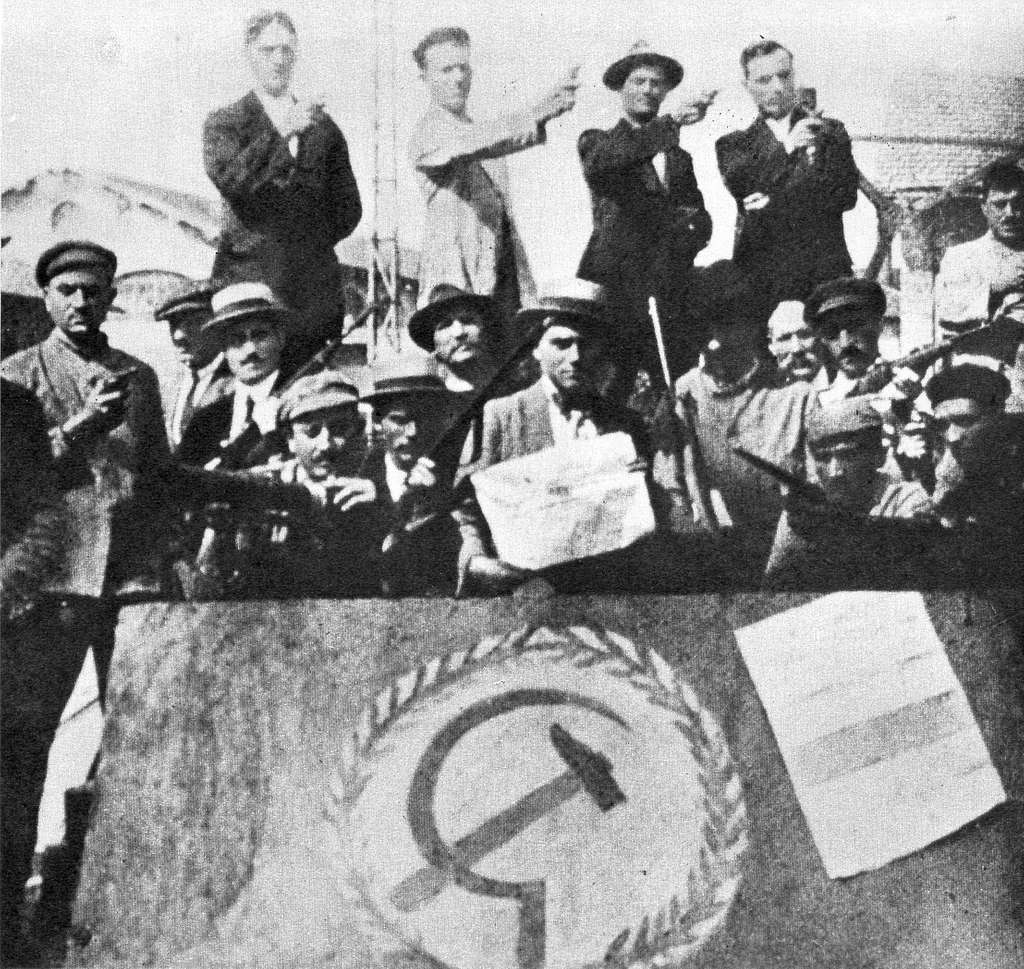
Revolutionary socialists sometimes get a reputation by reformists of being violence-hungry rifle-wielders ready to jump at any opportunity to bring war to the streets. But violence excites none of us, and the bloody cost of revolutions does not go unrecognised. The reality of the situation, however, is that the current capitalist system is built upon violence. War and genocide are inevitable extensions of global-scale capitalist competition, which sees the deaths of millions for the profits of a few. The ruling class has no qualms when it comes to violently repressing threats to its existence; the police force, the courts and the armies all exist for use by the ruling class to repress and violently squash working-class power. Time and time again the ruling class has demonstrated its willingness to fire on peaceful protests, to assassinate political leaders, and to execute political prisoners. There will come a time when violence is necessary to protect ourselves against the violence of the bourgeois state. This will only be in a time of revolution, when there is a broad class-conscious political movement against the ruling class and a mass revolutionary party strategic, disciplined, and ready to lead it.
The political direction a revolution will take depends on the balance of political forces involved. It is not only socialists who pose a revolutionary alternative to the ruling class and capitalist system. Socialists, anarchists, and even fascists can draw in masses to their political agenda. The difference is that revolutionary socialists offer a revolutionary strategy that can result in the liberation of all working people.
Revolutions are inevitable, but successful revolutions that liberate the working class from the shackles of capitalism certainly are not. A disciplined revolutionary socialist party, led by an experienced cadre with a deep understanding of Marxist revolutionary theory, is critical to a revolution’s success in liberating the working class. This means a group of revolutionaries dedicated to the scientific study of the foundational theories of Marxism, rigorous analysis of the successes and failures of past revolutions, and the ability to understand and adapt to changing conditions. A movement with the most vigour, passion, self-sacrifice, and heroism will not be able to take on the challenge of a revolution if its politics are confused or misdirected. On the other hand, even the most comprehensive and well-thought-through revolutionary theory is useless if such a party is unable to bring with it the broad masses of working people. This can only come from the application of such theory, from a party standing by the working class in struggle and proving through experience it has the political resolve and theory needed to lead them to victory. We are not currently in a position where the ideas of revolutionary socialism can be tested and proved legitimate to the working masses, but we can build the foundations: a cadre organisation well-versed in Marxist theory, with a membership directly experienced in struggle against the ruling class where it does occur. This means as conditions change and opportunities arise, we will be best positioned to take them up.
Revolution is the only way that the violence of capitalism can be overturned. The ruling bourgeois class will never give up their power willingly, as it will never be in their material interests to do so. Being a revolutionary socialist doesn’t mean that we think reforms have no use or cannot substantially improve people’s lives. Reforms such as the civil rights movement and the legalisation of homosexuality made strides in liberating people from oppressions. Worker rights and strike reforms can significantly improve workers’ ability to organise. Reforms on their own, however, will never threaten the underlying structure of exploitation and oppression. Any wins made with capitalism still in place can be taken away when governments change. At the moment, we are seeing the pullback of trans rights, abortion rights, and wins for the workers’ movement across the world. It is critical we fight back against these attacks. But we must fight back with an understanding that making such changes is not the end goal, but rather just the beginning of building a movement capable of challenging the ruling class and creating a new kind of society for the good of all.
Revolutions are the locomotives of history. Revolutions are difficult; they are bloody, and no good outcome is guaranteed. Successful revolutions must be built on theory and experience that can only be built up by years of arduous and demanding work. But faced with a world built fundamentally upon the exploitation and oppression of the masses, a world of hunger, war, genocide, and poverty, revolutions stand as our only hope of real and permanent change to a world built for all of us.
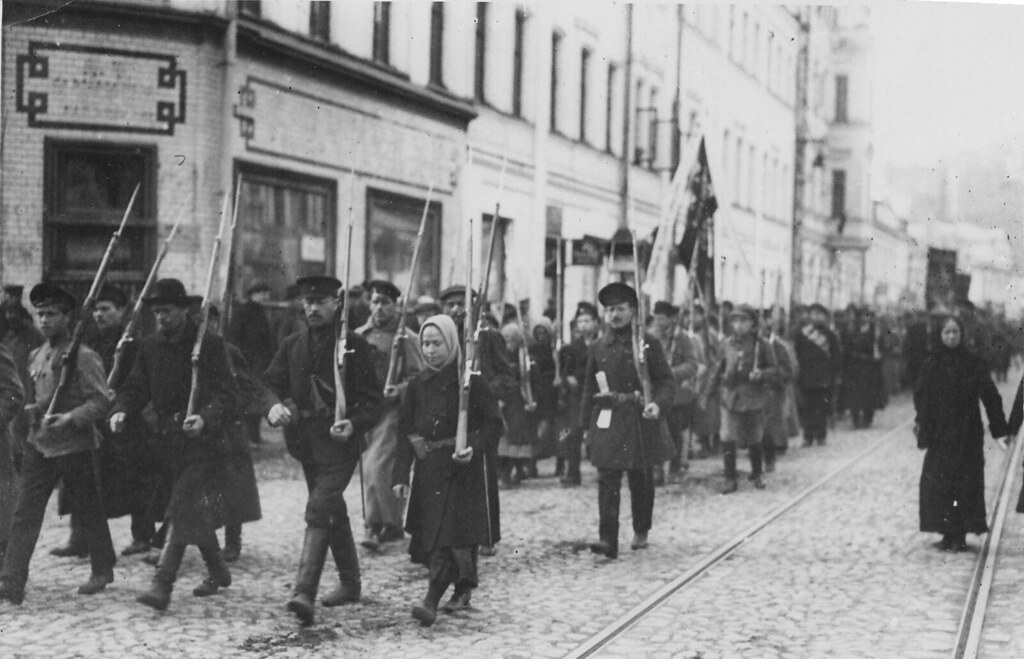
Russian Revolution: Bolsheviks in Moscow. Red Guard. Errusiar Iraultza: Boltxebikeak Moskun. CC BY-ND 2.0.