The New Zealand Labour Party has the leadership of New Zealand’s working class. Five trade unions are affiliated to the party, including E tū, the largest private sector union. Labour has been polling for some time now as the most popular political party, and has been either the largest party in parliament or the second largest since the 1920s, with their greatest support base being the working class. Further, the party is likely the largest in the country in terms of members. That said, despite one of the five formal objectives of the party being, as stated in their constitution and website, “to educate the public in the principles and objectives of democratic socialism and economic and social co-operation,” Labour is the second party of New Zealand capitalism and imperialism. It has, at its best, tinkered around the edges of the exploitative capitalist system, and at worst, has carried out some of the harshest attacks on the working class and the oppressed in this country’s history. To understand this unfortunate state of affairs, this article will go through Labour’s early past up to the present day, and make the case for an alternative.
Labour’s early history explains its connections to the working class today. The modern Labour Party was founded in 1916 as a combination of moderate and more radical elements of the workers’ movement, notably the federation of trade unions called the New Zealand Federation of Labour, known as the “red feds” for their radicalism. In 1919, the party adopted as one of its formal objectives the “socialisation of the means of production, distribution and exchange.” However, it takes more than rhetoric to make a socialist party, and it did not take long for Labour to begin to shed its radical factions and policy positions in the interests of electoralism.
The First Labour Government came to power in 1935 and implemented what could be described as a Keynesian social democratic programme, making some meaningful improvements but never threatening the fundamentally exploitative structures of capitalism. There were three Labour governments between 1935 and 1984, all of which could be described as Keynesian social democratic.
The Fourth Labour Government (1984–1990) brought neoliberalism to New Zealand. The party implemented a massive transfer of the tax burden from the rich to the working class and the poor. They halved taxes for the highest earners from 66 percent to 33 percent and slashed the top corporation tax rate from 45–50 percent to a flat 33 percent. To offset these massive tax cuts for the rich and corporations, the Labour government introduced GST – a regressive tax disproportionately affecting workers and the poor – at 10 percent and then increased it to 12.5 percent. The party also embarked on a massive campaign of privatising and corporatising state assets and services, as well as deregulating the private sector. This resulted in mass layoffs across the country. Unemployment skyrocketed to over 11 percent. Māori, being largely employed in the affected industries, were hardest hit by the reforms, with an unemployment rate reaching 25 percent. Labour’s neoliberal reforms triggered the longest recession in New Zealand’s post-war era.
The Fifth Labour Government (1999–2008), led by Helen Clark, originally governed in coalition with the Alliance Party, a coalition of left parties that formed in opposition to Labour’s neoliberal reforms. The Alliance was led by Jim Anderton of the New Labour Party, which split from Labour during their neoliberal reforms. The Alliance effectively collapsed in 2002, but Jim Anderton’s new Progressive Party made it to parliament alone and formed another coalition with Labour. Labour also relied on the support of the Greens, New Zealand First, and United Future. This Labour government marked something of a return to more traditional social democratic governing, but did little to reverse the neoliberal reforms of the Fourth Labour Government or the subsequent National government. The Fifth Labour government also had a fraught relationship with Māori resulting from the foreshore and seabed raupatu.
The last Labour government (2017–2023), led by Jacinda Ardern and then Chris Hipkins, had its first term in coalition with New Zealand First (with the support of the Green Party) but in 2020 won the first outright majority in MMP history, needing no other party to govern. This Labour government, especially under the leadership of Ardern, gained popularity and admiration through its responses to crises such as the 2019 Christchurch mosque shooting and the COVID-19 pandemic.
However, the Sixth Labour Government governed as neoliberal social democrats, refusing to go beyond tinkering. They campaigned on eliminating child poverty, building 100,000 “affordable” (not public) houses, three years’ fees free for tertiary students, and many other things. However, out of fear of incurring the wrath of the capitalist class and losing the support of the moderate voter, they refused to carry out the progressive economic reforms needed to keep their promises and deliver meaningful change. Ardern thoroughly ruled out ever implementing a capital gains tax, let alone a wealth tax.
Failing to deliver on their commitments was by no means the only objectionable decision of the Labour Party. Labour had, in line with past governments, delivered real-terms funding cuts to the tertiary education sector, resulting in mass layoffs and course cuts across New Zealand’s tertiary institutions. In 2023, Labour, facing a resurgent right in the form of National, ACT, and New Zealand First rising on the backs of huge donations from New Zealand’s capitalist class, folded like a wet paper towel and moved to the right. They announced $8 billion in cuts to the public service and capitulated to the right’s “tough on crime” rhetoric by taking an even more punitive approach to crime through announcing the training of hundreds more frontline police, enhanced police powers, and creating new and harsh charges for crimes of poverty. Labour lost the 2023 election.
The Labour Party drew all the wrong lessons from its defeat. They say they did too much too quickly and failed to explain what they were doing to the public. This is utter nonsense. They abandoned their base in a doomed search for right-wing voters and failed to inspire people to turn out and vote at all, let alone vote for them. Labour’s nonsense conclusions from their 2023 defeat has resulted in them being a feeble and ineffective opposition in the face of the present hard-right government. At the time of writing, their line of promise little and expect less has left them unwilling to even commit to reversing much of the coalition’s attacks. Take, for example, first year fees free and the landlord tax cuts. Labour is also a partner to the NZ-US imperialist relationship, having supported the FBI setting up an office here and offering only semantics in response to the coalition’s massive boost to military spending, rendering them incapable of a coherent opposition to the right’s gross foreign policy decisions.
Socialism is the idea that capitalism should be abolished and the working class should democratically and collectively own and control society, organising it in a collaborative, not competitive way. Labour, despite their constitution, has never governed as anything better than Keynesian social democrats, managing the worst aspects of capitalism. For over four decades, Labour has operated as neoliberal social democrats, never going beyond light tinkering with the system and at times launching brutal attacks on the working class in the interests of maintaining capitalism. In short, Labour is loyal to careerism and electoralism far more so than they are to the idea of representing the working class, and if that means doing the bidding of the rich and powerful, then they will do so.
Socialists don’t criticise Labour just for the sake of it: we believe that we desperately need an alternative, a mass socialist workers’ party capable of winning the working class to its side and leading them in getting rid of the capitalist system in its entirety and taking power for themselves. A party not focused wholly on the capitalist parliament but building the strength, confidence, and militancy of the working class through unions and on the streets. Such a party is not a near prospect in New Zealand, but this is why it is so important for socialists to devote time and energy to the building of such a party. Laying the foundations for a mass revolutionary socialist party is the project of the ISO. If you, like us, are sick of the treachery of Labour and the other liberal forces of the left, then take action, get involved with the ISO, and help build the socialist alternative.
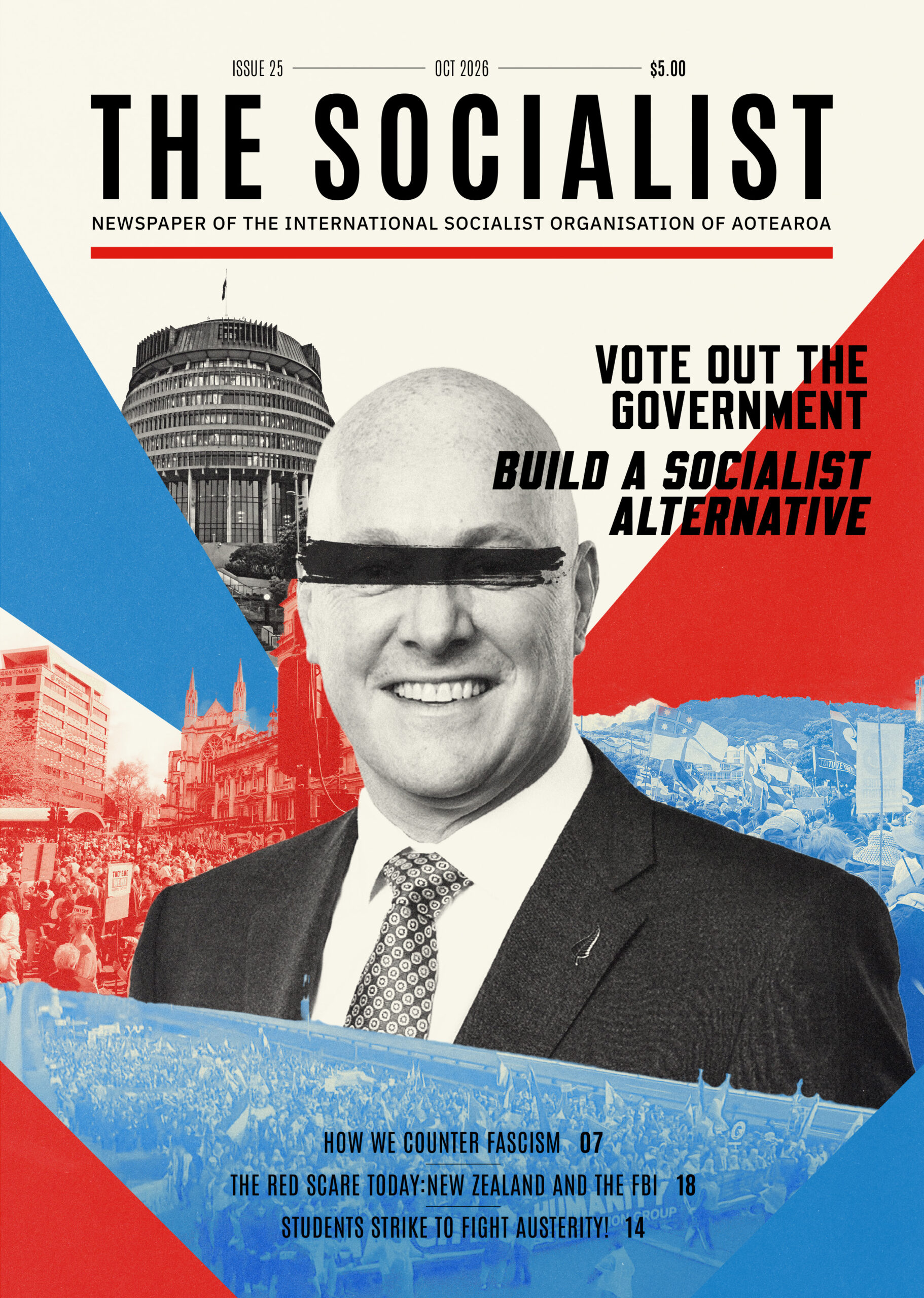
Banner Image: Government House, Department of the Prime Minister and Cabinet, © Crown Copyright, Attribution 4.0 International (CC BY 4.0). Edited by the ISO.