On July 16, US secretary of state Marco Rubio gathered officials from over 65 countries – including New Zealand – to launch an “unprecedented global offensive against the transnational threat of Radical Left terrorism.” Warning of a supposed upsurge in left-wing violence, Rubio conjured images of a vast international network spreading propaganda, technology, training materials, and finances.
The offensive builds on the foundation laid out in president Trump’s National Security Presidential Memorandum/NSPM-7 “Countering Domestic Terrorism and Organized Political Violence,” published in September of last year. This memorandum identifies “anti-capitalism” and “hostility towards those who hold traditional American views on family, religion, and morality” as potential indicators of terrorist activity.
As a result of the memorandum, top Justice Department officials have been pushing federal agents to prosecute those demonstrating against Immigration and Customs Enforcement (ICE) officers. Already a group of Texas protestors have been sentenced to at least 50 years in prison, and more are facing charges for simply facilitating meetings while having alleged ties to “Antifa.”
It’s worth considering, then, what this meeting means for the left in Aotearoa. The Trump Administration’s press release indicates “international partners are now coordinating” to shut down so-called “Antifa’s” “safe havens, propaganda channels, and cross-border operations.”
Let’s note four important points about this statement:
1) “Antifa,” as we know, is not an actual organisation but – for the American right – a signifier which stands in for almost any instance of political discomfort. This includes Black Lives Matter protesters, January 6th rioters, and communities opposing ICE. Using a deliberately vague label allows authorities to target a broad range of groups without the need for detailed evidence.
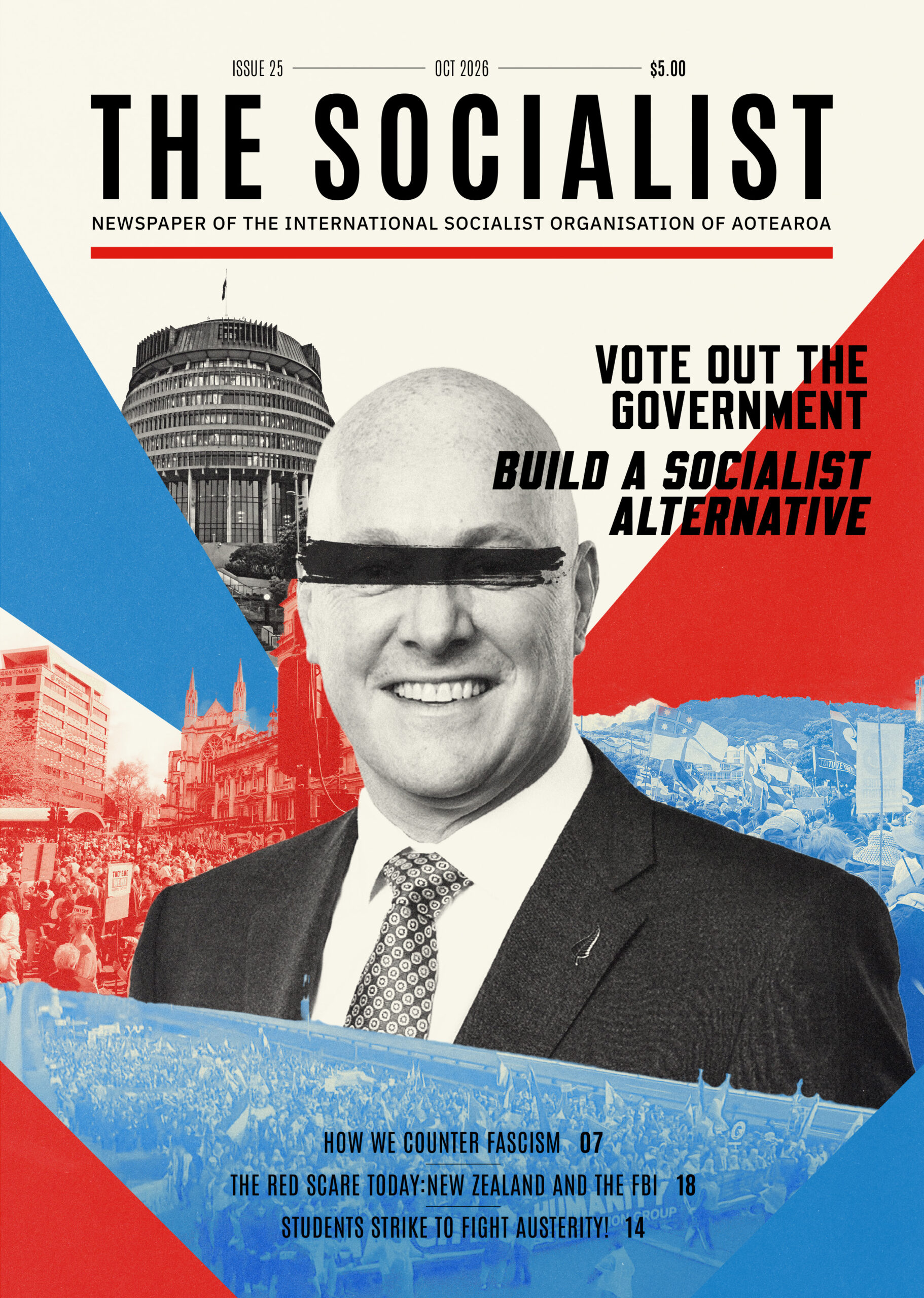
2) The FBI is one of the main bodies conducting investigations into left-wing movements, having now set up an NSPM-7 Joint Mission Center alongside the IRS. In July last year, the FBI announced the opening of a permanent office in Wellington to “investigate and disrupt a wide range of threats and criminal activities including terrorism” – a category which is now officially associated with “anti-capitalism.”
3) Also in July last year, the New Zealand government secretly considered changes to the Terrorism Suppression Act aimed at expanding “the full range of behaviours or activities of concern that are part of the contemporary threat from terrorism.”
4) Our current coalition government has friendly ties with the Trump Administration, welcoming FBI director Kash Patel to several meetings, cuddling up to then-secretary of Homeland Security Kristi Noem, presenting a custom-made All Blacks jersey to Marco Rubio, and following Washington’s line on foreign policy, from denying Palestine state recognition to legitimising airstrikes on Iran. The Labour Party doesn’t provide much hope either, approving of New Zealand’s “strong relationship with the FBI” and their collaboration with the police.
It might be tempting to apply a crude deductive logic here: that the New Zealand police are going to work with international agencies to surveil leftists, or that they will start arresting organisers on the grounds of terrorist affiliation. But what would that reveal that isn’t happening – publicly – already?
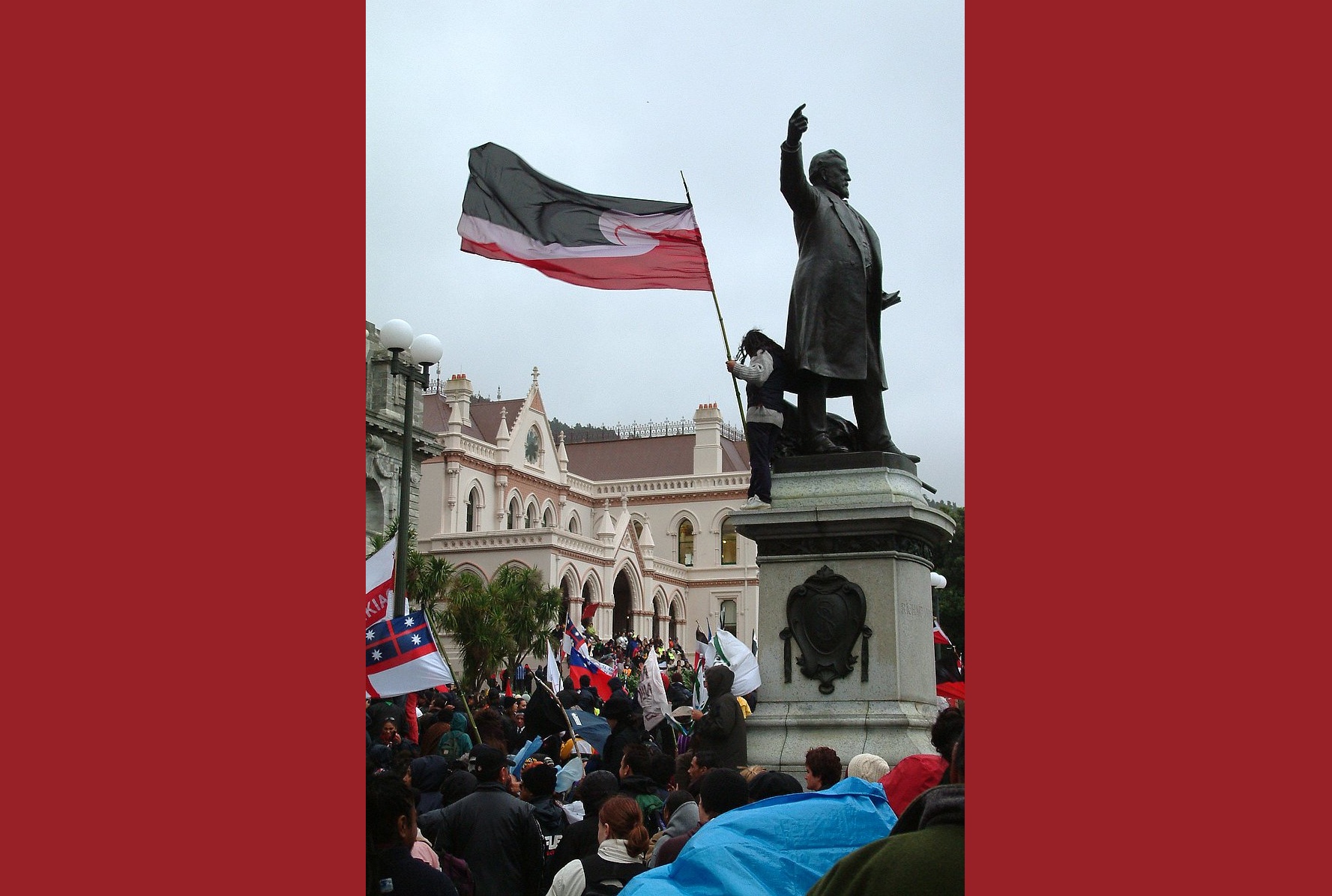
To pick a topical example, New Zealand police spied on British national Helen Steel and her family at the behest of Scotland Yard due to her campaigning with progressive movements in the UK in December 2002. Five years later they would attempt to arrest Māori resistance activists, peace advocates, and environmentalists after raiding their homes under bogus applications of the Terrorism Suppression Act. These are far from the only examples of the state cracking down on leftists in our long history of Red Scares.
This is a history frequently mistaken, often calling up the US in the 1940s and 50s: senator McCarthy and the House Un-American Activities Committee (HUAC) hearings. While this was a decisive event in a repressive history, it too often stands in for the history itself, preventing us from confronting anticommunist reaction as a constitutive and uninterrupted part of the capitalist enterprise, rather than a singular, almost incidental, affair. We are so familiar with McCarthy’s “second” Red Scare we often forget there was even a “first,” and many prior to that. The opening to the Communist Manifesto, after all, invokes the spectre of communism “haunting” Europe in 1848.
The key here is to recognise both the continuity of anticommunist repression and the new formations now taking shape. As the above examples demonstrate, Red Scare panics tend to spike during times of heightened imperial conflict, such as World War I, the Cold War, and the so-called “War on Terror.”
In this context, anticommunism serves two main functions. The first is to chill dissent towards imperial ambitions. Labelling groups as seditious or as “security threats” often gives states authority to use discretionary powers against dissidents, and pushes international working-class solidarity outside the realm of acceptable speech.
The second is to metabolise racist hostility as a response to a universal threat. It is no accident that anticommunist anxiety maps onto established lines of racial prejudice. Early concerns raised about the left in Aotearoa came with European reports on Māori communities, such as MP William Rolleston reporting to parliament on ways to break through “the communism of the Māori pā” in 1865. Later iterations saw Winston Churchill decrying socialist projects as “schemes of the International Jews” and senator McCarthy pushing back a nascent civil rights movement. Today’s Red Scare arrives in the form of “cultural Marxism” (a widespread antisemitic conspiracy theory), and “Antifa” operatives supposedly driving the Black Lives Matter movement and anti-ICE protests.
It is clear that we are now heading into a new phase of imperial conflict, with a global military buildup anticipating a confrontation between the US and China. As New Zealand binds itself closer to the US through investment and military partnerships, it will receive pressure to bring policy and fiscal settings into alignment. A key manifestation of this pressure is New Zealand’s $12 billion commitment to defence last year, addressing Washington’s demands for allies to drastically increase military spending. Likewise, we should expect to see further legislative attacks on dissent from the US arrive recomposed on our shores.
Alongside this, anti-left sentiment is being pushed increasingly into the mainstream, particularly by NZ First. In his State of the Nation speech this year, Winston Peters targeted the Green Party as “self-confessed Marxists” and the Labour Party’s “cultural Marxism,” vowing to fight against the “insipid cancerous spread of the leftwing, woke agenda.” In early August he called for the arrest of migrant rights activists over a mock trial and subsequent satirical execution performance.
Looking elsewhere internationally, we can already see Red Scare tactics being weaponised against the Palestine solidarity movement, with the UK banning support for Palestine Action and Queensland outlawing the chant “From the river to the sea, Palestine will be free.” Similar efforts here to smear pro-Palestine academics and groups as antisemitic have largely failed, though the attacks continue.
How should the left respond? It may be appealing to elevate our privacy, speak more quietly about our radical affiliations, or black bloc our protests. For vulnerable communities, such as migrants, this is often the most sensible response. But for those of us who can afford to carry the risk, we only risk inviting further surveillance and suppression by “obeying in advance.” Too much privacy turns potential activists away from meetings and protest spaces, and disaffiliation lowers our collective confidence. In this environment the already narrow world of the left grows even smaller, but this is the time when we need mass organised resistance more than ever.
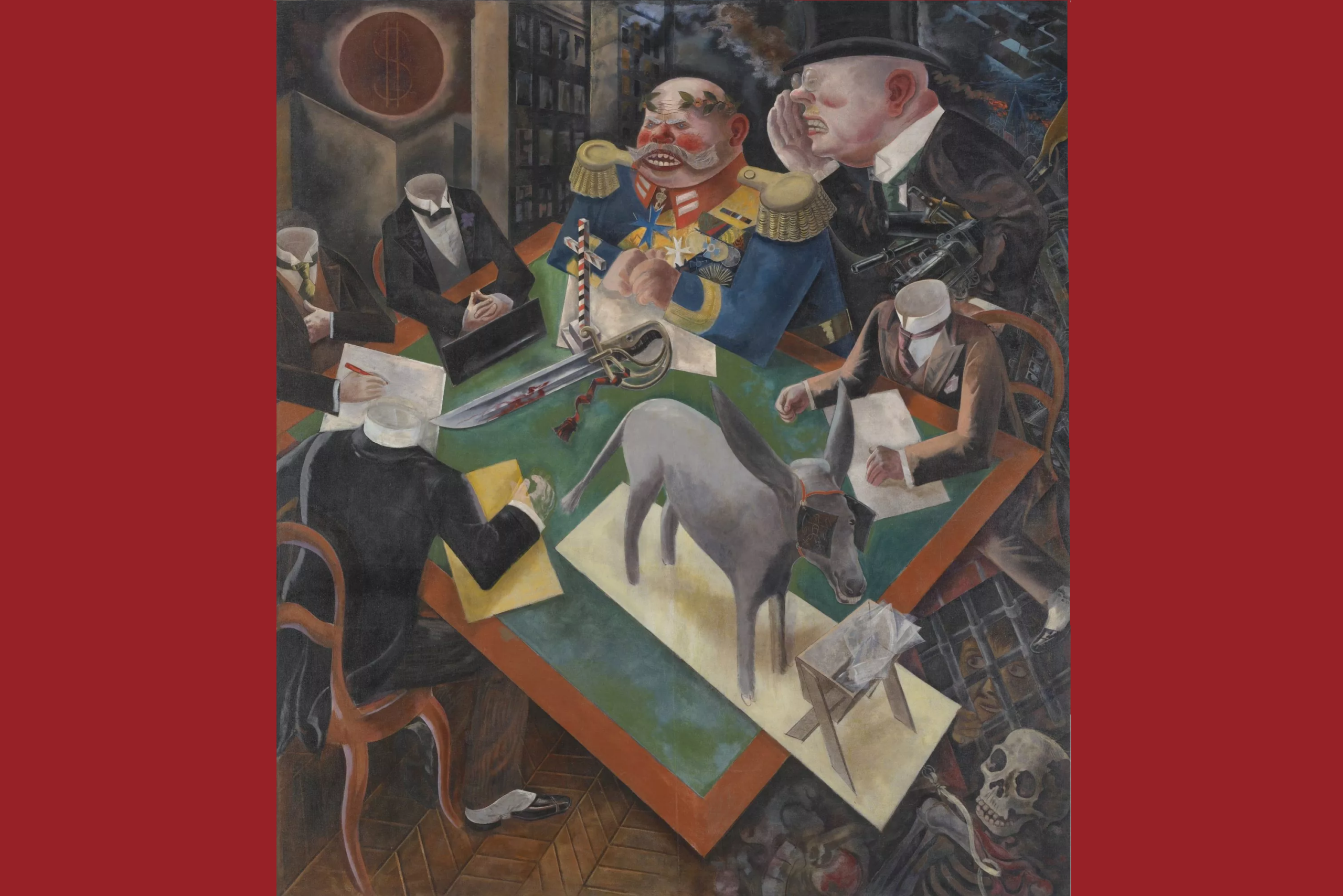
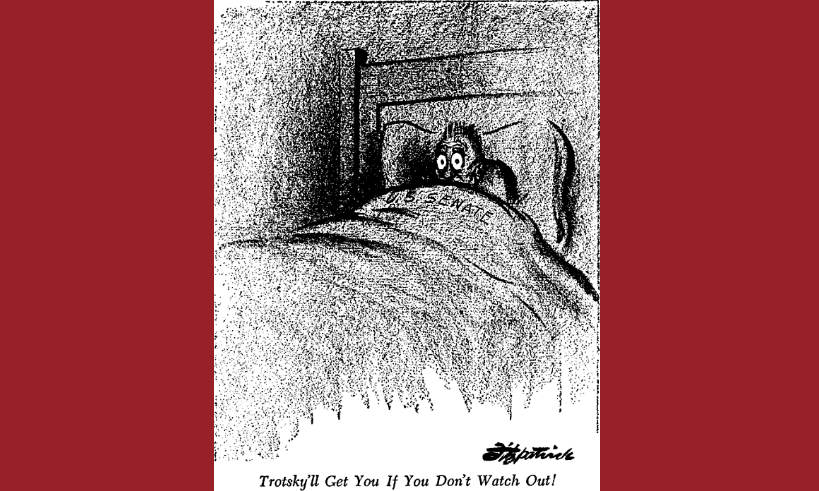
Photo caption: A political cartoon drawn by Daniel R. Fitzpatrick satirising the Red Scare of 1919–1920.
Photo credit: Murray, Robert K. Red Scare: A Study in National Hysteria, 1919–1920, 1955. Via Wikimedia Commons.