The Spark Ignites in Ōtepoti
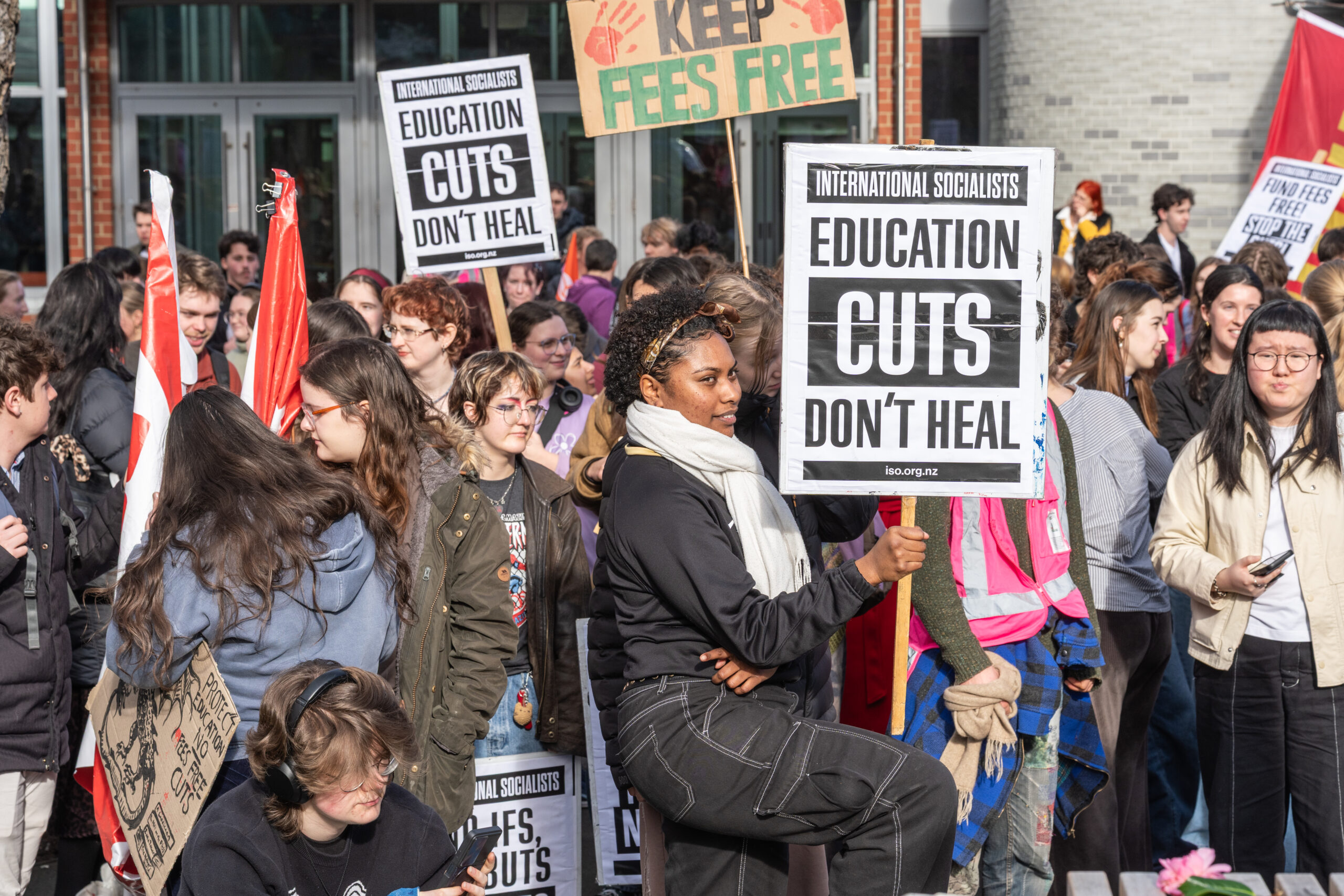
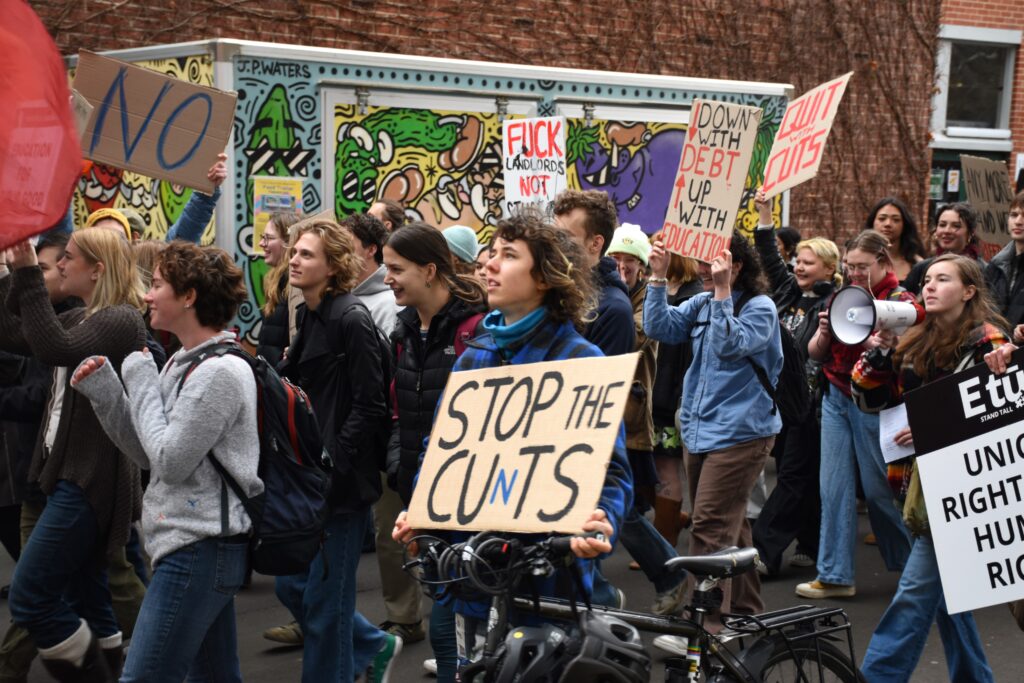
On Thursday 28 May 2026, around 400 students marched through the University of Otago campus, down George Street, and to the Octagon, adorned with various flags, placards, and banners. As students recognise their strength in numbers, the spark of a student movement is igniting in Ōtepoti.
After the progressive rise of tuition fees, and the recent axing of the Fees Free programme, students across Aotearoa united in protest against the Government. The Ōtepoti protest was co-hosted by four groups: Campus Greens, Southern Young Labour, the Otago University Students Association (OUSA), and the Ōtepoti branch of the International Socialist Organisation.
As protesters gathered at Union Lawn, representatives of the Labour Party roved around, asking if everyone had enrolled to vote and updated their addresses. Then, after covering some quick housekeeping, OUSA political representative Flynn Nisbett, dressed as a Debt Monster, spoke, stating that students feel they have been “slapped in the face” over how the Coalition Government had chosen to speak about Fees Free following their decision to cut it. Nisbitt also noted “neoliberalism has bipartisan support,” condemning the Labour Party for the role they have played in the present sad state of tertiary institutions.
Protesters marched through the Otago Union Building’s Link to the Museum Reserve lawn, where Otago Campus Greens co-covener Petra Campbell told a personal story about the struggle to thrive within the education system while living with mental health conditions. After saying she would never go to university, Campbell discovered that in order to follow her aspirations to be a Department of Conservation ranger, she was required to seek tertiary education. She emphasised that “I wouldn’t be doing it without Fees Free,” because the pressure of plunging herself into further debt was alleviated by the programme.
“Students are already working late nights, skipping meals, already struggling to pay rent. And yet, they simply expect us to just stand aside,” said Liam Calder of Southern Young Labour, during his speech on George Street. Calder also emphasised voting in the general election this coming November. According to Elections NZ, as of 31 May 2026, 52.9 percent of people aged 18–24 who are eligible to vote have enrolled. Compared to other age demographics, younger voters are underrepresented in elections.
The march reached the Octagon, where ISO members Oscar Bartle and Otago associate professor Brian Roper each made the final speeches of the protest.
Bartle launched into emphasising how students could win “more than crumbs,” proposing free tertiary education, funding for universities above inflation, universal student allowance, and independent student unions. After calling out the Labour Party, Grant Robertson, and the wider University of Otago upper management for their shared responsibilities and allegiances to the status quo, Bartle said there was a need for a mass, militant movement of students, citing previous successes of such mobilisation in Québec, Canada, in 2012. He listed the strategies the Québécois students undertook to achieve their goals, adding, “their movements successfully crushed the Government’s legislation.”
Roper began with a recap of prior policies and statements from politicians that led up to the decision to cut Fees Free, going back long before the Coalition Government. Additionally, flaming the New Zealand Policy Research Institute’s report on the Fees Free policy, he compared the number of people participating in tertiary education between 2005 and 2025. According to Roper, “during the same twenty years, when the population of this country increased from 4.2 million to 5.3 million, the number of people in tertiary education declined by 104,000.” Using a metaphor of trying to inflate a flat tyre on a car, he illustrated the necessity of a big action, after decades of neoliberal policy withering away the tertiary education institution, in order to see a corresponding big change. Roper also stated that multiple other countries in the OECD have better-funded student support systems and cheaper tertiary education, clarifying to the protesters that there is no excuse for why they could not also enjoy benefits that other students in countries such as Germany do in their day-to-day lives. Finally, he ended his speech by, similarly to Bartle, emphasising the need for a mass student movement. “We need to make clear to Luxon, to Seymour, to Peters, that we are coming for them. And, we’re gonna keep coming, from now until election day. Will you honour this pledge?” The crowd of protesters cried a resounding “yes!” The aforementioned two speeches are available on ISO social media.
In order to continue building this movement and achieve its goals, students will have to keep the pressure on. A national day of action is brewing for 29 July 2026, so keep an eye out and get involved with actions near you.
When students are under attack, stand up, fight back!
Banner Image: Protesters march through the Otago University campus bearing placards and cardboard signs. Photo credit: Jill Bowie.