Money makes the world go round, or rather, money goes around the world. Countless banks, corporations, funds, and trusts shift capital in a global investment market. Guns, bullets, bandages, and burgers are all subject to those markets. Customers buy, and the owners of production and merchant middlemen sell. Where there is strife, there is a market, and there is profit to be made. Tempting as it may be to separate issues by borders – to say that New Zealand’s problems, whether Māori rights, the suffering of our poor, or the exploitation of our people, places, and resources are somehow isolated issues – no country, even our islands, is an island unto itself. Anywhere there is a receipt, it is carefully accounted for across the world.
Nukutaurua, Te Māhia-mai-tawhiti, the Māhia Peninsula – located south of Gisborne – is the birthplace of Ngāti Kahungunu and Rongomaiwahine, the iwi of Hawke’s Bay. There is a distinct odour of fuel and flame as rockets are launched into orbit. At Ahuriri Point, we find Rocket Lab Launch Complex 1, where the land meets the sea. Situated on a coastal plateau, Māhia is surrounded by ocean with low air and sea-going traffic, providing an ideal, safe, and exclusive location for frequent launches; the complex may as well be a private “spaceport”. The peninsula’s location at 39 degrees south provides an ideal launch pad for polar or sun-synchronous orbits, allowing for efficient access to Space for Earth-monitoring and communications missions.
It is with such promise, boldly going into a sky free of war, strife, and suffering, that the reality of genocides redden even the white caps of Ahuriri Point. There is blood streaking the clouds, as the eyes of the world’s militaries eagerly jump to make use of Rocket Lab. Founded in 2006 by Peter Beck, it is often held up as a foundation for a nascent NZ aerospace industry. Today, it still leads the sector, one with a quickly growing revenue: $2.68 billion in 2024, with such laudable seed investors as Stephen Tindall of Warehouse acclaim and Mark Rocket (no joke), it would seem to be a home-grown Kiwi success story, one that has drawn in hungry investors across the world. Outside of New Zealand, it’s seen as an “innovative, exciting young space tech company,” and in the first quarter of 2025, Rocket Lab recorded $123 million in revenue, 32 percent up year-on-year.
Yet, Rocket Lab had a very early foray into “defence” contracting with the USA. It took nearly a decade after the first launch in November 2009, named Ātea-1, for the connections to the US military to break to the wider public. The Spinoff reported: “Rocket Lab’s life as a defence contractor began in the two years after the [Ātea-1] launch […] when it won contracts from at least three US defence agencies.”
According to The Spinoff:
One contract was for the Operationally Responsive Space Office – a joint initiative of several Space agencies within the US Department of Defence – for Rocket Lab to study a booster, a small electronics system and a launch vehicle to place small satellites into orbit.
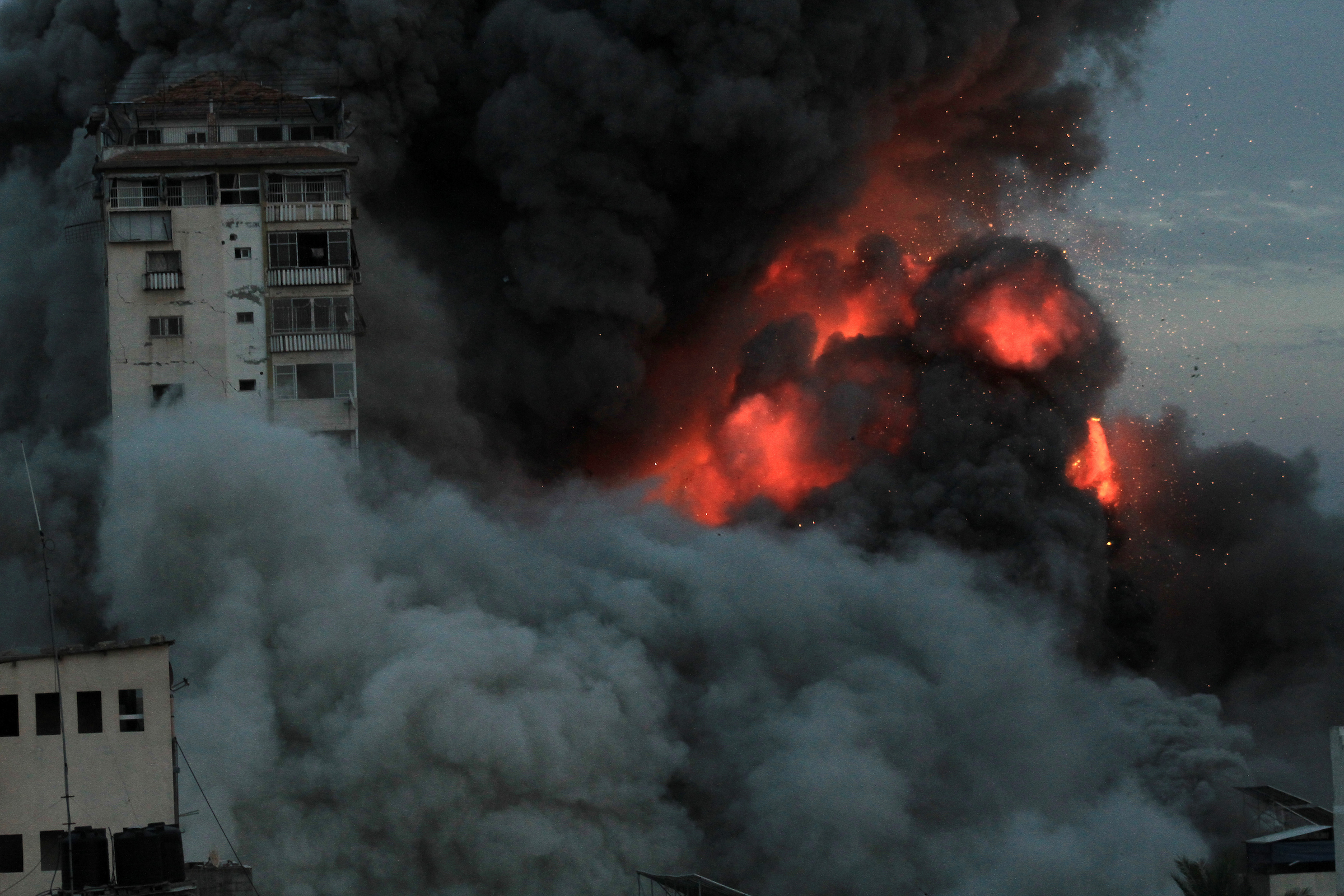
In 2024, it was confirmed that Rocket Lab had been launching satellites for geospatial intelligence firms BlackSky Technology, Capella Space, and HawkEye 360, all of which Newsroom noted have links to the Israeli Ministry of Defence. All three companies sponsored a geospatial intelligence conference that took place in Israel in January 2025, “with the Israeli Ministry of Defence and BlackSky listed among the conference’s leading partners.” In January 2024, the International Criminal Court ordered Israel to take measures to prevent genocide. By November, the official count was 100,000 Palestinians wounded and 44,000 dead in Israel’s brutal, genocidal campaign in Gaza; the Lancet medical journal noted that three times that amount was likely in this time. Yet Rocket Lab’s US defence contracts continued, and have only intensified with the company basing its headquarters in California while maintaining its launch assets and rocket infrastructure in Aotearoa.
The second post-2009 contract:
[…] required Rocket Lab to research high-density rocket propellants for the Office of Naval Research (ONR) and the Defence Advanced Research Projects Agency (DARPA). ONR is the main research agency for the United States Navy and Marine Corps, while DARPA is the Pentagon agency tasked with developing technologies that “maintain and advance the capabilities and technical superiority of the United States military.”
Though we may be tempted to look fondly back on the pre-Trump era USA, Rocket Lab’s place in maintaining and advancing the capacity and technical ability of the United States to bomb weddings, schools, and mosques under Barack Obama has only borne hellish fruit in the destructive attacks across the world by the rampaging US military.
The ties are made explicit with Rocket Lab’s long-running collaboration with Lockheed Martin. In November 2010, Rocket Lab stated that it had supplied Lockheed Martin, along with the Australian Defence Force, with some thermal ablative material – a plastic product that protects metal in high temperatures. A Rocket Lab press release from June 2012 states that this material had been “selected as an alternative material for thermal protection on Patriot missiles.” The Patriot Missile is a surface-to-air missile system that has been used by the US, Israeli, and Saudi militaries, including in Iraq, Syria, Yemen, and now Iran, to support US military assets in their assault against civilian populations across the Middle East.
The complicity of Rocket Lab has riled the people, especially as our Accident Compensation Corporation was an early funder of Rocket Lab’s endeavours to the tune of $206 million in 2018, well after the investment ties to US military technologies were common knowledge in the investment world. It cannot be understated that Rocket Lab is now a US corporation with explicit ties to an empire hungry for blood, cheap labour, and cheaper resources. In May 2025, Rocket Lab announced a $460 million deal with a US missile tracking tech company, as a creature gorging itself on the flow of revenue as investors eagerly chase militarisation of the sky.
There is a parable to be made of the dark road that nationalism, entrepreneurship, and military investment can take people down. The appeal to chase the heavens can be sold to us, made worse still, when we buy it wholeheartedly. Rocket Lab offered us the sky, past the clouds, to the sunlit yonder of a distant horizon. A “Homegrown Kiwi” enterprise whose dividends cover the costs of our health system was a tantalising vision, but was in actuality a poisonous seed that saw our national health insurance body invest in missiles and the satellite-eyes of killers and thieves the world over. You may not be interested in war, comrade reader, but know that war is interested in you. War needs funds. It hides amongst an otherwise promising future of scientific achievement and humankind’s advancement, lest we see it coming to eat us as well. I can only implore that we starve the beast.
Here in New Zealand, students and workers have actively struggled for three years on the streets, at the docks, and in the offices of the Empire’s subsidiaries. Success has been found in the consistent pressure of our communities against the managers of the country’s $86 billion Super Fund. The courts ruled that the bureaucrats and bankers failed to properly address human rights issues when considering whether to exclude companies from their investments, with the High Court finding that the fund’s policy documents, standards and procedures, and its sustainable investment framework were “unreasonable and unlawful.” How much money ACC’s investment funds have made from Rocket Lab’s astronomical growth is not available to the public; however, these gains are implicated in the butchery of men, women, and children, and “our” Super Fund managers have proven they were all too happy to cross that ethical boundary in their pursuit of profits. In 2008, Beck stated on behalf of Rocket Lab: “If it’s involved in the military, we don’t want anything to do with it.” A prescient turn of phrase. We cannot go to the stars on rockets built for war, knowing how many corpses we leave in our wake. The receipt has come back, and we are in the red. We are not an island unto ourselves; we must reject a starry future washed in blood. If it’s involved with war, we don’t want anything to do with it.
Banner Image: Remix by Kaakatarau Te Pou Kohere of: Peter Beck image by New Zealand Government, Office of the Governor-General, CC0 1.0; and Ballistic missile imageby DVIDSHUB on Flickr CC BY 2.0.