In a May poll, One Nation rode a global wave of support for the far Right, surging ahead of all other Australian parties. What is One Nation? Who is its leader Pauline Hanson? How can we compare this to Aotearoa New Zealand? And what can socialists do to fight the rise of the far Right?
Until recently, One Nation was known largely by its sole representative, Pauline Hanson, a Queenslander who has become notorious for her extreme racism. Her political career began in 1994 when she won a seat on Ipswich City Council in Queensland before she ran for the House of Representatives for the Liberal Party. During the election, Hanson launched a racist attack on Indigenous Australians, calling for the abolition of their “special treatment.” This led to the Liberals disendorsing her. When she won the seat, she entered Parliament as an independent.
In her maiden speech, Hanson seemed to decry “being called a racist,” then went on to claim that Australia was being “swamped by Asians” who “form ghettos and do not assimilate.” Her career feels more like bad satire about a racist politician than real politics. She theatrically performs her racism, including walk-outs, heckling, a motion in the Australian Senate titled “It’s okay to be White,” and twice she has worn a burka in the Senate to protest the allowance of full-face coverings.
One Nation versus New Zealand First
Parallels have been drawn between Hanson’s One Nation and our own homegrown New Zealand First. Indeed, both are steeped in racism. Both began as small parties, use racism, and opportunistically latch onto fringe voter bases to cling to power. Like Hanson, New Zealand First leader Winston Peters has said New Zealanders would be replaced by Asians who wouldn’t integrate into society. Equally, both share disdain for attempts to make amends for the past wrong-doing against Indigenous people. In April, NZ First’s deputy leader Shane Jones complained about Indian immigration, calling it a “butter chicken tsunami.”
While both parties still claim to give voice to outsiders, their increased support has earned the attention of new layers of capitalists. As Vashti Fox, state secretary of Western Australia Socialists and member of the national executive of Socialist Alternative, told me, “One Nation is increasingly the home of some of the wealthiest people in Australia. One of its current biggest backers is Gina Rinehart, the richest person in the country.”
As Vashti pointed out, “21st century capitalism is more violent, more crisis-ridden, and involves intensified imperial competition.” In this political climate, capitalists need new strategies to maintain their rule and new approaches to relate to the global market. Like many on the far Right, both parties are differentiated from traditional centre-right parties by their opposition to neoliberal protectionism, a stance more suited to capitalism in crisis.
Likewise, in the “death agony” of capitalism, mainstream parties have alienated their bases. Because ruling parties have had little room to manoeuvre, they have taken unpopular measures, undermining their support base. In this context, middle class right-wing voters (such as small business owners, farmers, and small landlords) and some disenfranchised workers have been radicalised to the right, where they have been met by fringe alternatives like One Nation.
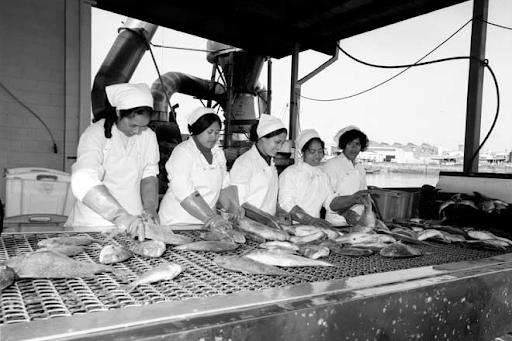
In this situation, sections of the ruling class have begun to shift towards such parties. Both parties have ceded mining sector support from larger centre-right parties. Hanson recently earned Gina Rinehart as a major donor. One Nation has recently been courted by the gas industry, who are trying to use her to cut across demands for a gas tax. In recent months, One Nation has tried to win over the agricultural industry, winning in the Farrer by-election with agricultural capitalist David Farley. Under the influence of Shane Jones, New Zealand First took a similar strategy, making shady deals for donations from mining and quarry companies, while leaning towards disenfranchised West Coast miners as a voter base. New Zealand First has also received funding from the fisheries sector, resulting in pro-fisheries policies during their time in coalition.
In the Aotearoa New Zealand situation, the centre-right National Party has so far held onto the agricultural industry through its deep ties with Dairy NZ and Federated Farmers. National’s other main competitor is ACT, a party based largely on urban property and financial investors, which has also begun to make moves toward a more authoritarian right.
How Should We See These Parties?
For a while, it seemed to some that Australia and New Zealand had escaped the far-right political turbulence occurring in many other countries. Yet today, One Nation seems a real contender as the governing party in the next Australian election, while NZ First and ACT surge in support toward the NZ election.
Some on the left have discounted the connection between racism and the rise of the far Right. While it may be true that the trend is largely led by other factors, as revolutionary socialists, our approach to mainstream politics acknowledges it as a crucial place that sets the tone of politics. It’s one place that the ruling class uses to spread its ideas. Even if it wasn’t racism that gave these parties their platform, they will use that platform to spread racism.
Flowing from this comes the question; how do we oppose the rise of the far Right? Our comrades in Socialist Alternative (SA), Australia’s largest socialist party, and one of the world’s largest Trotskyist parties, are leading the fight against One Nation in Australia. We asked them how they’re fighting, and set out to learn from their work so we can apply those lessons here in Aotearoa New Zealand.
How Do We Fight the Far Right?
Socialist Alternative has so far held forums of 400 people in Melbourne, 80 people in Perth, and is organising demonstrations in Canberra and Melbourne. In Adelaide, student members of SA confronted Hanson as she wandered the city streets, and in Perth, SA organised some 400 protesters to disrupt her at a One Nation event. As Vashti says, “Socialist Alternative is organising in a variety of ways against One Nation. Through the medium of the Socialist Party we have held forums, done doorknocking in working class and migrant parts of many cities, and have organised protests against branch meetings and appearances by Pauline Hanson.”
Vashti told me, “We are determined to oppose the politics of One Nation. We feel that we can’t simply let Australia drift blindly toward a Trump-style authoritarian government. We need to fight like hell to stop such a development. We have learned that, while there is undeniably growing support for Hanson, there is a deep reservoir of hostility to Trump-style politics in parts of Australia.”
She also condemned the shameful response of the Labor Party to the growth of One Nation. “We have learned that we cannot rely on the ALP to fight. Indeed, the ALP initially welcomed the rise of ON because they thought it would help them electorally. This is a shameful response to the far Right. Now the ALP is opposing Hanson on a very narrow basis – this opposition is to be welcomed but is not good enough. Her racism and her anti-worker politics need to be confronted and opposed.”
The experience of Socialist Alternative shows, more than anything, the need to prepare for the growth of the far Right in advance by rallying forces against it. In Aotearoa New Zealand, ISO is not yet large enough to build the kind of response that Socialist Alternative has in Australia. Currently, the far Right has only just started to grow in Aotearoa, but we have to learn from the experience of other nations, and prepare to face similar challenges. It is our responsibility to build our organisation, and to train a cadre that knows how to argue, organise, and fight.
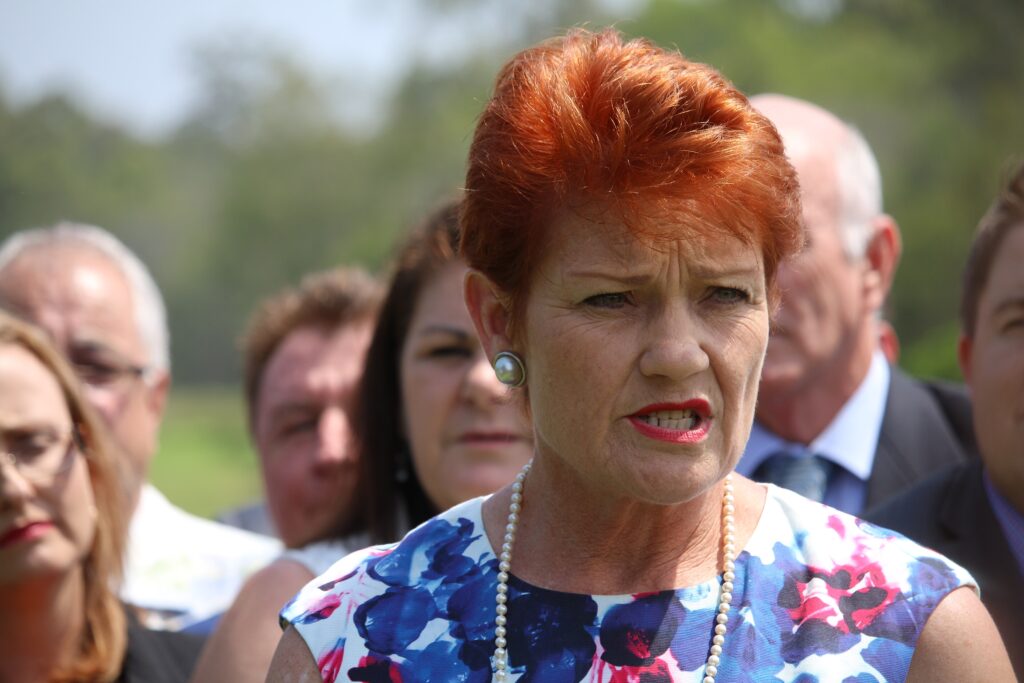
Banner Image: Pauline Hanson, Leader of the One Nation Party (Australia). Photo credit: jfish92 on Wikimedia, CC0 1.0.