Editor’s note: since this piece was written, the Alliance Party has applied to register with the Electoral Commission, having reached the 500-member threshold.
This piece is one in a series of profiles of electoral parties in the lead up to the 2026 General Election.
The most brutal right-wing government this country has seen since the 1990s is in power. The opposition is led by Chris Hipkins, the spineless neoliberal Labour Party leader promising to be a “continuity candidate” for the Coalition’s far-right policies. Now, with the 2026 general election approaching, a spectre is haunting Aotearoa – the spectre of “democratic socialism.”
Born in 1991 in the wake of mass discontent with the betrayals of the Labour Party, the Alliance, as the name suggests, was founded as a social democratic coalition of progressive parties (with democratic socialist factions within). NewLabour, the Green Party, Mana Motuhake, and the Democrats launched the new political vehicle, joined shortly after by the Liberal Party – a tiny fraction of dissidents from the National Party.
The newly-formed fighting coalition was able to mobilise its base and build to an impressive showing in the 1993 general election, winning 18 percent of the vote and proving that there was a genuine appetite for a left-wing alternative to the new neoliberal norm. Under the First Past the Post electoral system however, this relative success only translated into two MPs – Jim Anderton and Sandra Lee – a far cry from 13 MPs garnered by the 10 percent vote share under MMP in the 1996 general election. In 1999, Alliance’s vote share sunk further to 8 percent, but it entered into coalition with the Labour Party to form a government; this proved fatal for Alliance. Though joining forces with Helen Clark’s Labour allowed for genuinely worker-friendly reforms within the neoliberal system, the meek tailing of Labour that was required led to an internal rift within Alliance, and to its continuous decline. It has hobbled on in one form or another as the political undead ever since.
The Conditions Then and Now
2026 is a different moment. The social conditions of 1996 no longer exist. Alliance is no longer drawing from a working class freshly betrayed by their so-called representatives in the Labour Party. Instead, it is entering the oppositional fray alongside a deeply uninspiring Labour Party, the more radical social democrats of the Green Party, and a beleaguered left-wing Māori-nationalist Te Pāti Māori. The conditions for re-launching a democratic socialist electoral vehicle are even less favourable today than they were in 2001, when a similar Socialist Alliance was launched in Australia. At that time, Australians could at least point to the recent emergence of a loose anti-capitalist movement, which saw 20,000 people blockade the 2000 World Economic Forum gathering in Melbourne. Yet even so, the Socialist Alliance reflected soberly shortly afterwards on their failure to break through, concluding that, “The main reason for the Socialist Alliance’s poor votes is the electoral rise of the Greens, who now capture most of the broad left vote.” Despite the Alliance Party’s aspirations as a left alternative to existing options, it is vying for the votes of the broad socialist and social democratic left, mostly competing with the Green Party for the space to the left of an ever rightward-drifting Labour Party.
The Alliance Party’s foundation is no longer a coalition of progressive parties. Rather it is largely drawing its political contenders from the Federation of Socialist Societies, a network of social and educational broadly-socialist groups, which boasts a strong membership on paper but does not engage in pre-party organising. And the Alliance Party itself has shifted leftwards since its social democratic origins: no longer striving to fix capitalism, it now aims to move beyond it – as democratic socialists (that is, as a socialist party aspiring to move to a worker-controlled economy through parliamentary mechanisms).
The strategy at play in the leadup to the 2026 election is difficult to parse, possibly because it is somewhat ad hoc. The Alliance has put pieces in place to run candidates in ten electorates, but has spent the better part of the last few months calling for party signups so it can reach the 500 members needed to run for the list. Despite not having managed to recruit these 500 members, it has managed to formally affiliate with the Maritime Union of New Zealand (presumably Alliance leader Victor Billot’s network through his role as MUNZ Communications Officer played a part here). The social media presence of the party has entailed amateur cellphone-recorded walk-and-talks, shared working-class history content, and AI-generated ads and infographics (much to the chagrin of those who identified it).
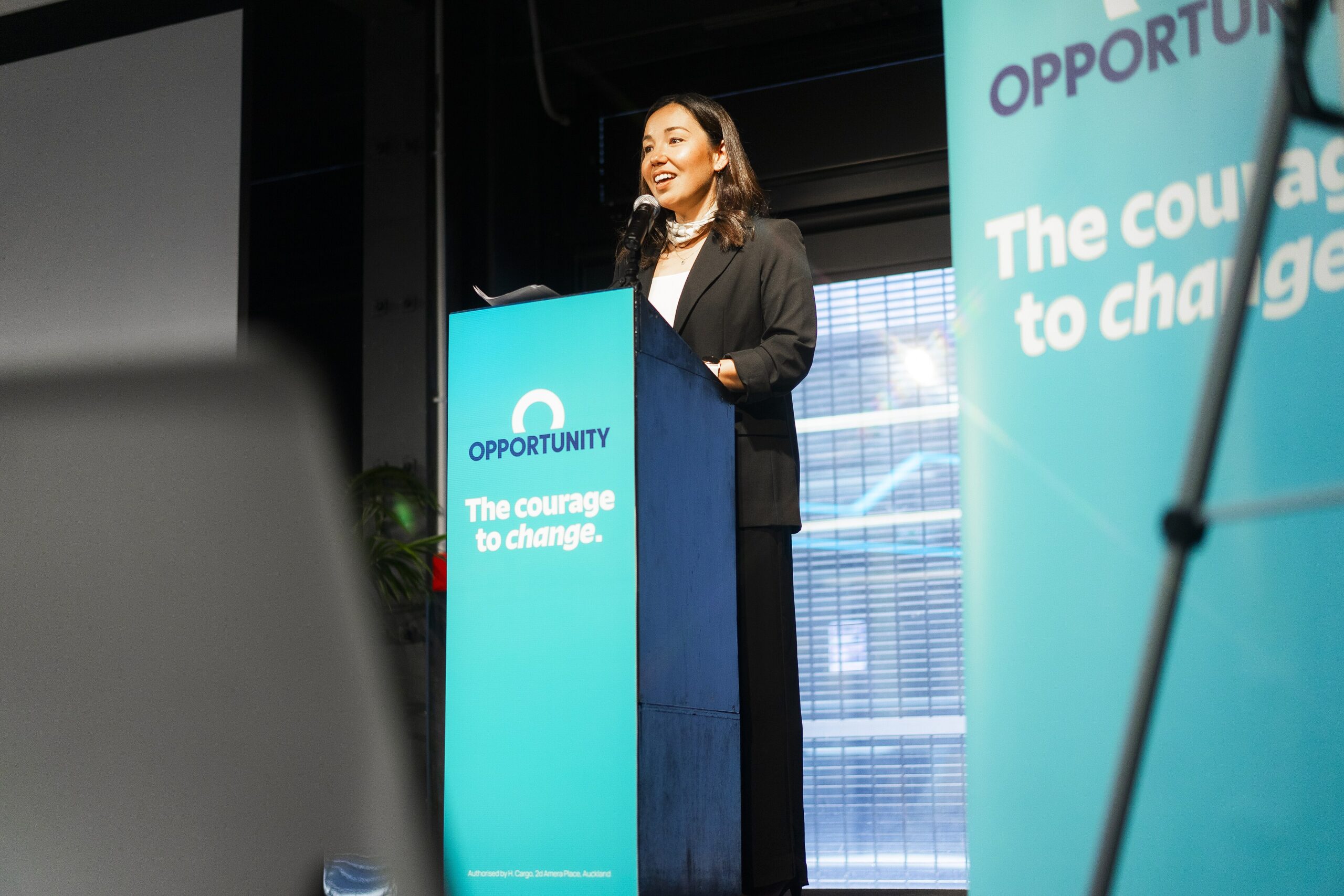
Alliance is clearly working on a wireframe budget and without much creative know-how at its disposal, and is competing in the usual electoral conditions wherein capitalists pour money into their favoured political project. The current coalition parties are attracting eye-watering sums of cash. Even the Opportunity Party sits on a war chest larger than Greens and Te Pāti Māori combined, having courted both “progressive” and right-wing capitalists. The only feasible strategy for winning against such odds is an outsized grassroots impact driven by large numbers of volunteer campaigners. Alliance’s struggle to meet the 500-member mark suggests that this ingredient is absent.
Alliance’s aspirations to build as a campaigning party are clear. Much of its messaging directly opposes the constant privatisation drive of New Zealand’s neoliberal political economy, from the health system to the ports. It does not take a mass party to shift the tide of such campaigns, but success does require real roots in relevant workplaces, churches, community organisations, and so on. The efficacy of this campaign strategy will be proven in practice, but winning over advanced sections of the working class will depend on the success of such campaigns, not on Alliance’s left-wing rhetoric.
Reform and Revolution
The ISO are revolutionary socialists. Our strategy is to keep alive the radical tradition of revolutionary socialism, and to train layers of educated socialist leaders who can intervene in class struggle, patiently and in periods of downturn if necessary. Our longer-term goal is to build a mass working-class party across these islands and the Pacific, and towards the international overthrow of world capitalism. The Alliance Party is a party of socialists who aim to reform capitalism towards socialism through Parliament and other methods. The Alliance constitution, in their words, “makes clear that electoral politics is only one part of the work. The Alliance exists to organise, campaign, and build a mass democratic party for working people, inside and outside Parliament.”
The primary overlap of the ISO and Alliance is our belief that a better world can be created through working-class power and our class’ ownership and control of production, and we both must appeal to the working class to win them to our ideas. Our primary difference is that ISO believes that while Parliament can be used as a loudspeaker for socialist ideas, it cannot reform away capitalism. The project of the Alliance Party, as per its updated 2026 constitution, is “to be the electoral expression of the broad socialist and social democratic left in Aotearoa New Zealand.”
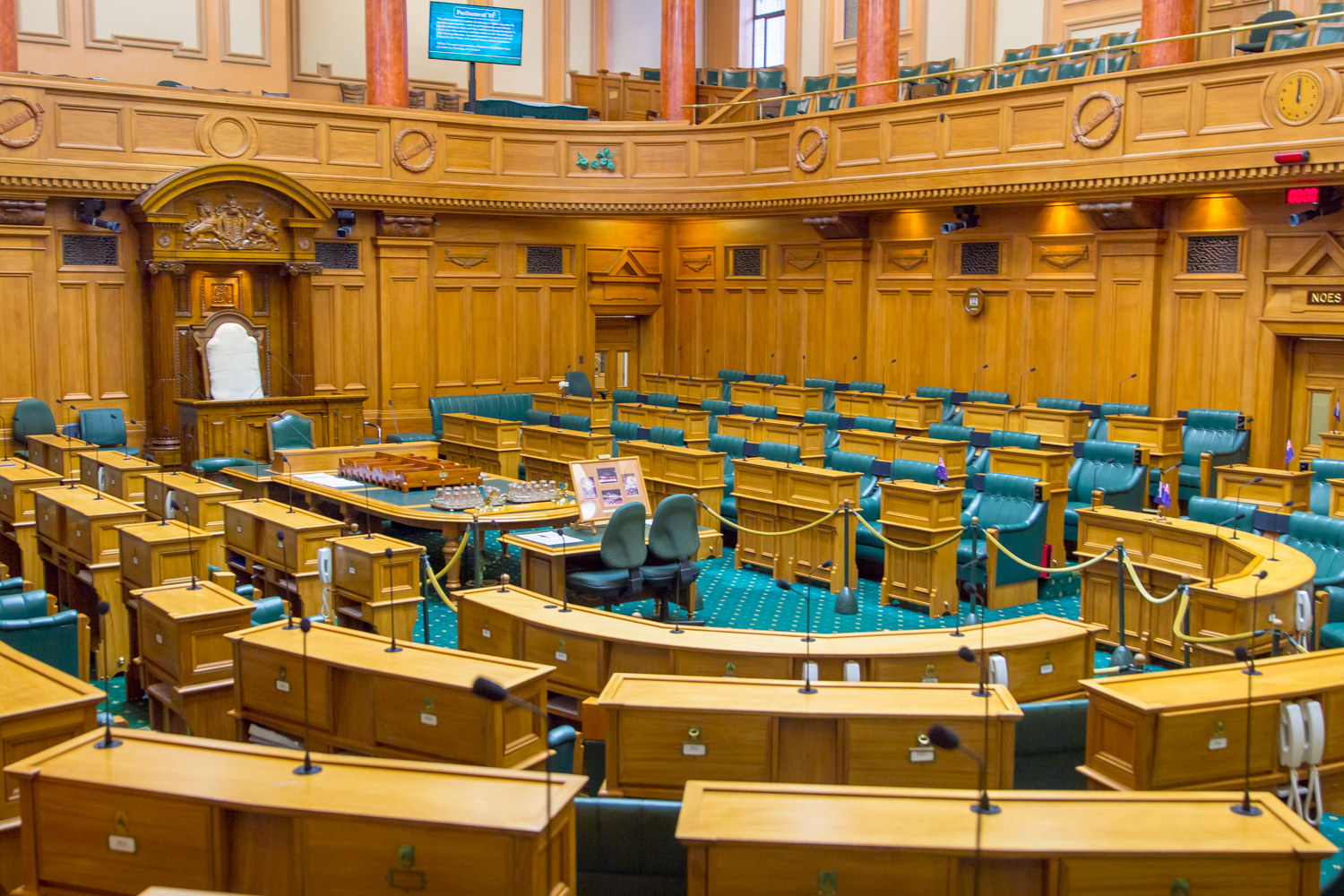
These are distinct projects, and call for distinct organisations – which we have. But we are not in a revolutionary moment, we are not Bernstein and Luxemburg ideologically duking it out to guide revolutionary masses. Socialism is broadly unknown or misunderstood across the modern working class, and the political tradition needs to be rebuilt and given a working-class audience. To this end, the ISO has worked alongside the Alliance Party in the past, and we’d be likely to do so again under the right conditions. Their run at Parliament is a well-intentioned one. Ultimately though, the execution seems rushed, ill-timed, and at a moment when the political conditions are working against such an electoral intervention. If this pessimism of intellect is proven to be misplaced, I will be overjoyed to see socialist arguments be handed the loudspeaker of Parliament, and for national-level debates to grow beyond the swamp of liberalism.