In May 2026, conservation minister Tama Potaka introduced the Conservation Amendment Bill, the biggest proposed overhaul of Aotearoa’s conservation system since the Department of Conservation (DOC) was created in 1987. The bill would shift DOC’s purpose from protecting nature to managing “assets” in a way that “balances” conservation with economic growth. It would also weaken DOC’s Treaty obligations, requiring only that iwi and hapū views be “considered,” rather than DOC having to “give effect to the Treaty” as is their present mandate.
The Bill was met with shock and horror when it emerged that it could allow up to 60 percent of public conservation land to be sold, swapped, or otherwise disposed of – removing it from public ownership and access. Although Potaka insisted the intention wasn’t to sell all that land, public figures estimated potential revenue of $60 million a year, effectively pressuring a chronically underfunded DOC to sell land to fund conservation work. In response, tens of thousands mobilised. Over 50,000 people signed a Greenpeace petition, and campaigns launched nationwide. On 25 June, Potaka backed down: the Bill will now exclude land sales, though the shift in DOC’s purpose remains.
The Conservation Amendment Bill’s proposed changes are part of a wider pattern. The coalition has cut DOC funding, centralised conservation decisionmaking under the minister, and advanced legislation that designates some invasive mammals – goats, tahr, and deer – as “special” for tourism and hunting, removing DOC’s obligation to control them. Beyond DOC, the government has pushed through the Fast-Track Approvals Amendment Act, the Fisheries Amendment Bill, major changes to freshwater and planning laws, and even disestablished the Ministry for the Environment. The Crown Land Legislation Amendment Bill would allow pastoral leaseholders to buy Crown land, further shrinking public ownership.
Conservation has long been a site of struggle. These latest attacks are not an anomaly but part of a long history of conflict between the conservation movement and capitalist interests. These moves should be understood as the capitalist class hitting back against the wins the conservation movement has made through that struggle. To understand this present moment, it helps to look back.
The History
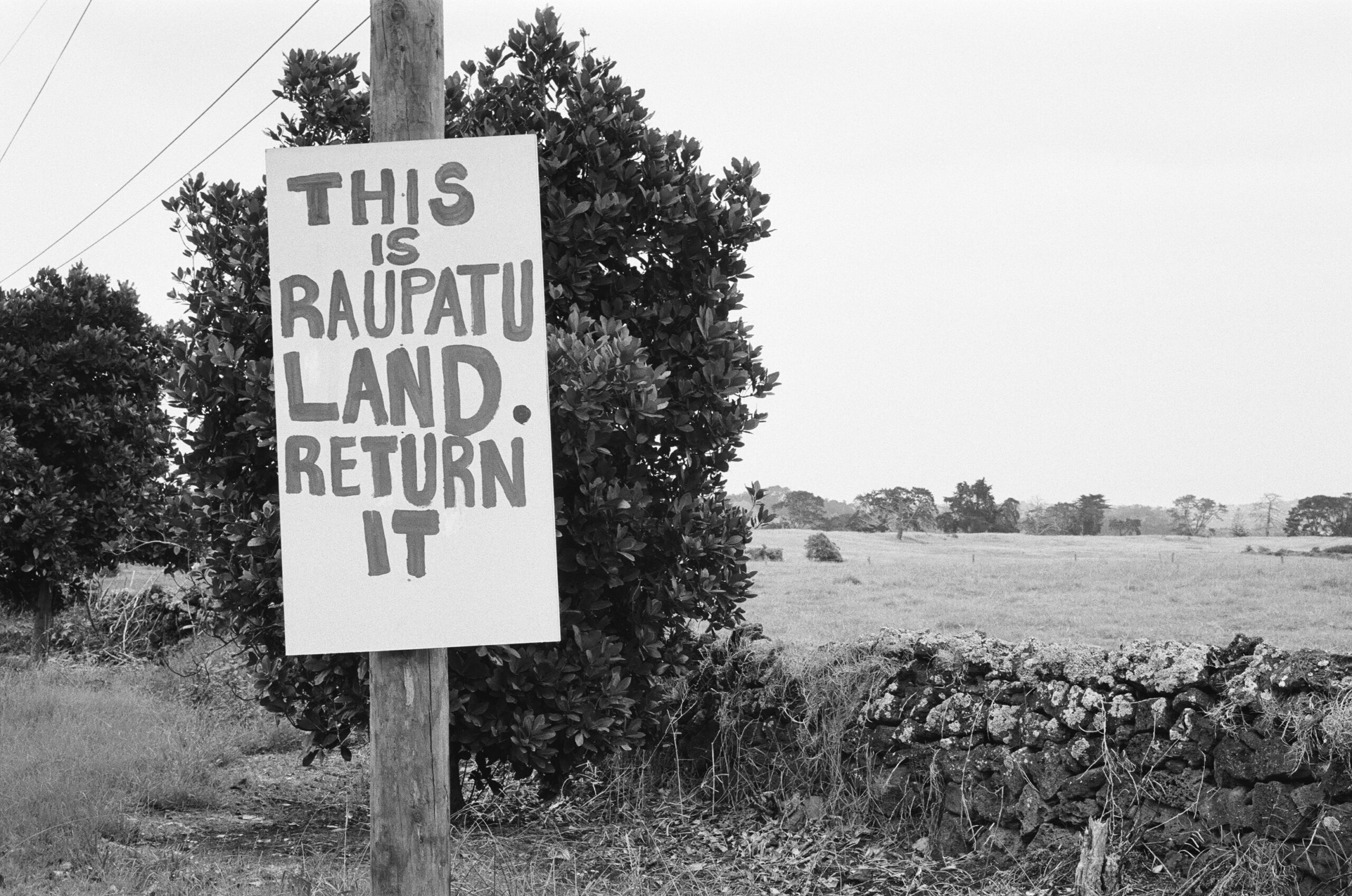
DOC land is, for the most part, dispossessed Māori land. These areas provided Māori with fuel, fibre, kai, and tools. Many landscapes were actively created and maintained by Māori – karaka forests, as well as many harakeke and raupō swamps, were planted, protected, and harvested. Lowland tussocklands and northern gumlands were produced through repeated burning. Colonisation has seen most of this land be dispossessed from Māori through sale and confiscation.
Prior to the formation of the DOC in 1987, there was effectively no “public conservation land.” Most of what is now DOC land was managed by the Forest Service or Lands and Surveys as revenue‑generating assets for the state, often in partnership with private industry. Only a small portion – mainly national parks and remote areas unsuitable for industry – was set aside for conservation.
From the mid-20th century, campaigns like Save Manapouri, led by groups like Forest & Bird, the Maruia Society, and the Ecologic Foundation, built public support for conservation. As the movement made ground, the forestry service increasingly began employing ecologists and conservationists. Protest movements like the famous 1978 Pureora Forest Protest blocked forestry operations in old-growth forest, and in 1975 a coalition of campaign groups produced the Maruia Declaration, a petition calling for a dedicated conservation agency. Its 341,160 signatures (about 1 in 10 New Zealanders) began a long campaign that led Labour to begrudgingly commit to creating DOC in its 1984 election campaign.
Make no mistake – the campaign to shift from managing public land for private profit was class struggle, even if it was unconsciously so. Mining, forestry, and pastoral corporations lost access to potential profits so that ordinary people could enjoy healthy environments and spaces essential for social wellbeing. This transition was only possible because, by 1987, most profitable lowland, accessible, or mineral‑rich areas had already been privatised; what remained in public hands was largely rugged, remote, or commercially marginal.
During the same period, Māori fought for greater authority over conservation land. Through court cases and Waitangi Tribunal processes, many iwi secured limited customary rights. While Māori were still largely prevented from using traditional resources on DOC land, the department was at least required to “give effect to Treaty principles.”
Today
Since 1987, a growing tourism industry, rising demand for rare minerals, and a cost‑cutting state have pushed governments to shift conservation away from protection and toward profit. Capitalists now look to public land with greedy eyes and salivating mouths. For them, public conservation land is not a source of life and water, a reservoir of carbon, and a place to unwind and recharge. To capitalists, public land is wasted if it isn’t generating profit.
Successive governments have tried to unwind the gains we made with DOC’s creation. Mirroring health and education, conservation is only considered valuable to capital if it can generate profit, and funding is repeatedly attacked – especially during economic crises. Since the 2008 financial crash, governments have sought savings by cutting public services, and workers and the environment were left to pay the price. DOC’s budget has been squeezed for decades, replaced with user‑pays models. This government has intensified the trend: hut and campsite fees have surged, a tourist levy has been introduced, and access charges are being added to high‑use areas.
At the same time, the state is turning to public land to lure overseas investment. As it stands, the Conservation Amendment Bill still redefines DOC’s role as “balancing” conservation with economic growth, enabling more private concessions – from mining to resorts to gondolas. Large areas already hold active mineral exploration permits. Even without land sales, these concessions could allow mining on land the public technically still owns. Treaty obligations are an obstacle to this agenda.
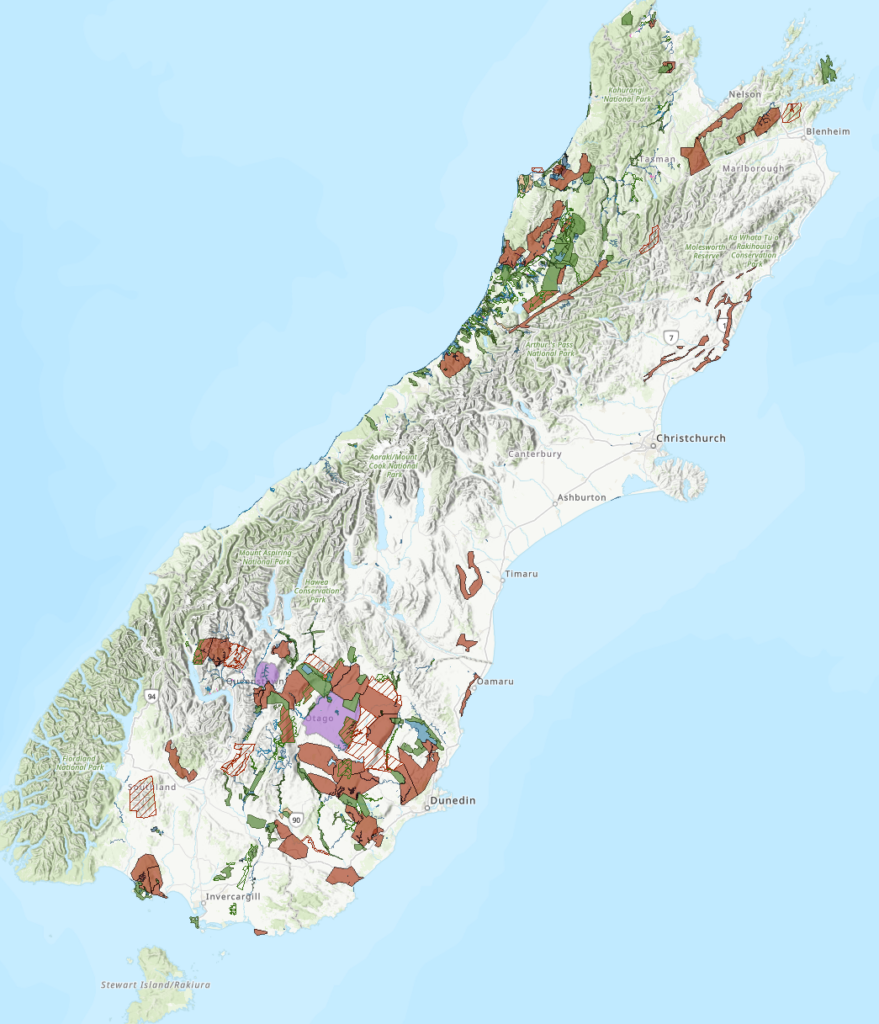
Image caption: A map of the South Island of New Zealand, showing current exploration permits including on Conservation Land. Sourced from the New Zealand Petroleum & Minerals website.
It’s no surprise that the National Party and its coalition partners are again defunding conservation, shifting costs onto the public, and opening land to private interests. Nor is it surprising they want to weaken DOC’s Treaty responsibilities. As Ngāti Paoa Trust noted, if iwi can be “consulted and ignored,” the Crown keeps all power while mana whenua bear the consequences.
Even with the government’s partial retreat on the Conservation Amendment Bill, the broader attacks continue. In a biodiversity crisis, DOC is one of the last lines of defence preventing species from sliding into extinction. The cost of economic crisis and capitalist greed is not only our health, education, and livelihoods – it is the living world we depend on.
What is the Socialist Alternative?
This government’s reforms are clearly heading in the wrong direction; and even before this government’s destructive efforts, the status quo hardly provided environmental or social justice. But what is the alternative? What could conservation in a socialist economy look like?
Even at its best, the current conservation regime has never really worked. If conservation land isn’t important for tourism it’s largely left unprotected. On much of our conservation land, invasive deer and possums exist at levels incompatible with sustained forest cover – so in many places forests are dying, with no young trees to replace them. Likewise, publicly-owned dunes throughout Aotearoa are covered in weeds like lupin and marram grass, preventing them from functioning to protect land from flooding. It isn’t that these places don’t have value – it’s just that monetary value and the profit that can be generated from it is the only thing that matters under capitalism. A rational system would see that we need nature in order to survive. We need the oxygen that trees produce, and we need their carbon stores. We need the fresh water that filters through forests and wetlands. We need functioning ecosystems that can cushion against outbreaks of disease and crop pests.
The very existence of public conservation land enforces a binary that should not exist. Some land is for nature conservation, whereas other land is privately owned and open for exploitation. Despite our attempts to put a border around it, nature persists everywhere, and all land is interconnected. Some land is free for destruction – soils are eroded, trees are chopped, and water is polluted. But the impacts are felt far away – polluted water flows far beyond private property boundaries. Likewise, most carbon emissions don’t occur on public conservation land, but its organisms still suffer the effects of climate change. Enforcing a binary of private versus public land – a binary that only benefits wealthy industrialists and landlords – means that all land is degraded, even if we put some in reserves.
Just as usage for Māori is restricted, most conservation land is de facto inaccessible for the general population. While most public land is formally available for the public to freely use, this “freedom” is just like any other under capitalism. That is, freedom for those who can afford it. As it is, outdoor skills are difficult to learn, equipment is expensive, and much of our public land is inaccessible without a car.
This broken relationship between humanity and nature can be repaired, but only by moving beyond capitalism. If private property were abolished and land held by all, for all, the planet could be managed rationally. In a world socialist economy, land would not be owned for profit but used, protected, and cared for collectively. Nature could flourish, and our economies could be reorganised to exist alongside it rather than against it. Vast wealth currently lies unused, hidden in the bank accounts and assets of the rich. If held collectively, that wealth could fund meaningful work for all, like the restoration of ecosystems worldwide. It could also give people the time and resources to connect with their environment, making recreational spaces such as conservation land accessible to everyone. With greater support for education, ecology and environmental departments could thrive, pushing science and society forward. If people have democratic control over their workplaces and societies, we could build a world where everyone has the ability to be an ecologist and conservationist in their own homes and workplaces.
As Karl Marx said in Volume III of Capital:
Even an entire society, a nation, or all simultaneously existing societies taken together, are not owners of the Earth. They are simply its possessors, its beneficiaries, and have to bequeath it in an improved state to succeeding generations as boni patres familias [good heads of the household].
How Do We Get From Here to There?
While this particular Bill may have been modified, it still allows for massive expansion of private industry in public land. We should not sit idle. The attacks on conservation will continue and are continuing elsewhere. The environmental movement has made great strides in recent decades, but with the present crisis of capitalism it has hit an impasse. If the environmental movement does not look beyond capitalism, it will go no further.
This Bill has drawn out more widespread anger from the public than any other attack on the environment in years. This anger must be used to mobilise people – not just to the election booth, but far beyond. Environmentalists must use this opportunity to widen the movement – to expand the number of people taking part, protesting as a mass movement. Draw people out of isolation in their homes and workplaces, and allow all of us to feel our collective power. And let’s not stop there: each protest, each submission-writing party, and each meeting should be used as a place where we mobilise people.
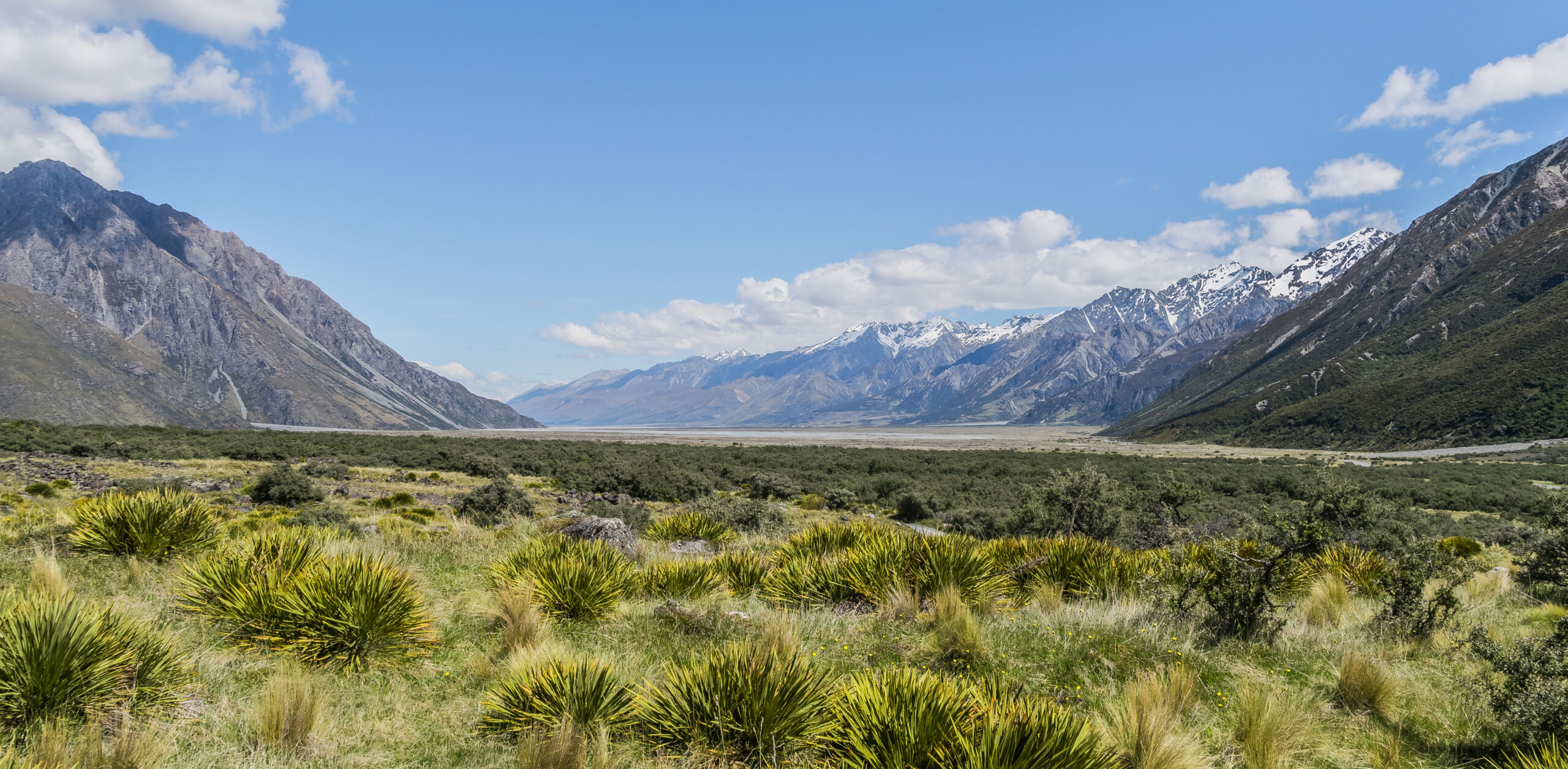
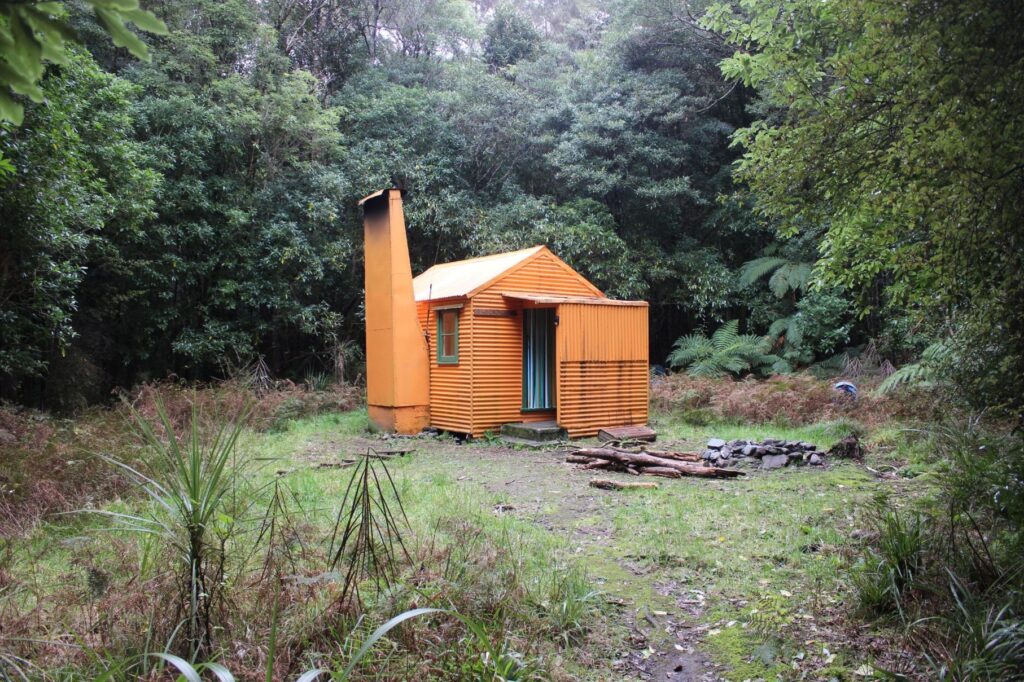
Photo caption: Waiorongomai Hut – a hut in one of the conservation areas that could have been allowed for sale. Photo credit: Joe Dillon.