The Left has long fought for the right to freely share ideas. Being able to criticise a government and powerful institutions without fear of reprisal is critical for social progress. Being able to freely access a range of analyses for educational purposes can be personally nourishing as well as help develop the capability of society as a whole. So we support freedom of speech as a necessary component of the “society free from exploitation, oppression and want” that we work toward. Marx, writing of institutional censorship of citizens, suggested: “The real, radical cure for the censorship would be its abolition”. Eric Heinze argued Marx primarily supports the freedom to challenge power, perhaps with only minimal limits on free speech “such as penalties for commercial fraud or courtroom perjury.” Free speech is necessary, but not absolute.
As with many other cases, capitalist representatives not infrequently set out to turn our arguments against us. In this case, a common argument is that if we truly value free speech, then all bigotry should be tolerated. This sets out to trap us in what philosopher Karl Popper described as the “paradox of intolerance”:
Unlimited tolerance must lead to the disappearance of tolerance. If we extend unlimited tolerance even to those who are intolerant, if we are not prepared to defend a tolerant society against the onslaught of the intolerant, then the tolerant will be destroyed, and tolerance with them. In this formulation, I do not imply, for instance, that we should always suppress the utterance of intolerant philosophies; as long as we can counter them by rational argument and keep them in check by public opinion, suppression would certainly be most unwise. But we should claim the right to suppress them if necessary even by force; for it may easily turn out that they are not prepared to meet us on the level of rational argument, but begin by denouncing all argument; they may forbid their followers to listen to rational argument, because it is deceptive, and teach them to answer arguments by the use of their fists or pistols. We should therefore claim, in the name of tolerance, the right not to tolerate the intolerant. We should claim that any movement preaching intolerance places itself outside the law, and we should consider incitement to intolerance and persecution as criminal, in the same way as we should consider incitement to murder, or to kidnapping, or to the revival of the slave trade, as criminal.
The Right has certainly continued to demonstrate understanding of their leverage against liberal tolerance. Most certainly, the “free speech” promoted by the likes of Elon Musk for his social media platform X (formerly Twitter) has seen a rise in Right wing hate. Likewise, in Aotearoa, the so-called “Free Speech Union” has made its Right wing agenda abundantly clear by promoting only “free speech” for bigoted, regressive, and White supremacist ideas.
The issue of free speech is sometimes conflated with a related but separate issue of the broadcast of speech: the capability of each person to transmit their free speech to others. James Cannon wrote on this topic:
This formal right of free speech and free press is outweighed rather heavily by the inconvenient circumstance that the small capitalist minority happens to enjoy a complete monopoly of ownership and control of all the big presses, and of television and radio, and of all other means of communication and information.
To some extent, technologies from the printing press to megaphones to the Internet have assisted workers to broadcast their ideas; but control of most of these technologies remains nonetheless heavily in favour of the capitalist class. Whatever rhetoric they may use to attempt to obscure their cause, the far Right acts in the interests of capital. So it may be useful to reduce the broadcast of far Right speech. Such “de-platforming” doesn’t actually hinder any far Right individual from speaking freely, or even bring adverse consequences upon them, but can help slightly to re-balance the broadcast of ideas.
The ISO’s Martin Gregory warned of the risk of appealing to power to limit such broadcast, though. Capitalist institutions will inevitably use censorship powers against the Left; Gregory cites examples of the outlawing of anti-war speech in World War I and of pro-strike literature during the 1951 Waterfront Dispute: “The state cannot be trusted to defend us from the far right and fascists.” Appeals to capitalist institutions ultimately serve to strengthen those institutions’ capability to censor us.
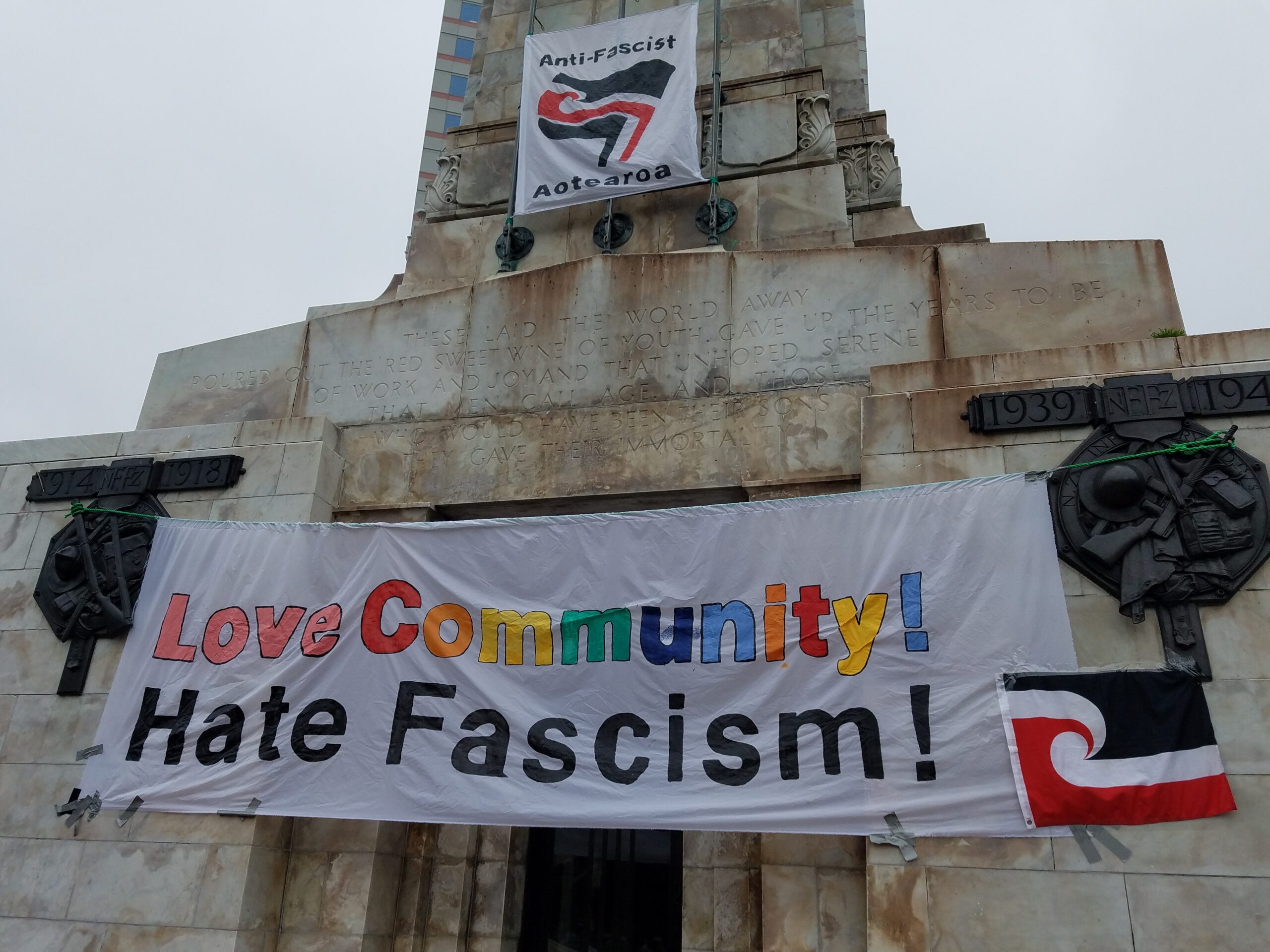
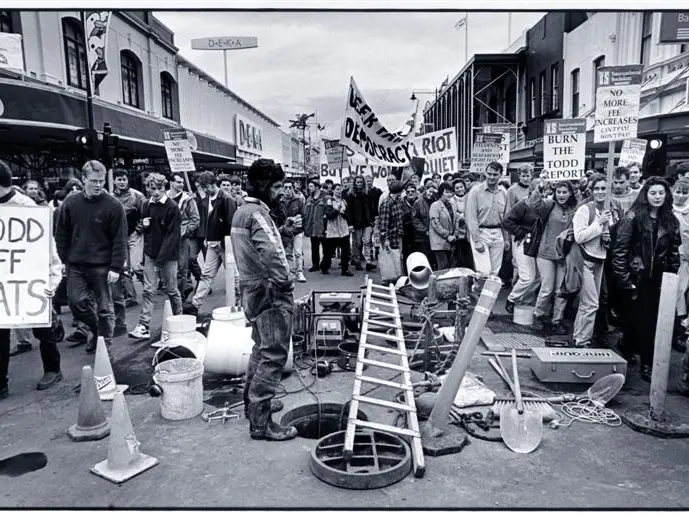
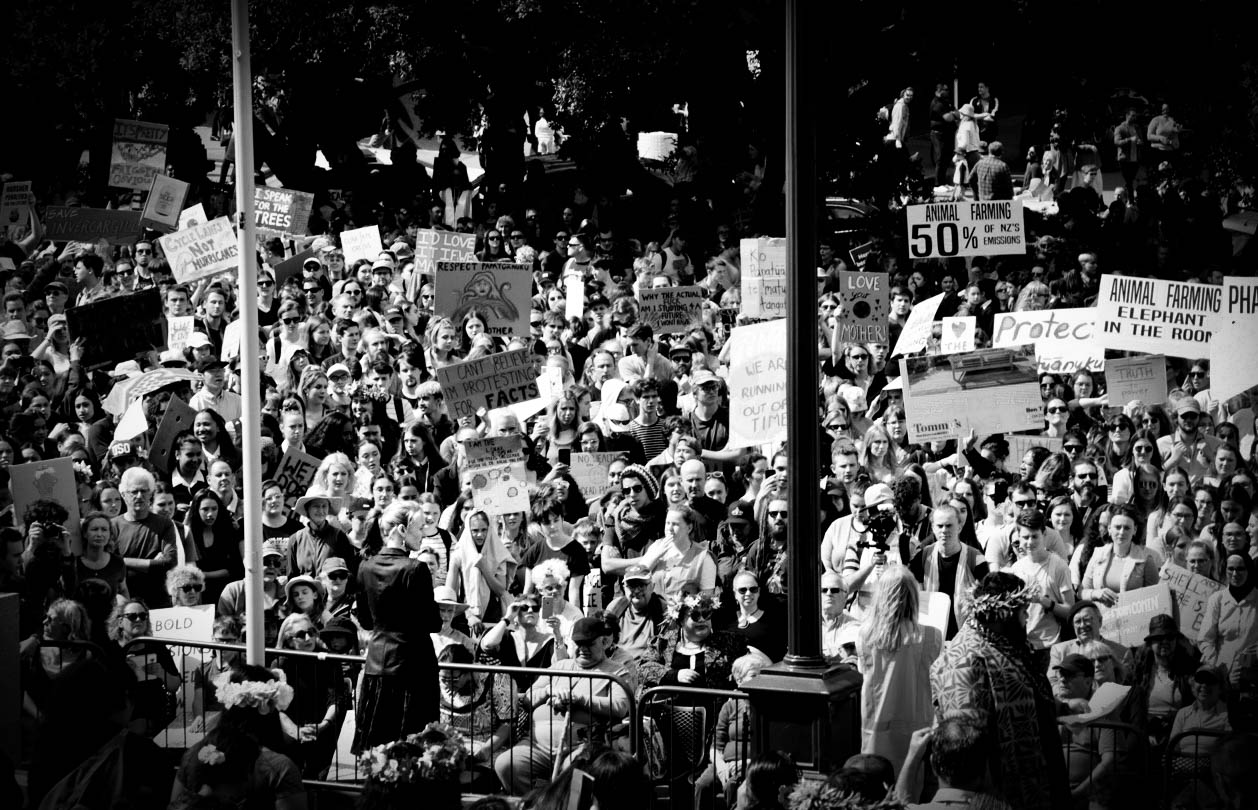
The solution is direct, grass-roots organised, mass counter-protest. Not infrequently, counter-protest is met with accusations of “cancelling.” It’s important to note that we are usually not actually silencing bigoted points of view but merely exercising our own right to freely express objection. The fact Left wing counter-protest to bigotry generally represents the mass opinion is hand-waved away by the accusers. The accusation of “cancel culture” is a weapon in itself, intended to make us falter and reconsider objection while our opponents gain ground – in actuality intended to silence dissent. The Pōneke Anti-Fascist Coalition’s Free Speech & Power pamphlet addressed such accusations:
Some groups believe their right to free speech is ‘under threat’. Often, the ‘threat’ is simply the open resistance and rejection of their hateful, harmful, and unproductive speech. There isn’t a legal threat to their rights, rather there is community opposition to it. When this kind of unproductive bigoted speech is spread on a mass scale, it normalises these ideas as acceptable, productive, and even worse, as the default view. If this speech is not rejected, norms about what is and is not acceptable to question moves towards the endorsement of unjust social hierarchies, the maintenance of historical systems of oppression and the acceptance of violence against the targets of this speech. In other words, the far right.
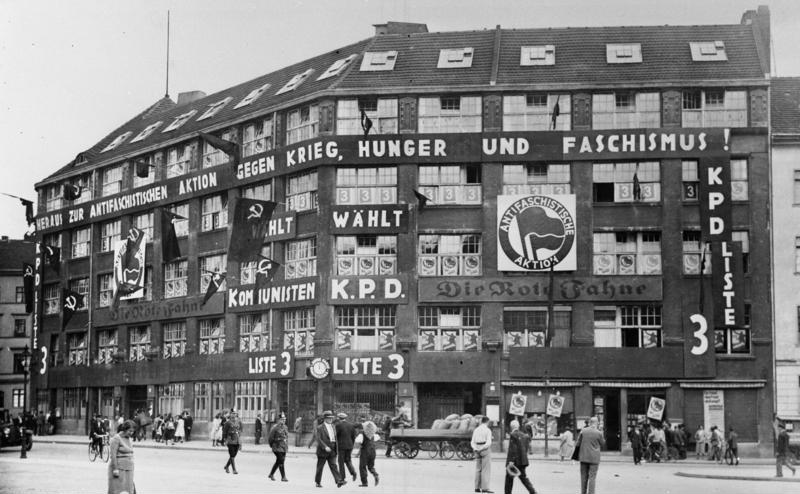
Discussion, argument, and persuasion may be appropriate for engaging with and winning the middle ground to our side, but it can be appropriate to directly counter far Right opponents with goals of limiting or preventing the spread (and thus the damage) of their ideas. We should be very careful and selective about putting limits on free speech (as opposed to broadcast), but in cases such as the spreading of fascist ideas suppression can be appropriate. The UK Socialist Workers Party’s Chris Bambery wrote in a 1992 pamphlet:
Nazis gain power through terror, not through force of argument. And, if they do gain power, then all free speech, all forms of democracy will be at an end. That is why socialists, who are whole-heartedly for free speech and open debate, say Nazis must be silenced to safeguard it.
Gregory also highlighted this necessity: “There are limits for fascists, but these should be enforced by the left, not the state, by physical action.” This explains why there are times when outright blockade is appropriate. Examples include the mass protest of Canadian far Right influencers Stefan Molyneux and Lauren Southern when they visited Aotearoa in 2018, and the mass counter protest and displacement of the far Right so-called “freedom” rally in Ōtepoti in 2022. On those occasions where a fascist threat begins to develop, simply de-platforming or holding a demonstration event may be insufficient. Mass mobilisation in opposition and direct counter, with the goal of entirely stopping the threat, is the necessary goal.
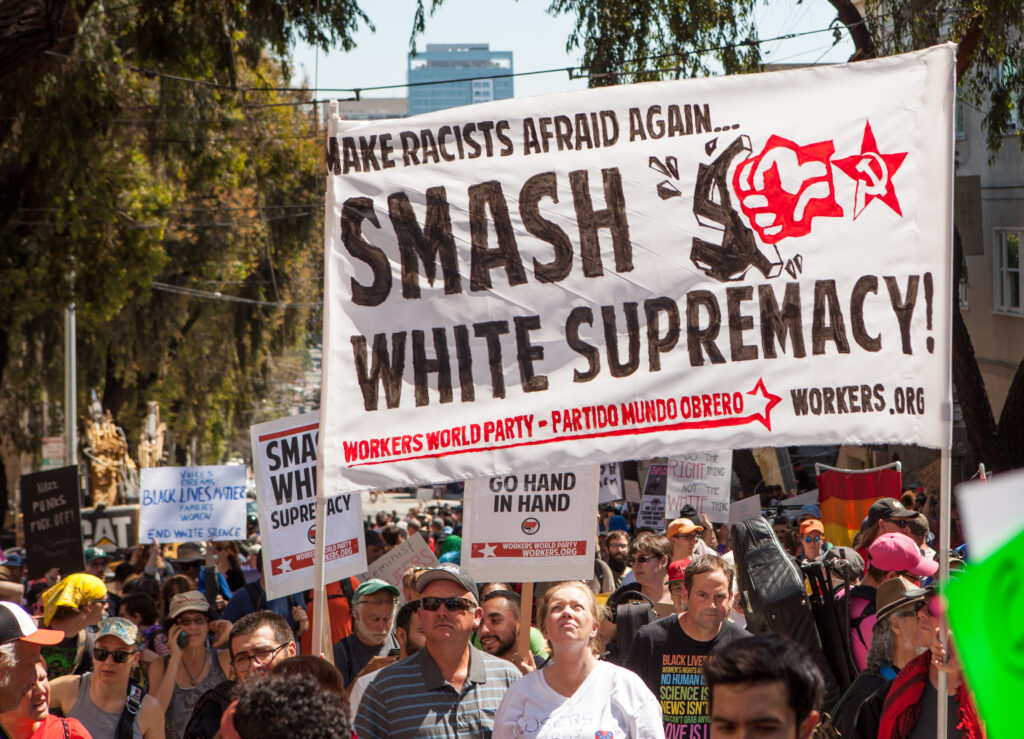
Banner image: Protesters hold a Workers World Party banner reading “Make Racists Afraid Again… Smash White Supremacy!” at a Patriot Prayer counter-protest in San Francisco, 2017. Photo credit: Pax Ahimsa Gethen. Licence: CC BY-SA 4.0