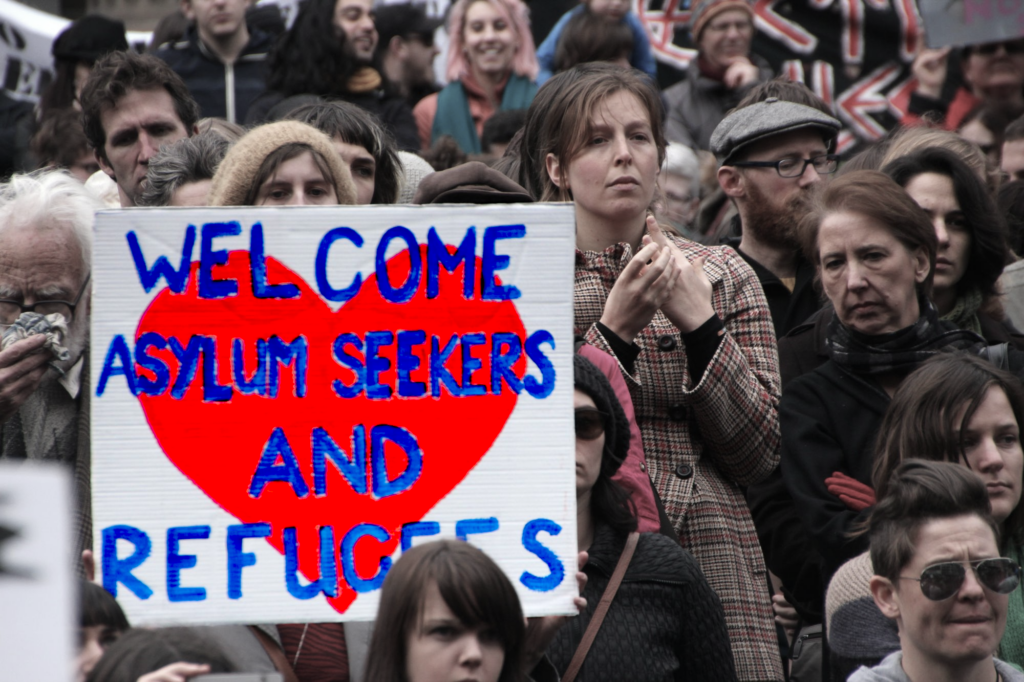
“Say It Loud, Say It Clear, Refugees Are Welcome Here!” The rallying call has been heard from Wellington to Sydney to Ottawa to London: a statement of invitation that goes beyond simple acceptance to suggest a real potential for sharing living spaces, resources, and experiences. Such a call touches at the edges of a long-dreamt human collectivity – a collectivity made impossible under capitalism. For in every case where that call is raised, it is in explicit response to conservative and fascist forces who attack refugees with various rhetorical and physical weapons. So this raises a series of questions: Why are refugees portrayed as an “other” by the Right? What forces push people into the category of “refugee” in the first place? What is the true scale of the refugee challenge? And how do we address that challenge in a way that combines solidarity and effectiveness?
Capitalism is a system of exploitation, with a small number of ruling class people taking a massively larger proportion of the world’s resources than could ever be considered equitable. That leaves the majority of the world’s people, including those of us who are relatively well-off simply by virtue of having been born in any of the world’s comparatively less exploited Western nations, to share what the capitalists haven’t yet taken for themselves. In New Zealand, for example, the wealthiest 10 percent own a little over half of the wealth in the country, leaving the smaller “half” of the country’s resources to be distributed amongst 90 percent of people. The UBS Global Wealth Report 2025 reports that just 1.6 percent of the world’s adults own 48.1 percent of the world’s wealth, with the remainder also distributed very unevenly. Australian artist Denis Lushch portrayed this perfectly with a simple image: three people sit at a table; a business-suited man who looks not unlike news mogul Rupert Murdoch or then Australian prime minister John Howard has a pile of cookies in front of him; a man in a high-vis vest and a hardhat, a stereotypical “worker,” has a single cookie on his own plate; pointing to the third man at the table, the businessman/politician warns the worker: “Careful mate… that foreigner wants your cookie!” The businessman/politician and the worker are both white-skinned and both have at least one cookie, even if that cookie distribution is extremely uneven; the “foreigner” is depicted with black skin and with no cookies. What’s the worker to do? There is clearly unspoken advice accompanying the businessman/politician’s “warning”: view the “foreigner” as an enemy, defend your cookie, and most certainly keep your attention away from my cookie pile. Defend the status quo; don’t question the status quo.
There’s no biological or spiritual pre-determination for people born into this world to somehow necessarily “become” what we call “refugee.” And it’s not as if people would willingly choose “refugee status” under safe and free circumstances. Instead, various forces create hardship and danger that make people migrate away from their homes. When people are forced to move within the borders of their own (assigned) country, we call that internal displacement. When people have the economic, logistical, and/or social ability to re-locate themselves and their family somewhat on their own terms and somewhat to a place of their choosing, we often refer to that in neutral or positive terms such as saying that they “choose to make New Zealand their home” or they are “granted citizenship […] in the public interest.” When “circumstances” force people into other countries, they are termed “refugee” or “asylum seeker.” These circumstances are often insufficiently critiqued, often portrayed in media as if some uncontrollable and unrecognisable force is randomly making peoples’ homes unliveable. In theory, it’s possible that some entirely “natural” disaster might produce such a circumstance, but in reality those forces are very recognisable: people are forced to abandon their homes because of the human-created forces of capitalism.
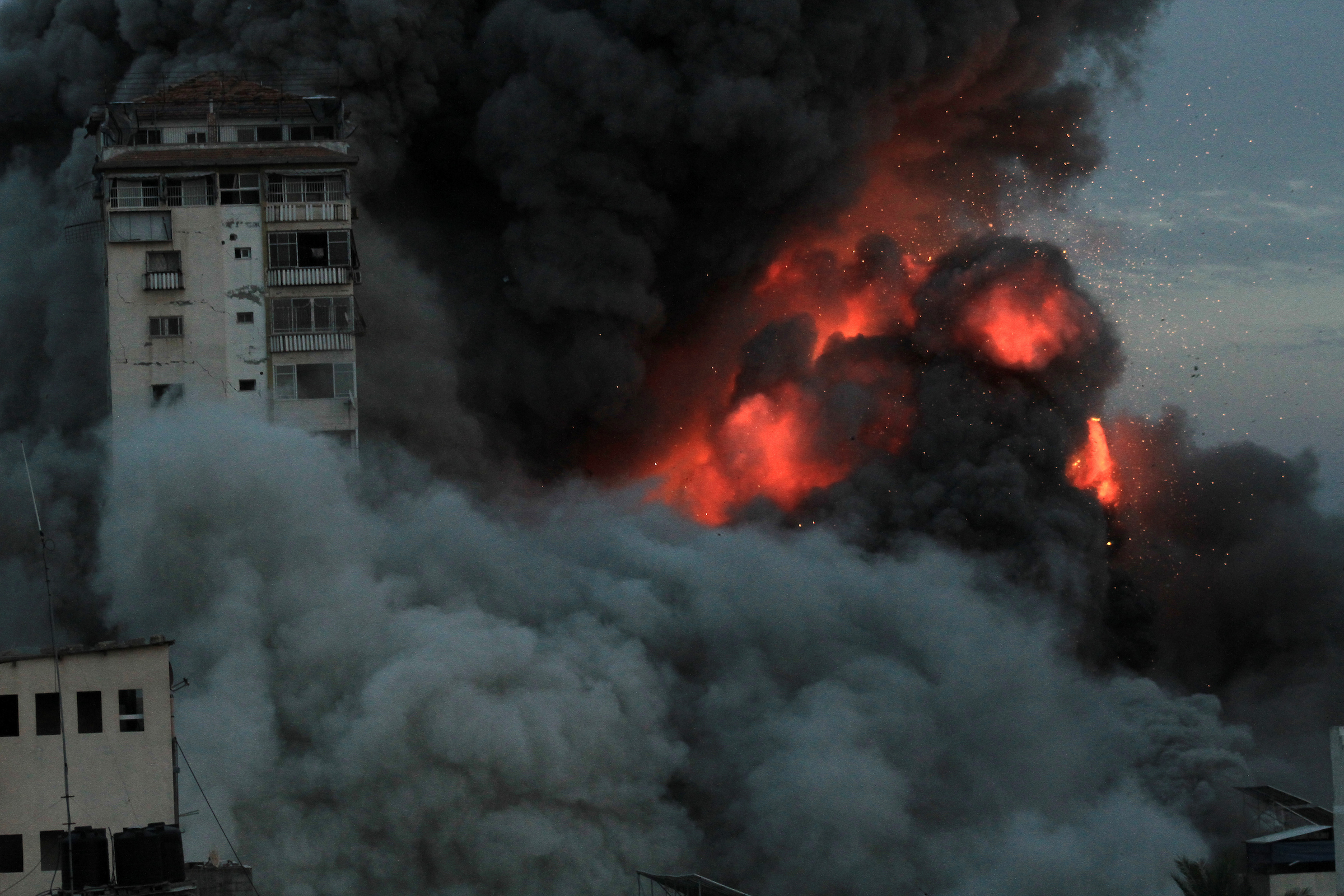
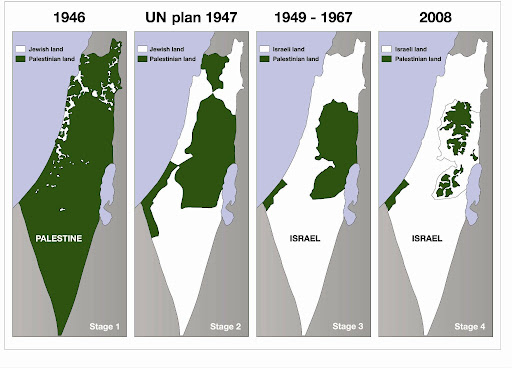
In our present day, the world is consumed by capitalism, and the migration associated with refugee status is often the result of the various manifestations of capitalism. The German turn to fascism in the 1930s to smash a threat to capitalism pushed Jewish, Roma, Queer people, and other minority groups from across much of Europe into refugee status. The establishment of Israel and its subsequent expansion pushed Palestinians into refugee status. The 19th and 20th century land-grab, and ongoing exploitation, of Africa and of those who live there has fuelled civil wars and pushed countries to economic collapse, pushing millions of people from across the continent into displaced and refugee status. The imperial proxy war of the late 20th century between the USSR and the USA armed and empowered local warlords and pushed people from Afghanistan into refugee status, and the USA’s so-called “War on Terror” continued that process into the 21st century. The more recent proxy war by those same powers in Syria, appropriating what started as people’s resistance to a brutal dictator, and compounded by the negative effects of climate change, pushed many Syrians into refugee status. As the Earth passes beyond the previously-feared 1.5 degrees of warming since pre-industrial times, and as capitalism drives industries and governments to ever-increasing consumption and production regardless of the consequences, our world’s climate is likely to push increasing numbers of people into refugee status. The making of a “refugee” is not a random and unexplainable problem – it’s a system problem.
Refugee Point reports of the war in Syria: “By 2024, over 12 million Syrians had been displaced, with more than 5 million seeking refuge in other countries and 7 million internally displaced.” The United Nations’ Refugee Agency, UNHCR, reports there are currently over 30 million refugees worldwide who fall within their mandate – that is, those who fit the legal definitions that agency is regulated by – an astonishing number of people at extreme risk and with extremely limited resources and protections. Simple human compassion suggests we should do all in our power to provide effective means to address those peoples’ immediate needs, and simultaneously address and permanently resolve the systemic factors that create such hardship for so many. We often hear excuses, however, theorising that welcoming refugees would overwhelm available resources.
New Zealand operates a “Refugee Quota Programme” to cap the intake of refugees at 1,500 people per year, officially considering “New Zealand’s capacity to support successful settlement.” That number increases New Zealand’s population by less than 0.03 percent each year, accounting for only about 6 percent of net migration to New Zealand (figures vary from year to year, but about 136,000 people migrate to New Zealand annually while simultaneously about 111,000 people migrate away, so net migration is fairly low). The actual “burden” – if people could be considered in such negative terms as the right-wing excuse-makers seem to – posed by the intake of refugees to the national infrastructure is a miniscule increase on the current provisions of that infrastructure. Liz Walsh addressed this same issue writing about the intake of refugees into Europe for Red Flag’s Australian audience in 2015:
But the crisis is not strictly about the number of people attempting to enter the European Union. The EU is home to more than half a billion people. Taking in 5 million more, a far greater number than is likely, would increase the population by less than 1 percent. That’s about half the annual rate of growth of Australia’s population over the last decade.
Nor is it a crisis of resources. Take housing. According to estimates by the Guardian, there are 11 million empty homes in Europe. Every single homeless person on the continent and every refugee breaching the militarised borders could easily be housed.
We could also zoom further out and consider what it would take to re-settle the total number of refugees in a global context. Using a 2024 world population estimate of 8.14 billion people, we can calculate that roughly one out of every 300 people in the world is a refugee by the UNHCR’s mandate. To look at that another way, if the total refugee population was dispersed throughout the world, if resources were shared equally, and if an economic assumption was made that refugees only use resources and don’t contribute, all non-refugees’ resources would be decreased (shared) by one three-hundredth: a not-even-noticeable amount.
So why the resistance? First, I’ll address the above assumption that refugees don’t contribute economically and are entirely a resource sink. This is implied in right-wing rhetoric, but is both: 1) Simply and absolutely not true; and 2) An erasure of human beings’ intrinsic value as human beings regardless of economic output. I applied that assumption above only to demonstrate a “worst case” to counter the idea that refugees pose a burden: quite simply, we could globally accommodate all refugees regardless. In most cases that you see this assumption, though, it is put forward to bolster xenophobic divisions within the working class. Remember Lushch’s image of the worker pitted against the immigrant over a single cookie? It’s apt that the worker is portrayed as White and the immigrant as Black. In 2025, New Zealand took in refugees under its quota from Syria, Afghanistan, Myanmar, Democratic Republic of the Congo, Iran, Pakistan, Colombia, Eritrea, Somalia, and elsewhere. Mohan Dutta, director of the Massey University Center for Cultured-Centred Approach to Research and Evaluation, describes the contrasting of the Black “other” against: “broader architectures of white supremacy, settler colonialism, neoliberal multiculturalism […] that together produce the conditions for racialised violence.” Divide-and-rule at play.
But, even more critically for the capitalists, they need for us to not notice what we might potentially unite against. It’s critical for capitalism’s continuation that the working class believes there is only one cookie to go around – only the resources that we have managed to keep within our grasp. And certainly those resources are, intentionally, limited. News media frequently report on delayed ambulance services, stretched hospital facilities, overburdened teachers, and poorly maintained sanitation infrastructure. But those resources are so severely limited because the bulk of the resources are hoarded by the capitalists: the pile of cookies, or over half of the country’s wealth owned by a small fraction of the people, or nearly half the world’s wealth owned by just an even smaller fraction. The other assumption in the earlier calculation that accommodating all refugees would be a not-even-noticeable redistribution, was for resources to be shared equally. At present they most certainly are not.
We must continue to fight against divisive, xenophobic, racist politics that demonise rather than humanise those who are fleeing devastation. We must increase, and ultimately do away with, quotas on people’s right to live safely and fully. We must dismantle the imperialist and colonial system that causes people to become refugees, and replace it with a true internationalism that solidarises with all peoples’ right to be free and to thrive everywhere. And this includes urgently stopping and reversing the death march of global warming and climate change. All of these need to be undertaken simultaneously. This is no small task ahead of us, but we have a world to win when we succeed.