For as long as there have been calls for radical change, students have been involved in a big way. In the past decade alone, we’ve seen the rise of massive movements led by young people around the world. From global calls to combat climate change and campaigns for a free Palestine to mass protests against governments that have even resulted in regime change, one cannot doubt the importance of students in radical politics.
In particular, university campuses and other such institutes have been hotbeds from which such movements have sprung. As we look back at the history of student radicalism, we see the same fire and creativity that fueled student protest then as we see now. Often, those student protests would explode into mass movements, resulting in massive changes to the way we live. Thus, we take a look to the past so that we may step further into our future.
One striking era of protest that maintains an influence today was that of the late 1960s. Many young people were growing up with a sense of increased global connectedness as the Western and Eastern Blocs sought global influence post World War II. This feeling of connection was shaped by factors like increased access to public education and the increasing availability of visual media. Being able to see, hear, and read about the plights and efforts of people from around the world as you yourself struggled to break free from stifling circumstances meant that pressure was building up to change the system.
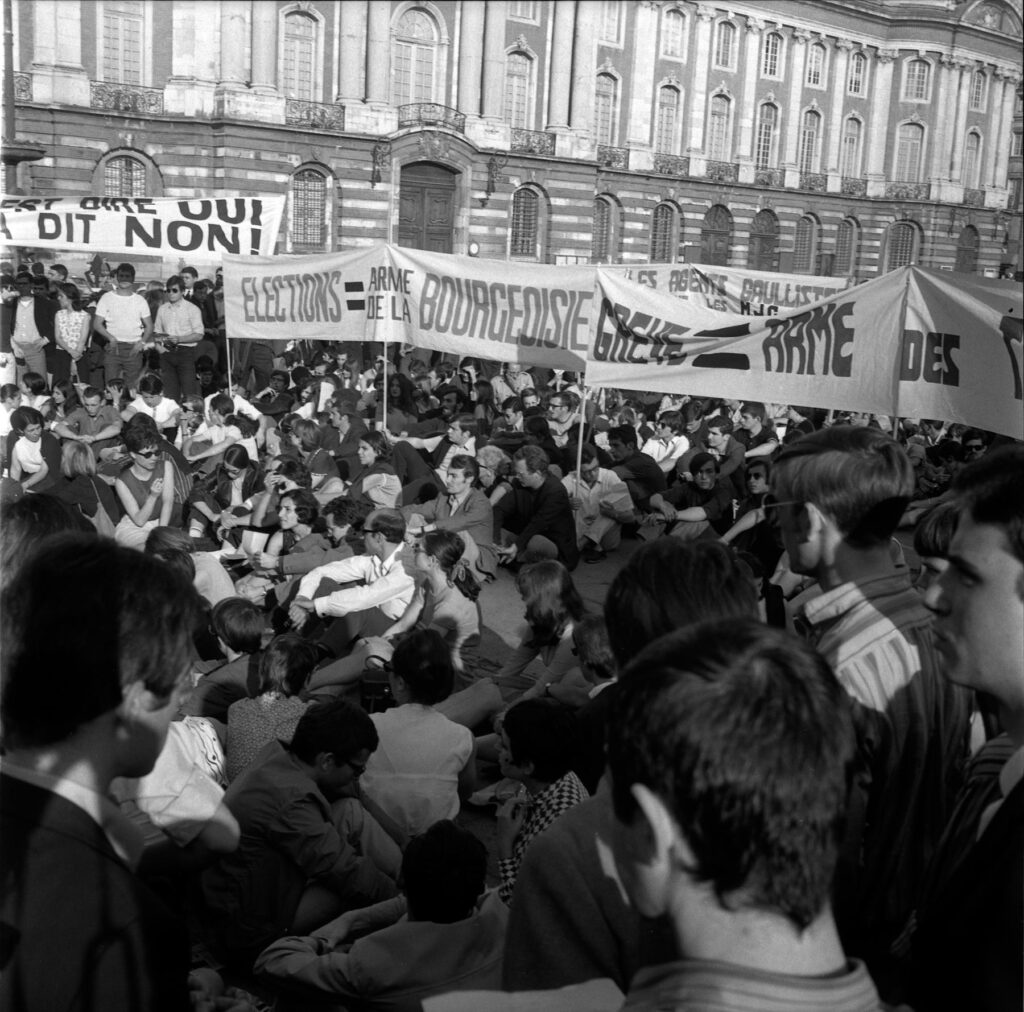
The pressure came to a head in 1968 when students, workers, and the disenfranchised rose against repressive state apparatuses and oppressive social structures. In France, student action against class discrimination quickly escalated into the events of May 1968, which saw general strike action and the country at the brink of revolution. Students in Italy fought against the traditional capitalist and patriarchal society, eventually establishing worker-student assemblies and encouraging the rank-and-file union activity of the industrial struggles known as the Hot Autumn. In Mexico, students led protests with the support of Mexican civil society for political reform and greater democratic ability; and in Pakistan, students held a protest campaign to expose the growing class divide, leading to mass popular protest and the overthrow of the dictator. In Aotearoa, this period would mark the beginning of the Māori Renaissance.
Heading into the early 1970s, young, educated Māori were looking for a way to combat continued attacks on Māori culture and language. Following a conference at the University of Auckland organised by Ranginui Walker, Ngā Tamatoa was formed. The group would work in their own right and alongside the Polynesian Panthers to fight racial discrimination and to confront the New Zealand government on, for example, Treaty of Waitangi breaches. In 1972, Ngā Tamatoa would present a petition to the Crown to have reo Māori taught in schools and would go on to organise the historic 1975 Land March, led by Dame Whina Cooper. Although those groups would eventually disperse, their actions would leave a long-lasting legacy on social reform in New Zealand.
These activities would mean the abolition of the 1967 Māori Affairs Amendment Act, which had forced Māori land into the colonial capitalist system of land ownership imposed by pākehā. This change meant establishment of legitimate communal ownership of land by iwi. Efforts by Ngā Tamatoa would see Waitangi Day ratified as a holiday; and further, the establishment of the Waitangi Tribunal. We see here that the power of students, paired with experienced activists and bolstered by a strong community, saw a reinvigoration of the fight for Māori culture and language. In fact, this fight continues today with the National, ACT, and NZ First coalition government’s attempts to reintroduce the same sorts of legislation that was being fought against in the 1960s and ‘70s.
As we move through the 1970s, we saw students leading democracy movements against military dictatorships and right-wing regimes in countries like Thailand and Ethiopia. In the 1980s, we saw massive student movements, such as in South Korea, as the people continued to fight for democratic freedoms. But by the 1990s, neoliberalism would take hold of much of the world, undermining community structures and isolating students and workers from one another.
Neoliberalism, as it continues today, means massive pushes for privatisation and gutting of public services. For students in New Zealand, it ushered in the era of high university fees and student loans. Students would protest this for most of the decade, preventing the introduction of even higher fees and interest on those loans. As the full privatisation of tertiary education was on the table, these fights were hard-fought, but without mass public support they weren’t able to prevent the steady trickle of ever-increasing fees that we see today.
Constant attacks on the ability of workers to organise, and the pitting of young people more and more against each other has meant a downturn in radical student politics in the twenty-first century. Despite this, the past decade has seen dozens of student-led protests in action. School Strike for Climate mobilised millions of students globally in 2019 to demand action from political leaders to curb the effects of climate change. Student-led protests for a free Palestine grew rapidly at the end of 2023 and through 2024, often fending off serious government crackdowns to deliver demands. And protest actions led by students and young people globally in recent years have meant significant reforms and even the overthrowing of governments in upwards of ten countries.
Often, the successes of student protest are made that much more decisive through widespread public support or participation. Fiery students working with experienced organisers means more resilient and impactful movements, and the combination of these with the working class means stronger combatting of capitalist overreach. Many student movements have fallen into obscurity or were swept up into parliamentary politics due to the lack of a political home to retain those lessons. To combat this, we emphasise that it is essential to have a revolutionary socialist, working-class party to expand on what we learn from each movement and to carry this knowledge into future campaigns for a democratically organised world.
Over the past decade, real cracks have started to emerge in the neoliberalism-induced student apathy. Occupation attempts on campus, guerrilla political art, radical action groups challenging student associations, and so on reveal a renewed appetite among students for real, material change locally and beyond. In Aotearoa, this can also be said for the working class. Specifically, we have recently seen some of the country’s largest strike actions in response to this government’s gutting of public services, and the 2024 Hīkoi mō te Tiriti was likely the largest protest action in our capital’s history.
It is therefore as important as ever for our students to support our workers and for our workers to support our students. These environments train us all to have resilience in our movements and to practice real democratic approaches to decision-making. By combining into a revolutionary party, we can continue to increase our power through the lessons we learn together. With more combined actions against rotting capitalist governance, we can truly make the world a better place. Students and workers are the fire and the future of our world.
Image caption: Protests in France in May 1968, which started with student protest against universities and the Government, spreading to the masses of the working class. Photo credit: Donna Nobot, Wikimedia Commons.