Freedom from Oppression, Freedom from Exploitation
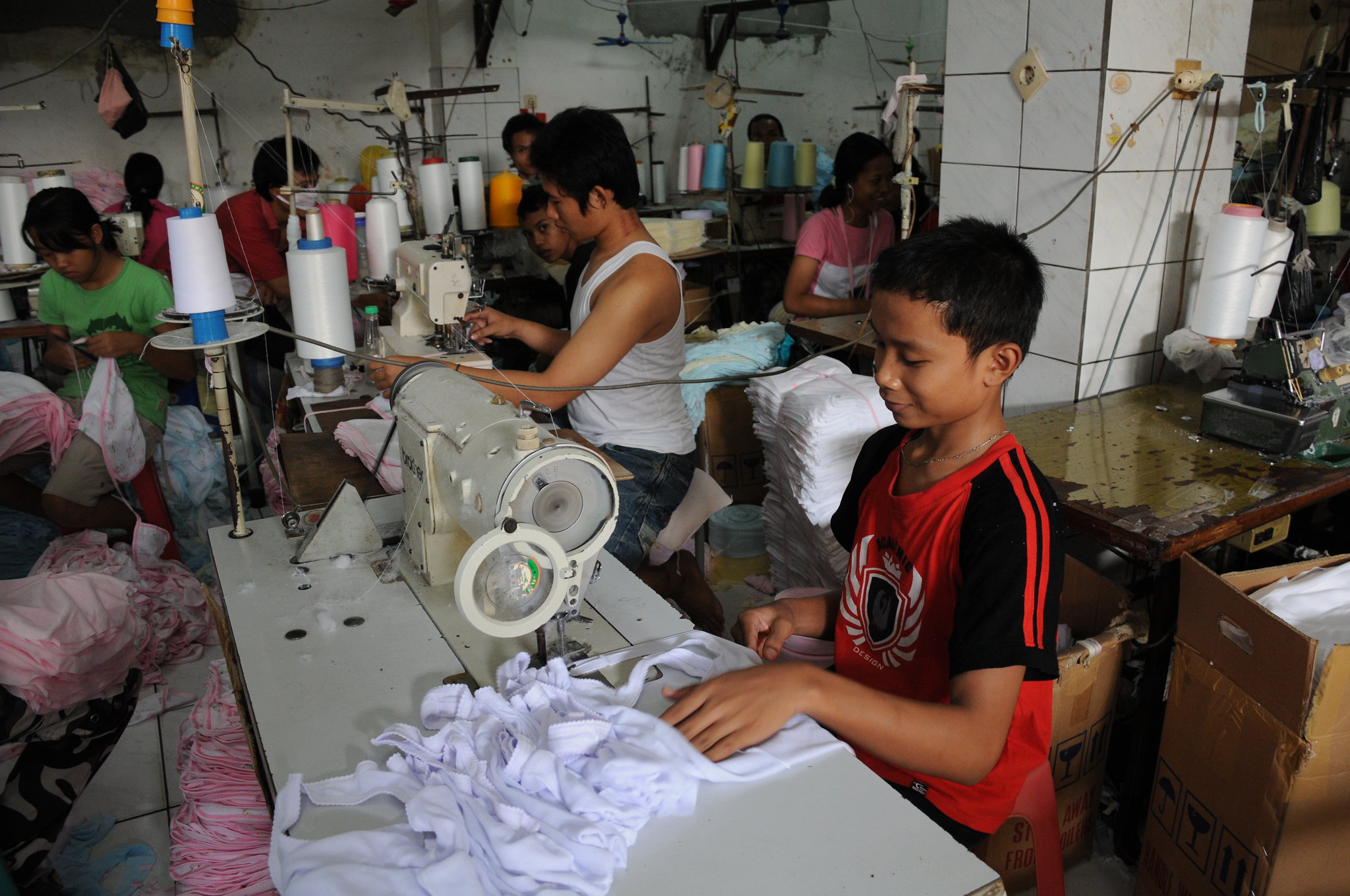
Freedom is a contested word, but the real freedom at the core of the socialist vision – freedom for everyone – must be fought for. Socialists envision a world where everyone has the freedom to take the time we want to do the things we want. A world where the guiding principle is well-being; where all people are free to engage in art, self-reflection and personal development, to learn the things we want when and how we want to, and to do work we are interested in. A world where everyone has the freedom to rest as much as needed, recognising that we are on a spectrum of wellness, age, and capacity for work and that our position on that spectrum will shift from time to time throughout our lives. The union fight for the 40-hour work week, for paid holiday and illness and parental leave, and for some semblance of workplace safety measures has given us a glimpse of this vision, but we intend to go much further. We envisage freedom from bosses whose motivation is to extract profit from the fruits of our labour. We envisage the freedom to not be alienated from what we produce.
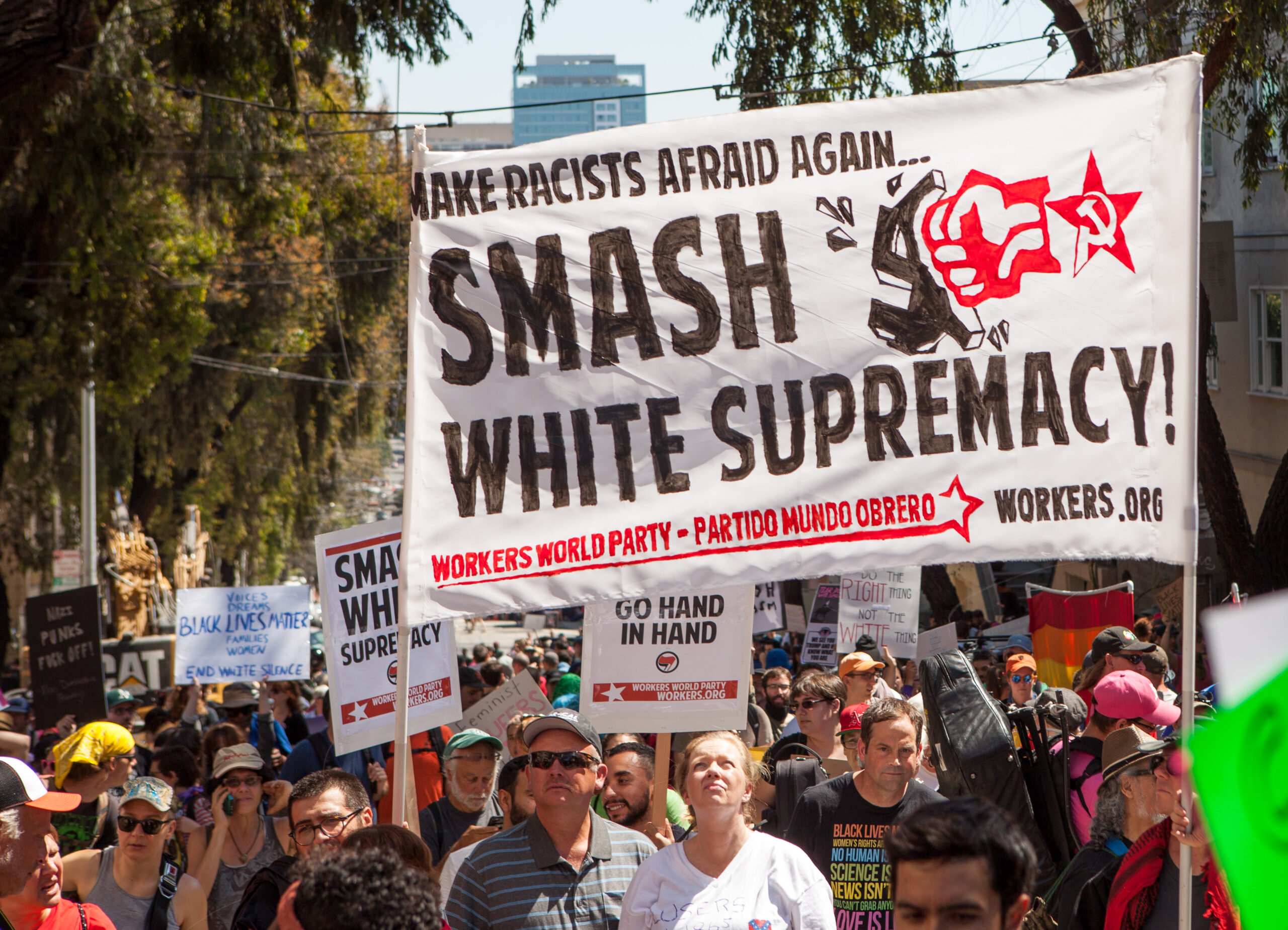
Socialists demand freedom for humankind from being set against one another in artificial divisions, and from being shamed, excluded, exploited, and scapegoated for who we are. Capitalism has thrived on misogyny, racism, xenophobia, and queerphobia. Socialists understand that we cannot be free until we are all free, and this means a future where all those bigotries are eradicated. We must ensure the freedom for all Indigenous people from dispossession and disconnection from whenua (special connection to land). Imperialism and colonialism have sought to exploit land and people, and this exploitation must be ended, compensated for, and prevented from ever occurring again.
People are not disposable resource units, and our value is not determined by our productivity or other measures of utility. All people must be assured the freedom to live fully as much a part of society as they wish to be. This means everyone must be absolutely assured of good-quality accommodation and must be fed as an inalienable human right, and it means everyone is provided any necessary assistance.
Freedom includes the right to equally free movement. Currently capital (investment and outsourced production) and ultra-wealthy people can cross borders unimpeded. Just look at how New Zealand welcomes “ultra-high-net-worth” immigrants while regularly creating “tightened rules” (restrictions) for everyone else. For the most part, borders are insurmountable barriers that maintain injustice, trapping people from escaping economic and environmental hardship, warzones, fascist, and other authoritarian regimes. Borders impede people from uniting with friends, family, and lovers. Freedom means a world without borders. Likewise, freedom must include freedom from incarceration and associated state-imposed subjugation and violence. As J Smith wrote in an article on the ISO website:
The prison state is an inherently abusive institution. Its origin was as a tool to suppress Māori resistance to European colonialism and to this day Māori are imprisoned at at least 8 times the rate of non-Māori. Prisons have never been about keeping people safe: rates of recidivism alone illustrate that. They are a tool for the ruling class to maintain capitalism and colonialism [.]
Therefore, we envisage a world of cooperative support, where peoples’ needs are met rather than criminalised. Where limitations absolutely must be imposed to keep others safe, the principle of freedom requires we provide the minimum constraint and the maximum support and care toward full social reintegration.
To achieve all of this, we set our sights further than just overthrowing the current ruling class. Socialists do not envisage taking control of countries and governments, installing “our own people” into newly vacant roles within those institutions. What we have had thus far is a system of oppression designed by the capitalist class, with only the palest hints at democracy, education, and justice. Such institutions within this system are designed to keep us complacent and compliant in our oppression. It is imperative that the current systems not be re-used. Freedom can only come from intentionally disassembling the bureaucratic systems of the capitalist state. As Marx and Engels put it: “the working class cannot simply lay hold of the ready-made state machinery, and wield it for its own purposes.” We must institute new systems that provide genuinely fair and collective decision-making, distribution, education, and justice.
Social Responsibility
We are social creatures, and we see our future continuing to be social. We recognise numerous forms of connection: ancestral, ethnic and cultural, geographic, and a shared global connection as “humankind”. While many such positive connections will persist into the socialist future, we envisage dissolution of negative ideas of competitive struggle – replaced with widespread celebration of collective unity and mutual support. Intrinsic to both social connectedness and physical proximity is the obligation to avoid harm to those around us. The freedom to be and to grow does not mean freedom from responsibility. One example is if another pandemic similar to COVID-19 occurred, we would be obligated to take steps to protect those around us – steps which we well know include social distancing and contact limitation, mask-wearing, and vaccination.
We are realistic in recognising that the overthrow of capitalism doesn’t automatically generate infinitely usable and environmentally sustainable resources, or useful and fair distribution of those resources. But we absolutely reject eco-fascist arguments about overpopulation. There are already enough resources to provide basic needs, including housing and feeding everyone. Socialist production and distribution of food, free from the shackles of private ownership and exploitation, would be even more efficient, as well as socially and environmentally responsible. We recognise a duty to one another to contribute toward overcoming agreed shared threats and goals, famously phrased by Marx as: From each according to their ability, to each according to their needs! Without the expectation of producing a surplus for profit, work requirements will be lessened; but, at least for the foreseeable future, the production of food, accommodation, and other needs will still require human labour, and we will each have a social responsibility to contribute as we can to the ongoing shared project of sustaining everyone.
Freedom is Attainable
Socialists have been accused of being “utopian”, implying our vision is unobtainable. We reject that defeatist attitude, rejecting ideas that humans are “naturally” competitive, hierarchical, exploitative, or bigoted. Such ideas are promoted by a tiny minority who project their own aspirations onto the rest of us, and those ideas only serve to uphold the current system of exploitation. We certainly shouldn’t accept capitalism as the only, the final, or the best system of human organisation. We really can achieve the envisioned cooperative future.
Conversely, socialists are sometimes accused of being against freedom. We’ve considered situations in which individual freedoms must be balanced with social responsibilities. But the perverse accusation extends further, holding up as examples supposedly “communist” dictators such as Stalin and Mao. Authoritarians have often appropriated socialist language to sow confusion and disorient resistance to their rule. There is nothing socialist or communal about an undemocratically imposed elite of bureaucrats under the rule of an all-powerful and immoveable ruler. Socialist groups such as the ISO work toward true liberation.
The scary-sounding phrase, “the dictatorship of the proletariat”, is sometimes wielded as an accusation of socialist authoritarianism. Arising after the defeat of the Paris Commune, the phrase refers to the working class gaining through revolution the political power required to manage production for itself, free from self-interested exploitation of the capitalist class. We anticipate capitalists attempting counter-revolution; the workers’ state is a tool for preventing the capitalists from re-taking power. As the necessity for such defence passes, we intend for the state to wither away to simply whatever is widely agreed as useful to facilitate collective organising.
Implementation
Some of the “how” of socialism is already described in its vision. For example, in an article titled The Importance of Envisioning Socialism Today, David Kotz (2022) writes:
If people are to be empowered to make the economic decisions aimed at meeting their individual and collective needs and wants, a future socialism must be based on public ownership of productive property and natural resources, a democratic participatory planning mechanism, and a shift in state power from the capitalist class to the working class and its allies.
It is well known that the working class must take control of the means of production, and must have the clarity and cohesion to resist counter-revolution. But we accept that there are still many unknowns. Socialists claim for the collective working class the freedom to determine what our post-revolutionary collective future will look like and how it will function. Some of that determination will occur and develop over time as we face challenges and collectively, freely, discuss and develop solutions.
We don’t yet know exactly how we will structure our future societies. We don’t know what technologies will be available. We can be certain our future must be truly democratic, with all representative roles being responsible and accountable to the whole working class and delegates being readily recallable (able to be un-elected) if they fail to represent collective well-being, or when the will of those represented changes. Take a look at the ISO’s constitution for one small example of trying out and developing these ideas in preparation for the future. What we do know is that the working class has the capability to create a free, collective future, and we want you to join us in that project.
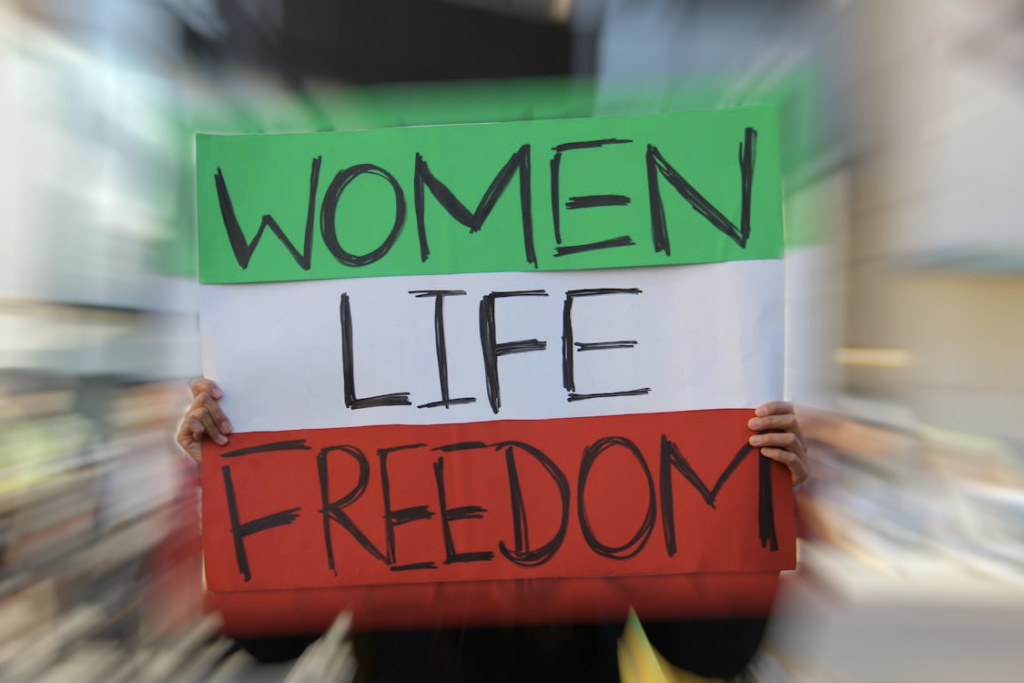
Image Caption: A person holding a placard which reads “Women Life Freedom”, a rallying cry for Kurdish and Iranian liberation, in Vancouver, Canada. Original photo credit: Sima Ghaffarzadeh. From Pexels. Licence: Creative Commons.