The real start of the Dawn Raids was not on 13 March 1974. Instead, the true origin lies much earlier, in the post-war economic boom of the 1950s. The industrial expansion at the time created a massive demand for labour, especially cheap labour for manufacturing and construction. The rapid expansion of industry combined with union dominance led to a historically low unemployment rate of under 2 percent for over two decades, much to the chagrin of the capitalist class.
A reserve army of labour (in the form of a high unemployment rate) is optimal for labour discipline, making sure desperate workers will take up any job, and employers can fire and selectively hire as brutally and efficiently as possible. One method the New Zealand government employed to ease this chronic labour shortage was allowing migrants to arrive with restricted visas, usually tied to an employer, guaranteeing wage slavery.
The post-war era saw a slow dismantling of the “White New Zealand” immigration policy of only allowing British subjects (who spoke English) to immigrate and naturalise, towards a seemingly more lenient one regarding Pacific nations. This was due to employers’ need to end significant labour shortages: the logic of capital forcing the New Zealand state to recruit workers from outside its borders. In 1945 the Pasifika population of Aotearoa was 2,159 (just 0.1 percent of the population). By 1976 this had increased to over 61,000 (close to 2 percent).
This wasn’t the benevolent grace of New Zealand saving its colonies of Niue, Tokelau, and the Cook Islands from unemployment and natural disasters, though the media framing often portrayed it as such. It was a calculated manoeuvre to select how many Pacific Islanders entered the country for work. Once the colony of Western Samoa (now the nation of Samoa) achieved independence from New Zealand, an employer-initiated immigration quota system was created. This was changed to a three-month work scheme in 1964, then expanded to a six-month visitor permit, as well as including Tonga and Fiji in 1967. Although the time limits were loosely and sporadically enforced at the time (including against British immigrants) because factory owners still needed the manpower, those time limits would later be the basis for the racist crackdown.
As simply as bourgeois rights are given, they are just as easily revoked. In 1968, after a small recession, the New Zealand police force expanded deportation from those labelled as “violent criminals” to all people who overstayed their visas. This included a provision that allowed police to demand passports at any time and arrest people suspected of overstaying if they could not prove legitimacy. In 1973, Aotearoa faced an economic crisis. The United Kingdom had joined the European Economic Community (EEC), cementing closer trade ties with continental Europe and sharply reducing its need to import from a distant ex-colony. New Zealand’s largest export market contracted almost overnight. What followed was a decade of stagflation as the structural dependence on British trade came due. A global recession and oil crisis compounded the damage. Capital now had an “excess population”: workers it had recruited to fuel expansion were now “surplus.” But the State had the legal means to dispose of them, a process that would be weaponised with brutal, systematic efficiency. The state machinery of mass eviction was set in motion.
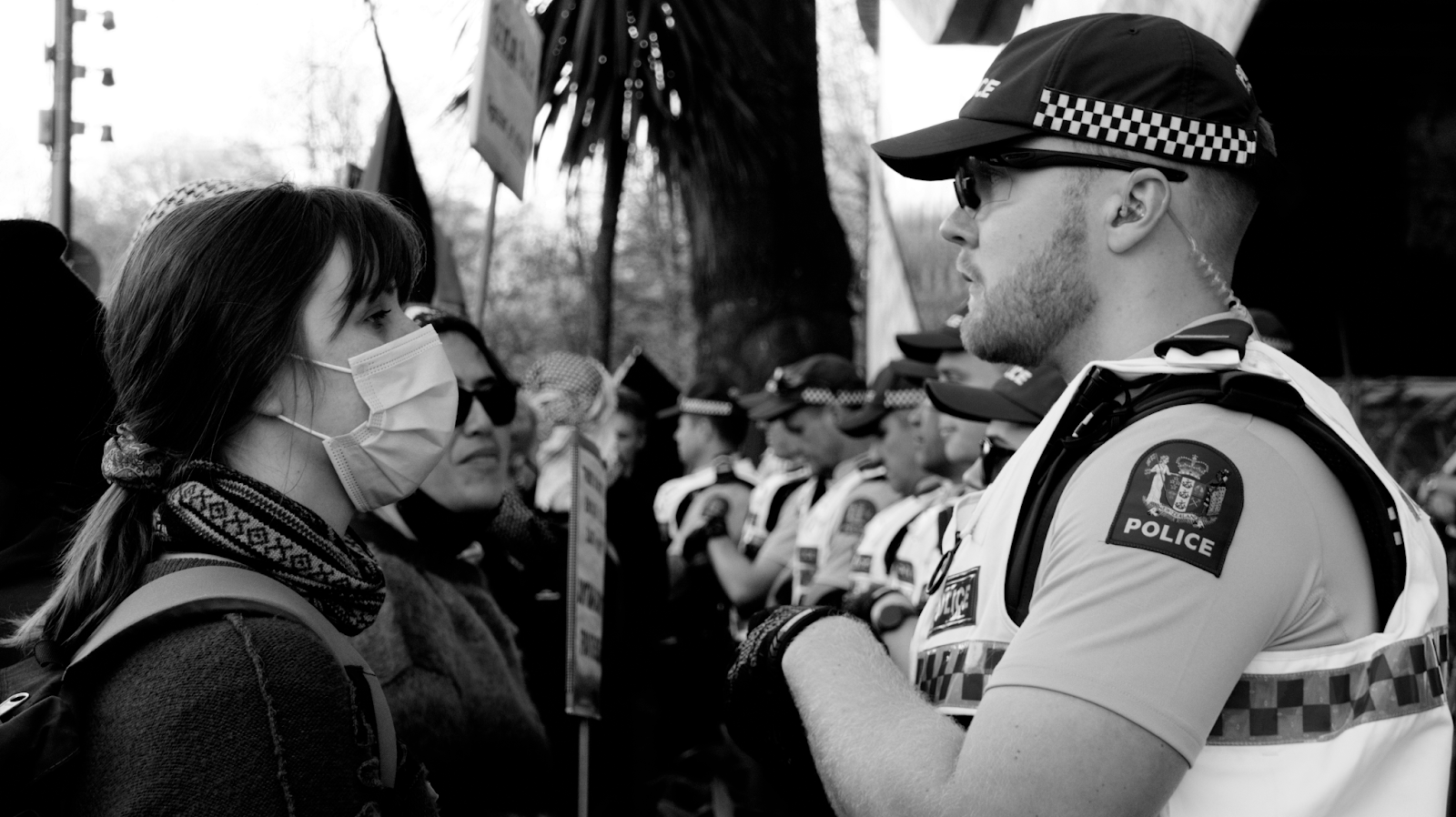
The dawn of 13 March 1974 was the start of several years of racist torture of the Pasifika community by the Norman Kirk Labour Government. New Zealand police and immigration officers blasted sirens and lights and broke into people’s houses in the early hours of the morning in what came to be known as the Dawn Raids. Police targeted factories, public places, and even churches where suspected overstayers were living. Anyone suspected of overstaying was required to immediately produce their passports to police for inspection; hundreds were arrested, and an entire community was scapegoated for the economic crisis. The irony of this was a corporate pushback when the Kirk government offered a two-month amnesty if people “voluntarily” left the country – in reality it was either leave, or be arrested. During that time, over 1,500 left in those two months, and manufacturing sectors recoiled. What followed soon after were harsher and more viciously-applied short-term visas. The capitalists need workers; they just don’t want the associated humans.
Robert Muldoon’s 1975 election campaign was explicitly racist, speaking to an assumption that immigrants were taking the jobs of “real” New Zealanders, and the media followed suit. Although most (67 percent) overstayers were immigrants from Europe, Australia, and the US, the vast majority (86 percent) of overstayer prosecutions were against Pasifika communities. The Dawn Raids were a targeted, racialised campaign designed to discipline a specific fraction of the working class, create an atmosphere of terror and humiliation, and manage the social tensions of capitalist contraction. By the end of the 1970s, over 1,500 people had been deported and many more families terrorised by imprisonment and state repression.
Resistance to the racist escalations was wide-ranging and, to the dismay of the State, persistent. The main resistance factions included Ngā Tamatoa, Citizens Association for Racial Equality (CARE), Council for Civil Liberties, the Federation of Labour (FOL), and many local church groups. This coalition led to the formation of Amnesty Aroha, which campaigned tirelessly for unconditional amnesty for all overstayers, and produced informational booklets for affected families. Union delegates set up workplace warning systems and confronted police who tried to enter job sites without warrants. Protests and pickets were also part of the coalition’s repertoire. One such picket against the British cruise ship Ocean Monarch, which planned to quietly deport Tongan overstayers, successfully pressured the crew to refuse involvement in the deportation scheme.
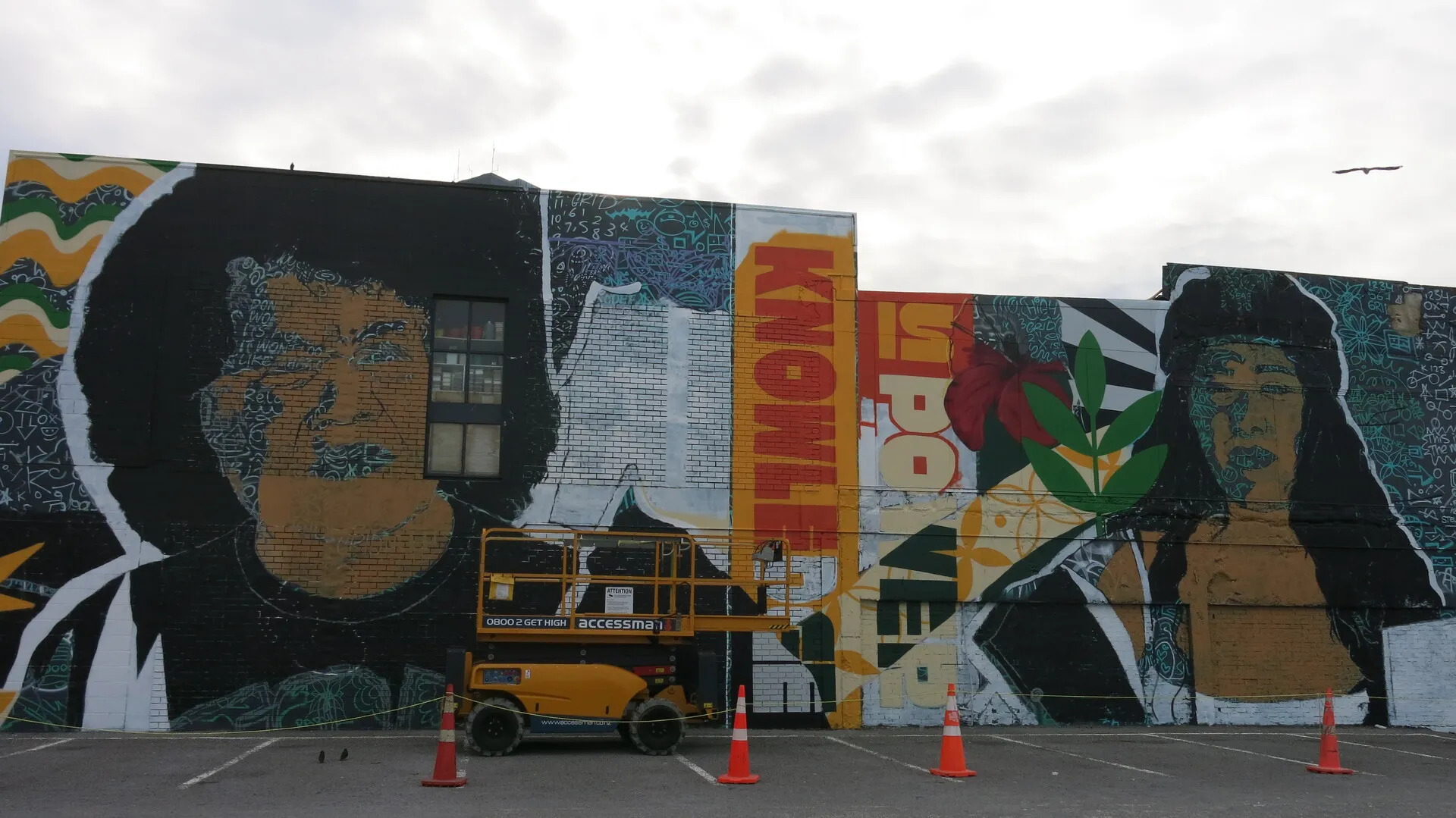
Perhaps the most famous pole of resistance was the Polynesian Panther Party (PPP). Founded in 1971 and modelled after the United States’ Black Panther Party, the PPP was a radical grassroots organisation of Samoan, Tongan, Cook Island, and Māori workers and students who explicitly named capitalism and colonial imperialism as their enemies. Their community survival program had a food cooperative that fed over 600 families, a prison shuttle, tenant advocacy service, and supervised homework centres. When the Dawn Raids commenced, the PPP mobilised for confrontational self-defense. Alongside future prime minister David Lange (their legal advisor at the time), they distributed thousands of legal aid pamphlets and created the Police Investigation Group Patrol (PIG Patrol), in which members followed police officers through predominantly Pasifika suburbs to dissuade and report illegal and violent arrests.
The most spectacular tactic, and arguably the most successful, were the reverse dawn raids. As the name suggests, Panthers would arrive in the dead of night and flood the homes of prominent National Party ministers (such as Frank Gill, the minister of immigration) with spotlights, and using loudspeakers would demand to see the passports of the very people who demanded this from Pasifika families for almost a decade. This was one of the few times in their lives that the bourgeoisie and affluent White communities would gain some insight into what they were truly enforcing upon some of the most desperate and precarious people in Aotearoa.
Within three weeks of the reverse raids beginning in 1979, the Government halted the Dawn Raids and created an amnesty program in which nearly five thousand overstayers registered, and the vast majority received permanent residency. This is often read as the movement’s vindication. It was, but not in the way that liberal historiography suggests.
The State did not retreat because it was persuaded by “justice” arguments. It retreated because the political and economic costs of continued enforcement had become prohibitive. Deporting five thousand workers amidst ongoing mass organising, industrial action, and the public relations disaster of police raiding family homes in the middle of the night, raised the cost of enforcement beyond what the ruling class was prepared to pay. The State responded to organised power, not purely to reasoned argument. It made a tactical retreat. The underlying structure of racialised, precarious migrant labor remained, however, entirely intact. After the full computerisation of the immigration system, the State could more precisely determine who was overstaying; the deportation program continued, albeit at a less media-noteworthy pace.
Although prime minister Jacinda Ardern officially apologised for the dawn raids in 2021, Pasifika workers today remain a racially segmented, highly exploitable fraction of the New Zealand labour force. The Recognised Seasonal Employer (RSE) scheme recruits Pasifika people for low-wage agricultural work on precarious, industry-tied visas that restrict their geographical and occupational mobility. Their right to remain is conditional on continued productivity. Their residency status is held hostage to employer satisfaction. Their visas only exist for a maximum of seven months a year. The border regime continues to this day. Capitalists continue to get the workers without having to care about the social reproduction costs of the humans.
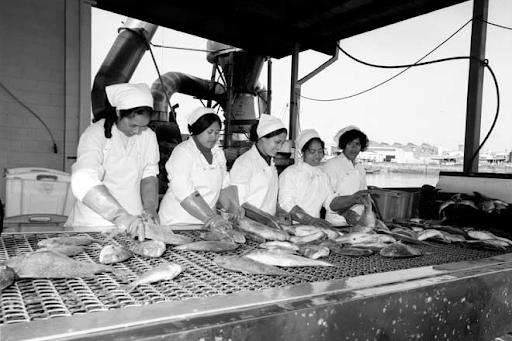
Banner Image: Pasifika Factory Line Workers. Photo credit: Archives New Zealand, Gregory Riethmaier, Creative Commons Attribution 3.0 New Zealand Licence.