Capitalism and technology often seem synonymous. The word technology conjures an image of Google headquarters full of tech bros in suits yapping about how best to maximise ad revenue, but a different vision of technology is possible: one that centres humanity and shared creation. The fundamental problems we have with technology are really fundamental problems with capitalism. With the destruction of the repressive powers that uphold the system, there is the possibility of a better world.
Automation is a bedrock of capitalist exploitation. The capitalist class is constantly trying to increase their profits. This means finding ways to intensify the exploitation of their workers: increasing the amount they produce without incurring greater costs in production. Essentially, this is made possible only by either reducing wages or increasing the speed at which a worker can work. One major way to do this is investment in technology (fixed capital). If capitalists switch work previously done by people to work done by machines, they can hire fewer workers or they can give them other jobs, meaning more can get done overall. With each new technological advantage, capitalists get a small edge in the market. They can sell their products slightly cheaper whilst maintaining the same degree of profit per product, encouraging more sales and greater profit overall. This forces other capitalists in the sector to make these same changes, creating an endless cycle of trying to innovate more quickly.
For workers, increased automation is a big burden. It can mean sudden job losses, a growing pool of other laid-off workers competing for work and often a worse quality of the jobs that remain. Fear over losing one’s job is harnessed by the bosses to encourage workers to work harder. This is also intensified by the construction of a notion of competition with other workers. When jobs are scarce, or workers know “restructuring” is on the table, it’s easier to drum up these kinds of sentiments. This sense of being divided from your fellow workers also makes it more difficult to organise collectively to protect the interests of all workers. The introduction of new technology often also means workers spend more time working with technology and less time working with each other. It is also often less interesting or skilful work. In many instances, workers become just a small link in a chain, never even seeing the end product they are making. This creates a state of alienation where workers are divided from their work, each other and their essential humanity. Not only is this isolating and miserable for workers, but it also helps to prop up the system of capitalism that thrives on this division.
Under socialism, automation could have a radically different quality. New automation practices would only be introduced after democratic approval from workers. This would mean only automotive practices that were safe and improved life would be introduced. The benefits of automation would also go directly to workers rather than to the capitalists. Workers would have ultimate decision-making over any structural changes that would come as a result of automation, including what to do with the increased rate of production. This could mean letting workers spend fewer hours a day working: reinvesting that time either into personal joy and development or into community efforts. It could also mean spending the same number of hours but using the increased value produced to invest in improving conditions for workers, either in their workplace or in society as a whole. For example, using that money to fund free healthcare for them and their families. These decisions would be made democratically and collectively in the hopes of using technology to make the world a better place.
Another area of technology that would flourish under socialism is technological development. A myth often wielded against socialism is that without capitalism, there would be no motivation to develop new or better technology. That no one would work, or definitely not work hard and innovatively enough to create something new. Yet there are lots of reasons we can tell this is completely false. For one, even in a profit-driven world, there are many instances of people creating and innovating for various non-profit-driven reasons. Think of those who discovered insulin, who sold their patent rights for just one dollar, thus ensuring it would be accessible to everyone. Or the vast amounts of open source software available on the internet. There are hundreds of examples of such projects done by people out of the goodness of their hearts.
If technological development is typically done in pursuit of profit, it is not because individual innovators want it that way but because the structures of capitalism confine it to be so. One major issue with both technology development and research is funding. Investing in new technological advancements that may or may not work costs money. Some experimental projects of public benefit are funded by the government; usually, these take place in institutions like universities, but these opportunities are beginning to dwindle. In New Zealand, recent cuts to programs alongside systematic underfunding of tertiary education have made these advancements for public good fewer and further between. This means most technological innovation is now privately funded, essentially meaning funded by capitalists who are the only people with the power and disposable income to undertake such projects. Therefore, technological development is funded in the interests of the capitalist class. Projects get funding only if they are projects that will make a lot of money.
The push for profit under capitalism incentivises many technological advancements that have devastating impacts on society. Capitalism props up a trillion-dollar death industry, creating weaponry that is used to assert imperialist power and slaughter people. Technology companies spend huge amounts making their social media platforms more addictive, often pushing content specifically designed to give inconsistent dopamine responses associated with greater anxiety and lower self-esteem. Artificial Intelligence presents great problems with huge environmental damage, poor conditions for workers, and the lack of human creativity. Under socialism, none of this would be profit-driven. The only technology that society would create and invest in would be technology that aims to improve life for everyone.
Under socialism, funding models would prioritise projects that help people; they would be democratically run and reflexive: able to adapt to the ethical wants and needs of society. It would also be possible to fund more diverse experimental projects, as there wouldn’t be such pressure to keep up in a competitive market. This would allow for new original methods for development expanding the current limits on every aspect of technology. There is a great potential for socialist technological projects to handle many of the challenges a new socialist regime would face. Better climate research could allow for innovative adaptation techniques that actually work. Human-centred healthcare models could lead to the development of new, better medications and treatments. Communication technology could be used to drive social connectivity and civic engagement. The positive impact of technology under socialism is likely greater than even the limits of our imagination but one thing is certain: there is hope. A better world is out there.
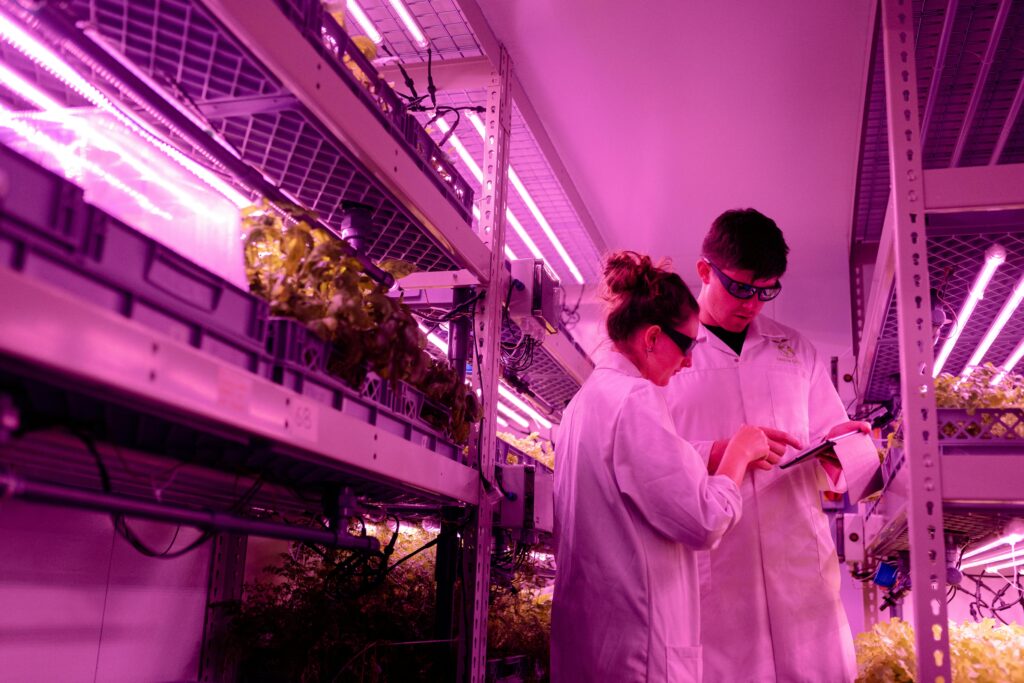
Banner image: Stock image of people in lab coats, representing biological and agricultural sciences. Photo credit: From pexels.com.