This piece is the first in a series of profiles of electoral parties in the lead up to the 2026 General Election.
A network of large-scale owners, the super-rich bourgeoisie, constitute the ruling capitalist class of Aotearoa. The National Party is the historic party that represents their interests, and it remains so today. These interests are in the exploitation of workers and the natural environment, and holding on to political power. The National Party is the historic enemy of the working class. As the ruling class is numerically tiny, it must draw behind it the electoral support of wider sections of society. National draws its mass support from a hotchpotch of small business people of town and country, farmers, landlords, investors, higher echelons of branches of the state and, no doubt, a few misguided fools from the working class. The party is said to be a “broad church” accommodating various capitalistic interests and united in fear of the working class.
That could change at some point. The capitalist class is not wedded to moderate conservatism for all time. History shows us that the capitalists have no compunction in turning to the far Right, or outright fascism, if that is what it takes to reset the profit system in their favour by dividing and suppressing the working class. In Europe, we have witnessed historic right-wing parties, such as the British Conservatives, being eclipsed by far-right rivals.
Although National is still the preferred party of New Zealand capitalism, a point of qualification applies. The rise of the far-right, economically liberal ACT party has been at the expense of National. At each general election from 2005 to 2017, National obtained over 40 percent of the party vote. They have not regained 40 percent since. At the 2023 election, National won with 38 percent of the party vote and had to form the Coalition with ACT and New Zealand First in order to form a government. Since that election, only one opinion poll has found 40 percent support for National, and that was back in January 2024. Every other opinion poll taken during the life of the Coalition until now (February 2026) has found National in the 30 percents. In other words, National’s decline at the hands of the far Right appears to be permanent, as far as anything in politics can be said to be so.
The thesis that National is still the preferred party of the capitalist class, but ACT is challenging that status, is borne out by the annual returns on large donations that the parties are required to make. In 2023 National received $10.4 million, making them the most richly-endowed party by a significant margin. However, ACT also attracted significant donations from business and wealthy individuals to the tune of $4.3 million.
Luxon’s role in the Coalition with ACT and NZ First has been paltry. In Coalition negotiations National sold out to ACT and NZ First’s racism cheaply. It was agreed that David Seymour could introduce a first reading of a Treaty Principles Bill.
Despite Luxon being the prime minister and his party supposedly the senior partner, he has allowed ACT and NZ First to make the running with little restraint. Take foreign affairs, for example: NZ First’s Winston Peters has been allowed to dictate policy without rebuke. Hence, our government refuses to recognise Palestinian statehood. In the debate in Parliament, Labour’s Peeni Henare was able to attack Luxon in these terms: “The prime minister has had countless opportunities to show moral clarity on Palestine. Each time, he has chosen delay, equivocation or inaction.”
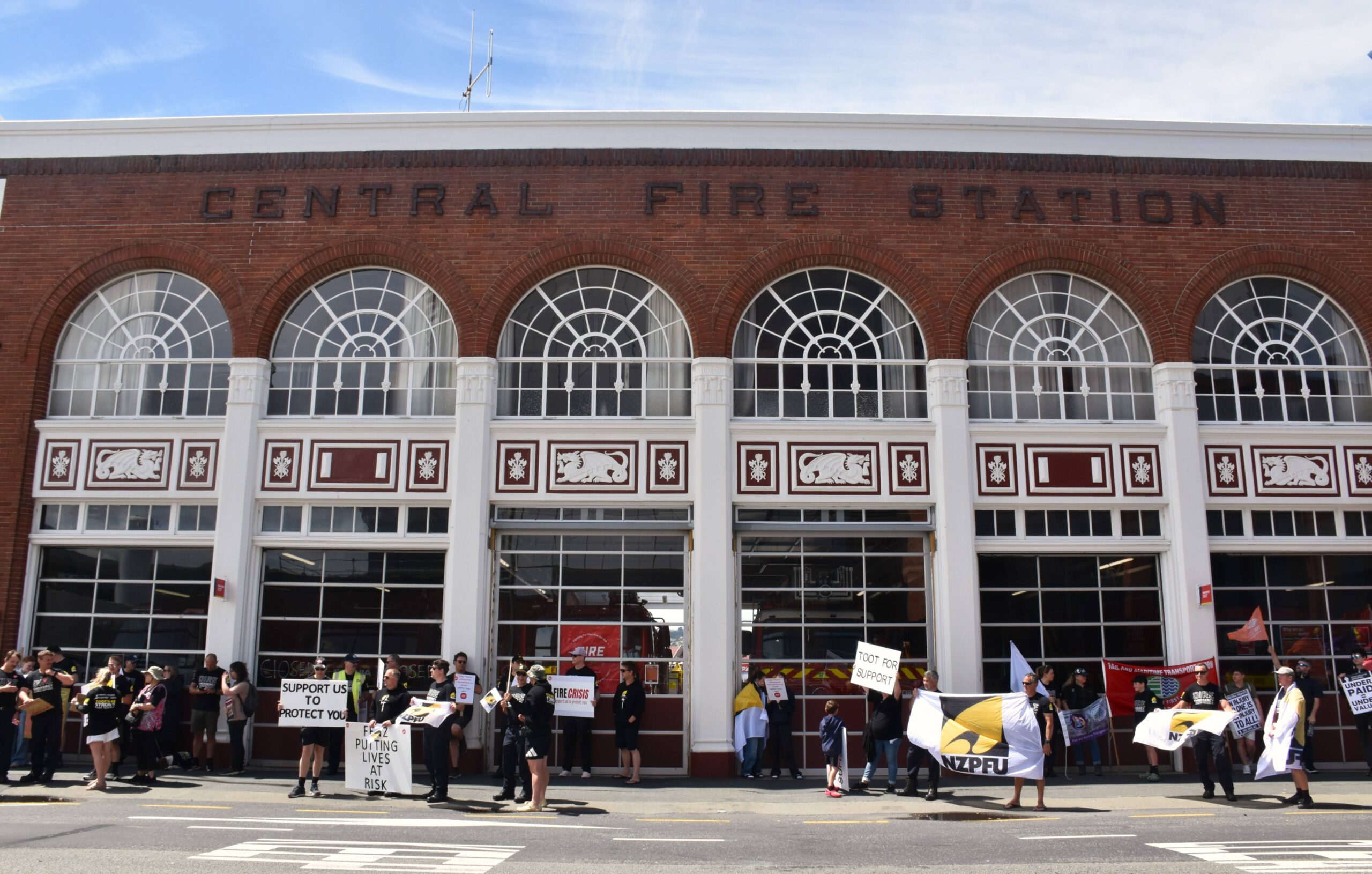
The Coalition parties are united on the economy. Slashing jobs in the public centre has been their flagship action. The result is higher unemployment, a deliberate policy objective to keep the working class on the back foot. As of December 2025, the unemployment rate had reached 5.4 percent. This has put downward pressure on workers’ pay. While price inflation for 2026 ran at 3.1 percent, pay rates rose by only 2 percent. GDP under the Coalition has hovered around zero growth. This record should spell doom to the Coalition at November’s general election, but so far the Coalition partners’ opinion polling is holding up. The reason for this is Labour’s inability to effectively attack. When Labour were in government they attacked workers’ living standards in response to the cost of living crisis. Essentially, Labour and the Coalition have followed the same neoliberal prescription, only the Coalition has gone about slashing the public sector aggressively.
It is a long time until the general election, so it would be foolish to make predictions. The best way for workers to challenge National would be a surge of workers’ action to bring victories and confidence to our side.
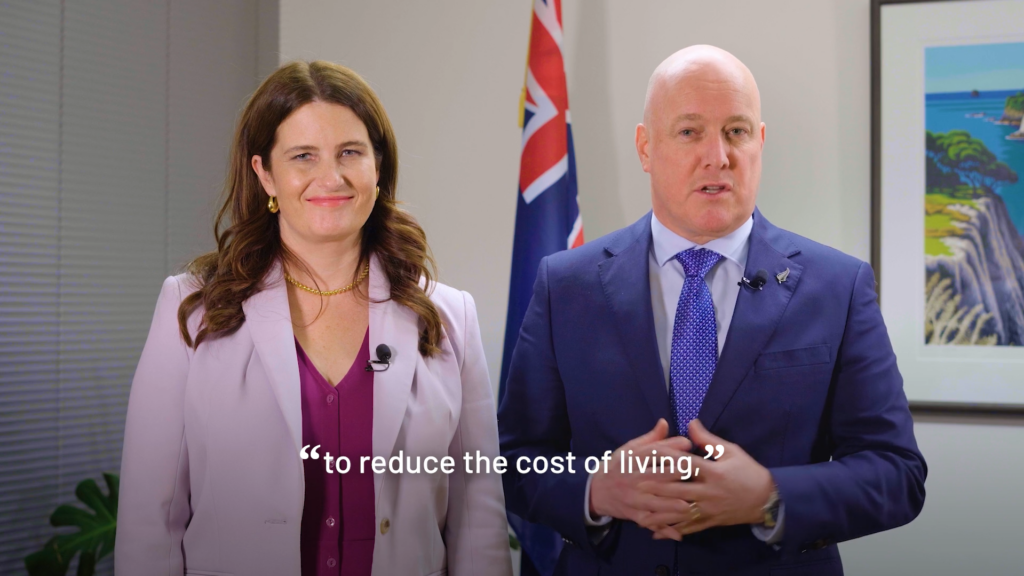
Photo caption: Prime minister Christopher Luxon and minister of finance Nicola Willis deliver Budget 2024. Photo credit: Wikimedia Commons, CC BY 4.0, quotation marks added.