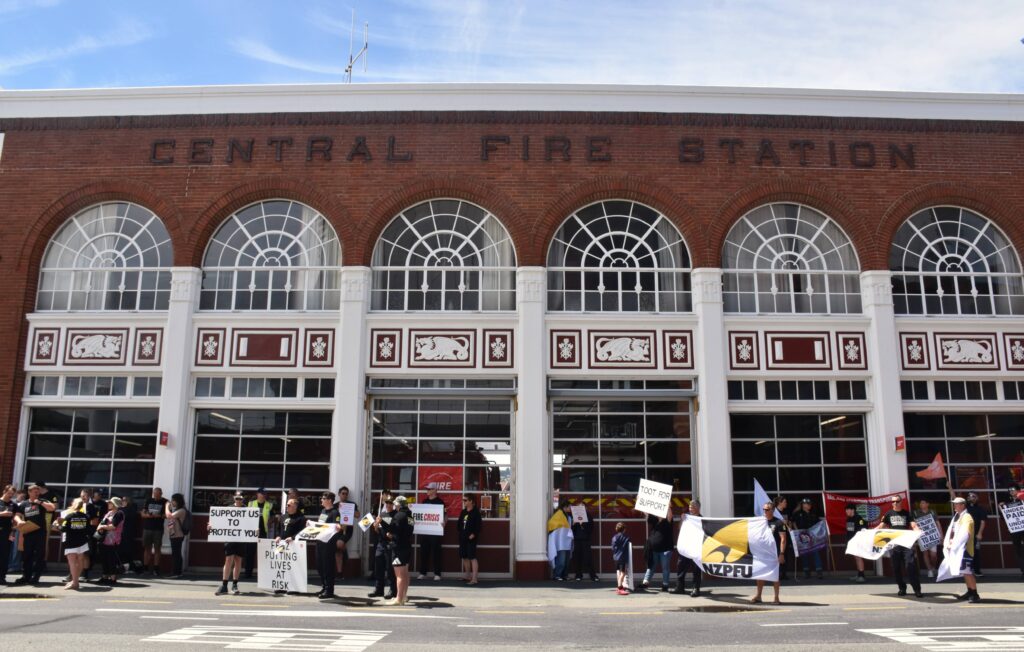
The following article was written after the 9 January Firefighters’ strike. The Ōtepoti Dunedin strike was attended by ISO members, including ISO editor Oscar Bartle, who conducted an interview with the local NZPFU branch secretary, Mike Taylor.
Firefighters with the New Zealand Professional Firefighters’ Union (NZPFU) have, as part of their “Dire Emergency” campaign, been taking frequent nationwide strike action since October 2025, with the most recent being the 9 January strike. Why, and how, are they striking? What has been the response from their employer, FENZ (Fire and Emergency New Zealand), and the Government? What’s at stake for the general public? These are the questions it is important to address.
In an interview with the ISO, Mike Taylor, the Dunedin NZPFU branch secretary, said this:
We’ve been striking because FENZ hasn’t been negotiating with us reasonably. We haven’t had a decent offer back from FENZ with relation to pay and conditions. We’ve got issues with fire appliances breaking down, and breaking down at incidents. Currently, we are using a ladder truck that is a replacement truck for our main one, and the one we are using at the moment is nearly 40 years old, which is crazy. No other emergency service would be expected to use equipment that is 40 years old. Our main pump truck for Dunedin City can only operate at 50 percent of its pumping capability. This is just a small example from Dunedin, of course; we’ve got these issues all around the country. We’ve got issues with staffing; we’re short-staffed around the country. At our last negotiations, FENZ promised to increase the number of staff across the country, and they’ve reneged on that since then, so that’s not happening. We’ve got other health and safety issues with recognition of occupational cancer risks, and other health and safety issues as well.
The average salary of a professional firefighter is utterly dwarfed by the bloated salaries of FENZ management and the executive, who are making well into six figures; their chief executive Kerry Gregory rakes in about $518,000 annually. Considering the various health and safety risks firefighters endure, the vital role they play in keeping us safe, the understaffing faced at the frontline, and the sharp cost-of-living pressures faced by working class people, how can this be justified? Surely it cannot be.
You could be forgiven for thinking it might be in FENZ’s interests (FENZs’ motto is “serving our people”) to sympathise with the cause of the firefighters, and to go in to bat for their workers by taking the matter to the Government to demand adequate funding. In reality, FENZ has acted in a rather hostile way towards its workers. When asked about this, this is what Mr Taylor had to say:
What you’ve said is exactly what we’re saying. It’s in their interest to represent us, as firefighters, and say our firefighters need better; they need the equipment, this is how much it’s going to cost for an effective fire service for this country, and tell the government this is what we need. Instead, they’re representing the Government’s view that “nah we can make cuts here, we don’t need these people, we can reduce costs”, and telling us “no, you’ll get what you’re given.” I think this is a self-preservation tactic by our senior management. I think people don’t want to admit that mistakes have been made in the past. I think those two things probably contribute to a lack of movement from our leaders. But what you’ve said is exactly right, we need brave leadership to stand up for their workforce.
Perhaps it is those massive salaries which keep FENZ leadership upholding the Government line. FENZ certainly has a history of lacklustre leadership in this area. Whatever the case, here is what Taylor had to say when asked if he was surprised FENZ had let things get to this point:
Well, unfortunately, I’m not surprised because this is pretty much par for the course every time that we come to our negotiations. So we’re now 570 odd days out of contract, and last time we were in negotiations, the same thing happened; we were years out of a contract. So I’m not surprised, I’m disappointed, but not surprised, and unfortunately, what they’ve done now is rather than negotiating they’re forcing us to facilitation which is where they get a third party in to monitor what’s happening in a non-binding way, and unfortunately, this is not progressing our talks, they haven’t made us any more offers, we haven’t been presented with any offers since then so it’s just a stalling tactic, it feels like. And in the meantime, we could have actually had this all wrapped up and squared away.
Hearing all of this can certainly make you feel for the plight of the firefighters. It also raises serious concerns about FENZ and the state of the fire service on which so many of us rely. When asked about the stakes for the general public, this is what Taylor said:
Without the strikes, what’s at stake is that our response can be hampered by broken down equipment. We know that in Dunedin, just a few weeks ago, we had appliances that broke down on the way to an incident. This was a fire that I was at personally, and the pump broke down halfway through the job. You know, lives are at risk. Without being melodramatic: lives are at risk. We’ve run out of options, which is why we’re taking this strike action now. When we’re not working for an hour, then we get some really serious potential repercussions for this hour that we’re not responding. We don’t want to see anyone get hurt. This really is nothing compared to the risk that they’re putting the public at every day.
It is clear that these firefighters take strike action incredibly seriously. In fact, strikes of this nature are completely unprecedented for the firefighters. Prior to 2022, when two one-hour strikes took place, there had been no nationwide firefighters’ strike in Aotearoa’s history. The fact that the strikes are only one hour in duration speaks to the very carefully considered nature of the actions they have taken. During the 9 January strike, a fire broke out in Auckland, which injured one person. The fire was attended solely by volunteer firefighter crews, which could not respond as swiftly as professional firefighters could have. Quick to jump on this opportunity to attack their vital frontline workforce, FENZ deputy chief executive Megan Stiffler spoke to the media and said: “We’re not angry with the firefighters, we’re angry with the NZPFU executives, that are recklessly endangering life and property. Considering that we are still in negotiations actively, there is no need for these strikes.”
To claim that NZPFU executives are forcing firefighters to take action is a malicious and ridiculous lie. Among professional firefighters, union membership, which is voluntary, is among the highest in the country, with around 90 percent of professional firefighters being in the NZPFU. Before embarking on this campaign, NZPFU members voted 99 percent in favour of rejecting FENZ’s offer, and 97 percent in favour of taking industrial action. FENZ’s offer has not meaningfully improved. FENZ management is fully aware of all of this. By asserting that firefighters, by fighting for the long-term future of the fire service, are “recklessly endangering life and property,” FENZ is engaging in character assassination of those who are quite literally fighting for our lives.
How could FENZ say such a thing when it is their, and the government’s, negligence that is causing massive delays in response times, and poorer outcomes due to poor equipment and understaffing? It is they who have driven firefighters to the point of needing to strike. The FENZ response should be viewed as it is, a slanderous attack on firefighters to deflect from their own failings and negligence. The fault and responsibility for this incident, and any like it, lies squarely with FENZ management and the government.
The Government is, of course, the main driver of this renewed crisis. They rule for the rich and are blatantly anti-worker. They have been enacting a programme of strangling public services while directing public funds to landlords, corporations, the military, and the wealthy. The particularly rotten priorities of the current government are a significant cause of the current crisis. However, it is not just this government. Successive governments have underfunded the emergency services for decades. Labour, New Zealand First, National, and ACT all bear significant responsibility for the crisis facing our fire service.
The importance of a well-equipped, well-staffed, and well-funded fire service cannot be overstated. As capitalism-driven climate change continues to worsen, extreme weather is becoming ever increasingly common. As extreme weather and extreme weather-driven wildfires rip across Aotearoa and the world, we will need fire and emergency services to be at their absolute best to defend our lands, our homes, and our lives. The working class, unlike the rich, need these services to be a priority. Unlike the rich capitalists, we cannot hide away in our mansions with hoarded wealth and hire private firefighting services to protect our private property, as has already started to happen in other parts of the world. This short-sighted government, which has been blatantly ruling for the rich, has no interest in properly funding a public fire service. Socialists say: Down with Luxon, down with the Government, and down with the world capitalist system. We say: Up with the firefighters, and power to the workers!
Two further strike actions have been planned by the firefighters. One on 16 January, and another on 23 January. It is in the interests of all working class people to show solidarity and support them. For updates and more information, visit direemergency.nz. If you agree with the socialist perspectives in this article, contact the International Socialist Organisation to get involved.
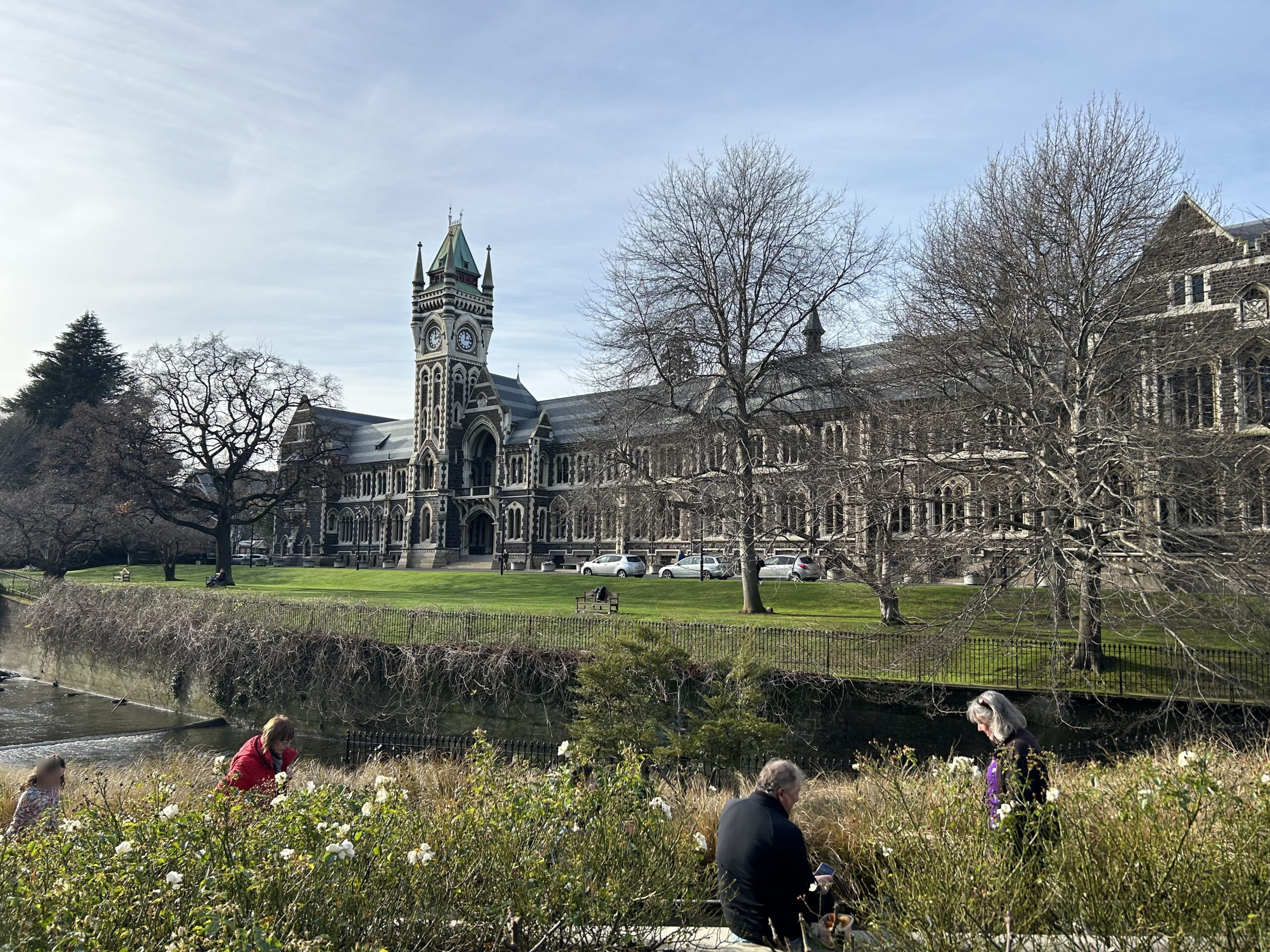
Photo caption: 9 January 2026 Firefighters’ Strike, Dunedin. Photo credit: Jill Bowie.